Cast Iron Seared Duck Breast
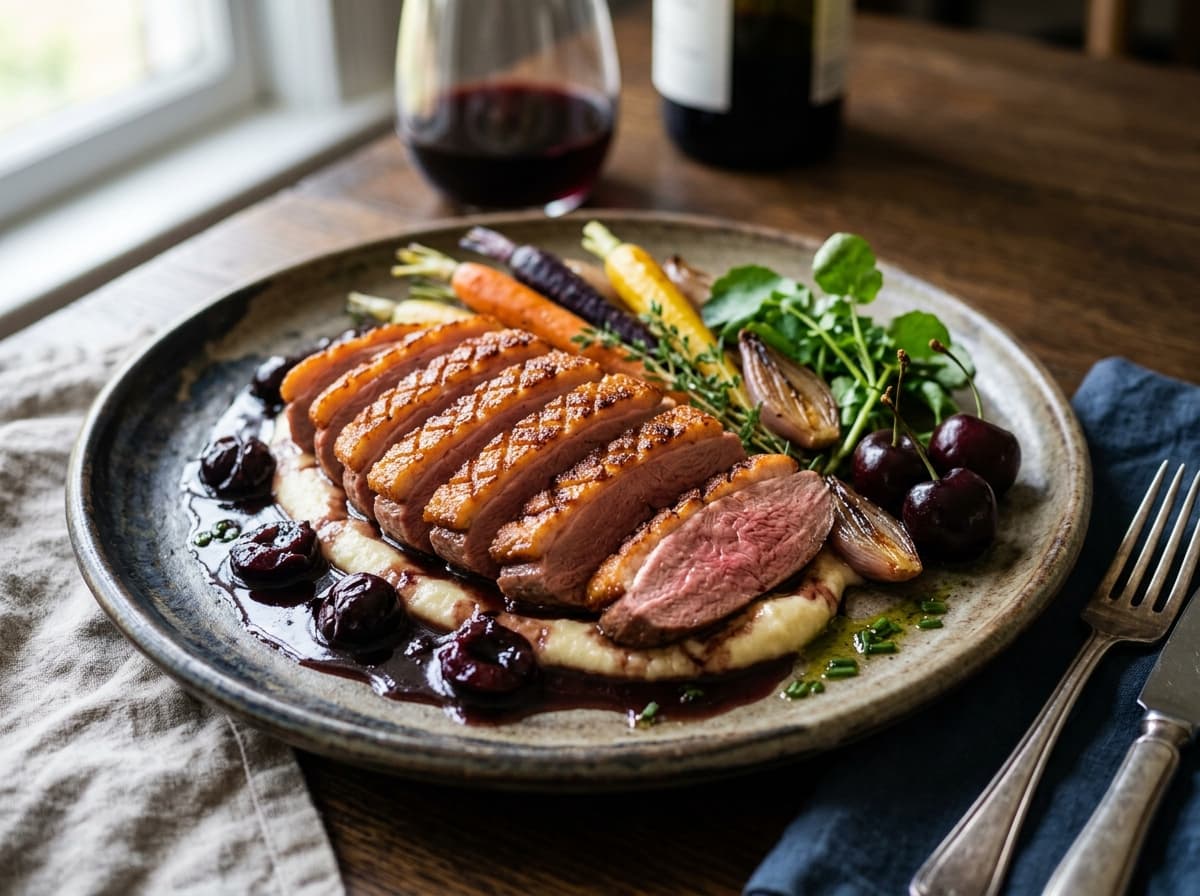
Restaurant-quality duck breast with impossibly crispy skin and a luscious honey-balsamic glaze, cooked by starting in a cold cast iron pan to render out every bit of fat.
- Cook temp
- 400°F
- 204°C · preheat
- Total time
- 28 min
- 10 prep · 18 cook · 5 rest
- Flip at
- 12 min
- of 18 min cook
- Pull at
- 135°F
- USDA safe minimum
How to Cook Perfect Duck Breast | Gordon Ramsay · Gordon Ramsay
Gordon Ramsay shows how to score the skin and start duck breast in a cold pan to slowly render the fat until crispy.
- Target //Cook at Medium then 400°F (204°C) oven finish for 28 mins (flip at 12 mins).
- Doneness //Pull when internal temperature reaches 135°F (USDA safe minimum). Rest 5 mins before slicing.
- Golden Rule //Duck breast sounds intimidating but the cold-pan method is honestly foolproof. Start cold, walk away, come back to crispy perfection. The rendered duck fat is liquid gold so save it in a jar in the fridge for roasting potatoes or frying eggs.
- Family Tweak //Slice the breast extra thin and serve with a sweet plum or hoisin dipping sauce. Skip the balsamic glaze for picky eaters.
Ingredients
- 4 piecesDuck Breasts, 8 oz each, skin on
- 1 tspKosher Salt
- 1/2 tspBlack Pepper
- 2 tbspHoney
- 2 tbspBalsamic Vinegar
- 1 tspFresh Thyme, leaves only
Send to Kroger
Untick anything you already have. One click sends the rest to your own cart.
Adds to your own Kroger cart — you'll sign in with Kroger the first time. Prices and availability depend on your store. Nothing is ordered until you check out at Kroger.
Get to the point
- 1
Score duck breast skin in a crosshatch pattern without cutting into the meat; season with salt and pepper.
- 2
Place skin-side down in a cold cast iron skillet; turn heat to medium and render fat for 10 to 12 minutes until skin is deeply golden and crispy.
- 3
Flip breasts and transfer skillet to a 400°F (204°C) oven for 5 to 6 minutes until internal temp hits 135°F.
- 4
Rest 5 minutes, then slice thin and drizzle with honey-balsamic glaze.
Step by step
Tap a step to cross it offScore & Season
Using a sharp knife, score the skin of 4 duck breasts (8 oz each) in a tight crosshatch pattern, cutting through the fat layer but not into the meat. Space cuts about 1/4 inch apart. Season both sides generously with 1 tsp kosher salt and 1/2 tsp black pepper.
WhyScoring is the secret to crispy duck skin. More cuts means more surface area for fat to render out and skin to crisp.
Cold Pan Fat Render
Place duck breasts skin-side down in a cold cast iron skillet. Turn heat to medium. Cook without moving for 10 to 12 minutes as the fat slowly renders out and the skin turns deeply golden and crackling crispy. Spoon off excess rendered duck fat as it accumulates.
WhyStarting in a cold pan is the whole technique. It gives the fat time to render slowly instead of burning the skin. Save that duck fat for the best roasted potatoes of your life.
Oven Finish & Glaze
Flip breasts to meat-side down. Transfer skillet to a preheated 400°F (204°C) oven for 5 to 6 minutes until internal temperature reads 135°F. Meanwhile, combine 2 tbsp honey, 2 tbsp balsamic vinegar, and 1 tsp fresh thyme leaves in a small bowl.
WhyDuck breast is best at medium-rare to medium. It dries out fast past 145°F, so pull early and let carry-over do the work.
Rest & Slice
Remove breasts from the skillet and rest on a cutting board for 5 minutes. Slice against the grain into thin medallions. Drizzle with the honey-balsamic glaze and serve immediately.
WhySlice thin and fan the pieces out on the plate. Fancy presentation for about three seconds of extra effort.
- Dad pro tip
- Duck breast sounds intimidating but the cold-pan method is honestly foolproof. Start cold, walk away, come back to crispy perfection. The rendered duck fat is liquid gold so save it in a jar in the fridge for roasting potatoes or frying eggs.
- Kid & toddler adjustment
- Slice the breast extra thin and serve with a sweet plum or hoisin dipping sauce. Skip the balsamic glaze for picky eaters.
- Serve with
- Mashed sweet potatoes · Sauteed green beans with almonds · Wild rice pilaf
- Reheating
- Reheat sliced duck in a 325°F (163°C) oven for 5 minutes. Do not microwave or the skin loses all crispness.
- Calories
- 440
- Protein
- 34 g
- Carbs
- 10 g
- Fat
- 30 g
Nutrition source: USDA FoodData Central #174220. Cook-time basis: Cold-start cast iron skillet rendering technique; finished in 400°F (204°C) oven. ThermoWorks instant-read to 135°F pull temp for medium-rare carry-over to 145°F.
Frequently Asked Questions
How do you reheat leftover cast iron seared duck breast without ruining the texture?
Reheat sliced duck in a 325°F (163°C) oven for 5 minutes. Do not microwave or the skin loses all crispness.
What is the target internal temperature for this recipe?
Confirm internal core temperature reaches 135°F using an instant-read digital probe thermometer inserted into the thickest part. Allow the meat to rest for 5 minutes before slicing to let carryover heat equalize and lock in juices.
How do I adapt this meal for picky kids or toddlers?
Slice the breast extra thin and serve with a sweet plum or hoisin dipping sauce. Skip the balsamic glaze for picky eaters.
What are the best side dishes to serve with this?
Recommended sides include Mashed sweet potatoes, Sauteed green beans with almonds, Wild rice pilaf.