Reverse-Sear Steak Methodology: Low Thermal Gradients for 2-Inch Thick Cuts
Why baking steaks at 225°F before flash-searing creates edge-to-edge pink perfection
- [1]Traditional searing exposes the exterior to 450°F while the core is at 40°F, creating a steep thermal gradient and a thick, overcooked gray ring.
- [2]Reverse-searing bakes the steak at 225°F (107°C) on a wire rack until the core is within 10°F of target doneness.
- [3]The low-heat oven acts as a dehydration chamber, desiccating surface moisture so the final sear takes only 45–60 seconds per side.
- [4]Reverse-searing is ideal for steaks 1.5 to 2.5 inches thick (Ribeye, NY Strip, Porterhouse, Filet Mignon).
The Thermal Gradient Problem in Traditional Searing
When you cook a 2-inch thick steak in a screaming-hot cast iron skillet from start to finish:
- The outer 6–8 millimeters are exposed to 450°F pan temperatures for 10–12 minutes.
- By the time the cold center finally reaches 130°F (medium-rare), the outer layer has reached 180°F+ (well-done).
- Slicing the steak reveals a narrow pink bullseye surrounded by a thick, dry, gray band of overcooked meat (the "gradient penalty").
How Reverse-Searing Solves the Physics of Heat
Reverse-searing (popularized by food scientist J. Kenji López-Alt) flips the sequence:
- Phase 1: Low Thermal Gradient Baking (225°F / 107°C):
- The steak is placed on a wire rack in a 225°F oven or smoker.
- Low ambient temperature transfers heat gently and evenly.
- The entire steak warms uniformly with virtually zero thermal gradient between surface and core.
- Simultaneously, the oven airflow dehydrates the surface moisture, preparing the meat for an explosive sear.
- Phase 2: The Flash Sear (500°F Cast Iron):
- Pull the steak at 115°F (for medium-rare) or 125°F (for medium).
- Drop the bone-dry steak into screaming-hot cast iron with a thin film of beef tallow.
- Because the surface is already dry, Maillard browning occurs in just 45 to 60 seconds per side.
- Heat does not have time to conduct inward, leaving 100% edge-to-edge pink doneness.
Step-by-Step Reverse-Sear Protocol
| Step | Action | Target Parameters |
|---|---|---|
| 1. Season & Rack | Salt steak at 1.0% by weight, place on wire rack | 1.5" to 2.5" thick steak |
| 2. Low Bake | Bake in oven at 225°F (107°C) | Approx. 35–45 minutes |
| 3. Probe Pull | Pull when internal thermometer hits 115°F | 10°F below final 135°F target |
| 4. Screaming Sear | Cast iron on high for 5 mins; 1 tsp tallow | 45–60s per side (max 2 mins total) |
| 5. Immediate Slice | Rest for only 2–3 mins (minimal carryover) | Slice against the grain and serve |
Technical FAQ
Q: Does reverse-searing work on thin 1/2-inch steaks?
No. On thin steaks (<1 inch), the oven phase brings the core to temp so fast that any final sear will overcook the center. Thin steaks should be cooked purely by high-heat flash searing straight from the fridge.
Tested Application Recipes
ZERO FLUFF // DIRECT EXECUTION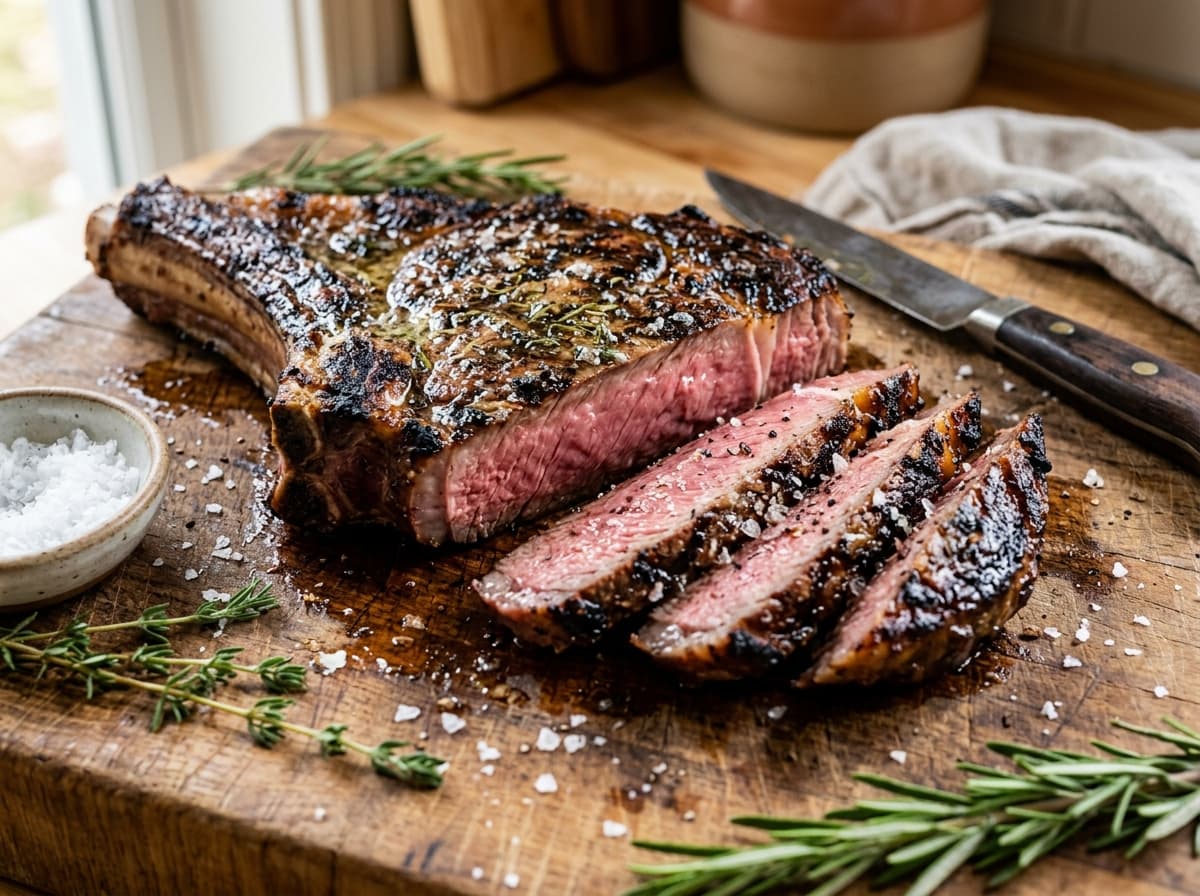
Grilled Reverse-Sear Ribeye
Thick-cut 1.5-inch bone-in ribeye gently roasted over low indirect heat to 115°F, then finished over screaming direct flame for wall-to-wall medium-rare perfection.
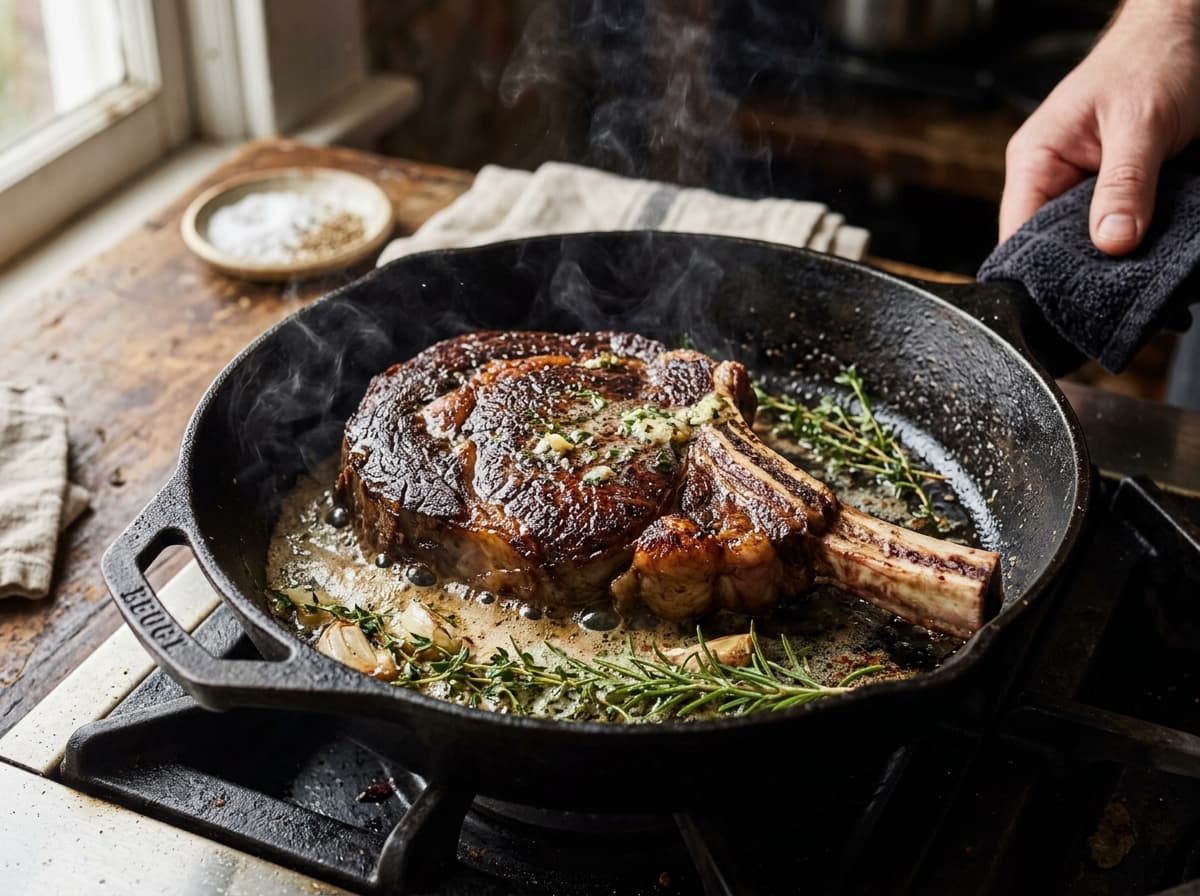
Cast Iron Butter-Basted Ribeye Steak
Restaurant-quality steakhouse sear with garlic herb butter pan basting in 8 minutes.
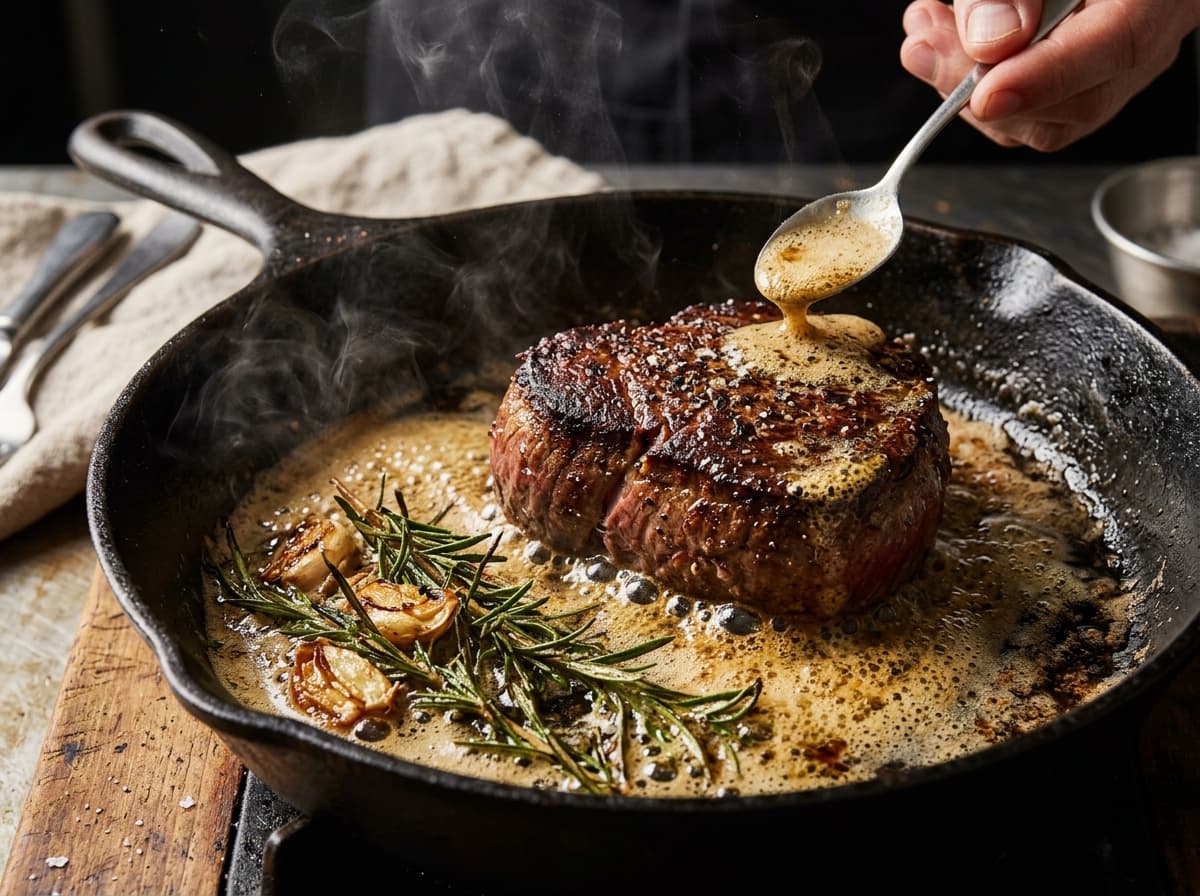
Cast Iron Filet Mignon
Tender 8-ounce beef tenderloin steaks seared in screaming-hot cast iron and basted in foaming garlic rosemary butter in 8 minutes.