All Field Guides (85)SPEC NO: BLOG-040
Culinary Technique & Physics6 MIN READ•UPDATED 2026-08-28
Sheet Pan Dinner Logistics: Thermal Zones, Staggered Timing, and Moisture Evaporation
Why dumping everything on one pan results in soggy vegetables and dry chicken
AUTHORED BY: Meal Instructions Research Team
VERIFIED CULINARY PHYSICS
EXECUTIVE SUMMARY // CORE TECHNICAL PRINCIPLES
- [1]Dense root vegetables (potatoes, carrots) require 30–35 minutes at 400°F; tender proteins (salmon, shrimp) overcook in under 12 minutes.
- [2]Staggered Loading is the foundation of sheet pan cooking: roast dense vegetables first, then add fast-cooking proteins to the same pan for the final 10–12 minutes.
- [3]Dark rimmed baking sheets absorb radiant heat and brown bottoms faster; shiny aluminum reflects heat, resulting in pale roasted vegetables.
- [4]Crowding a sheet pan traps steam; use two baking sheets across upper and lower oven racks if cooking for 4+ people.
The Fallacy of the "Dump-and-Bake" Sheet Pan Dinner
Popular cooking videos suggest tossing raw chicken, broccoli, and diced sweet potatoes onto a single sheet pan and baking for 25 minutes.
The thermodynamic reality:
- Sweet potatoes are still crunchy and raw in the center (need 35 mins).
- Broccoli has turned black and charred (needed 15 mins).
- Chicken breasts are dry, stringy, and chalky (needed 14 mins).
- Evaporating vegetable water has pooled across the pan, steaming the chicken instead of roasting it.
The Three Rules of Flawless Sheet Pan Engineering
- Rule 1: Staggered Chronological Loading:
- T - 30 Mins: Load dense vegetables (diced potatoes, carrots, Brussels sprouts) tossed in oil and salt. Roast at 400°F.
- T - 15 Mins: Push vegetables to the sides, make space in the center, and add medium proteins (chicken thighs, pork chops, sausage links) and tender vegetables (peppers, onions).
- T - 8 Mins: If cooking fast seafood (salmon fillets, shrimp), add during the final 8–10 minutes only.
- Rule 2: Pan Metal Physics (Dark vs Light Aluminum):
- Dark / Well-Seasoned Half-Sheet Pans: High emissivity ($e \approx 0.9$). Absorb radiant thermal energy and caramelize vegetable contact points.
- Bright Shiny Aluminum: High reflectivity ($e \approx 0.1$). Reflects infrared radiation, leading to soft, pale bottoms.
- Rule 3: Thermal Edge Zones:
- The outer perimeter and corners of a sheet pan experience the highest heat and airflow.
- Place cut sides of vegetables facing the perimeter/pan floor to maximize browning.
RELATED INTERACTIVE KITCHEN ENGINES
Technical FAQ
Q: Should I line sheet pans with parchment paper or aluminum foil?
Use heavy-duty aluminum foil for easy cleanup with meats and high-fat sausages. Use bare metal or parchment paper for vegetables where you want direct conductive browning. Never use wax paper in an oven (it smokes and melts).
Tested Application Recipes
ZERO FLUFF // DIRECT EXECUTION0015
seafoodsheet pan
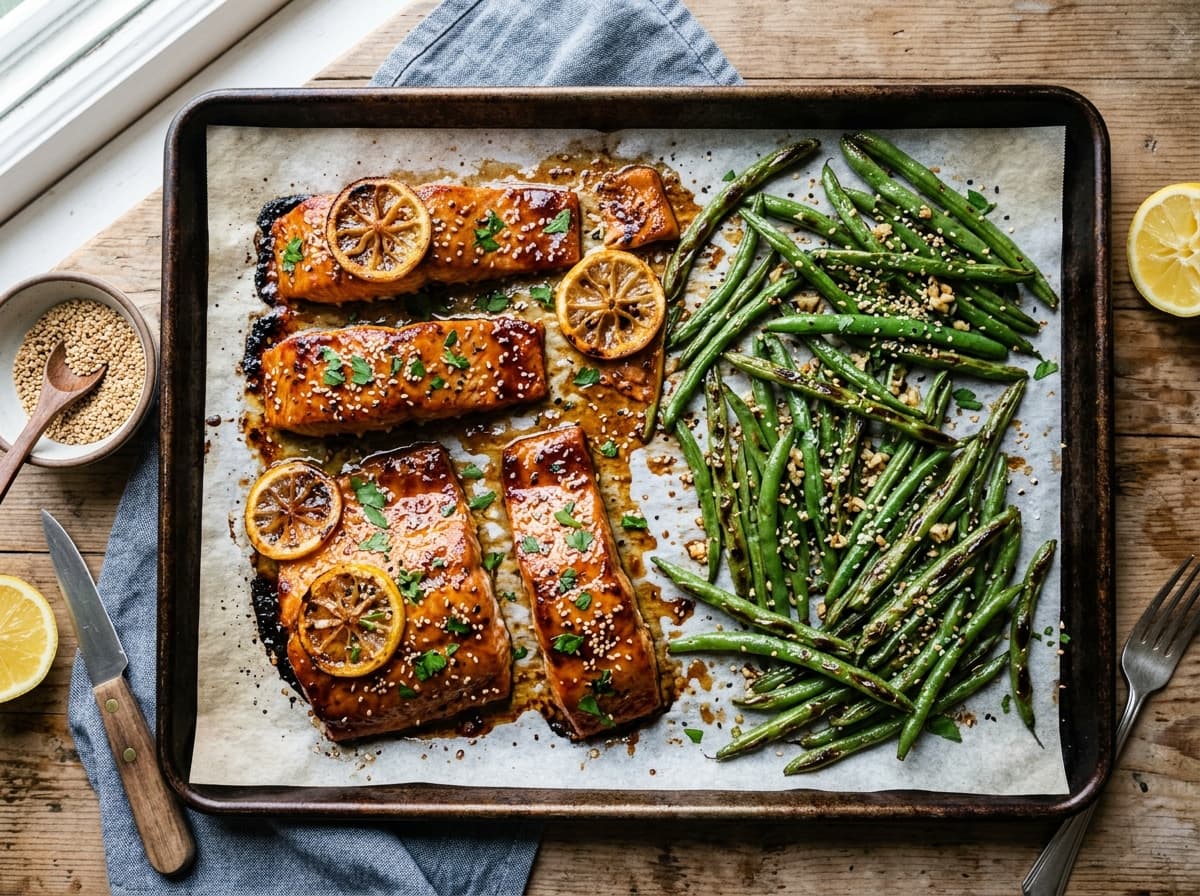
Sheet Pan Honey Garlic Salmon & Green Beans
Glazed tender salmon fillets and blistered green beans roasted together in 14 minutes.
TEMP400°F
TIME20 MIN
PROTEIN39G
Dead Simple
DIRECTIONS0005
chickensheet pan
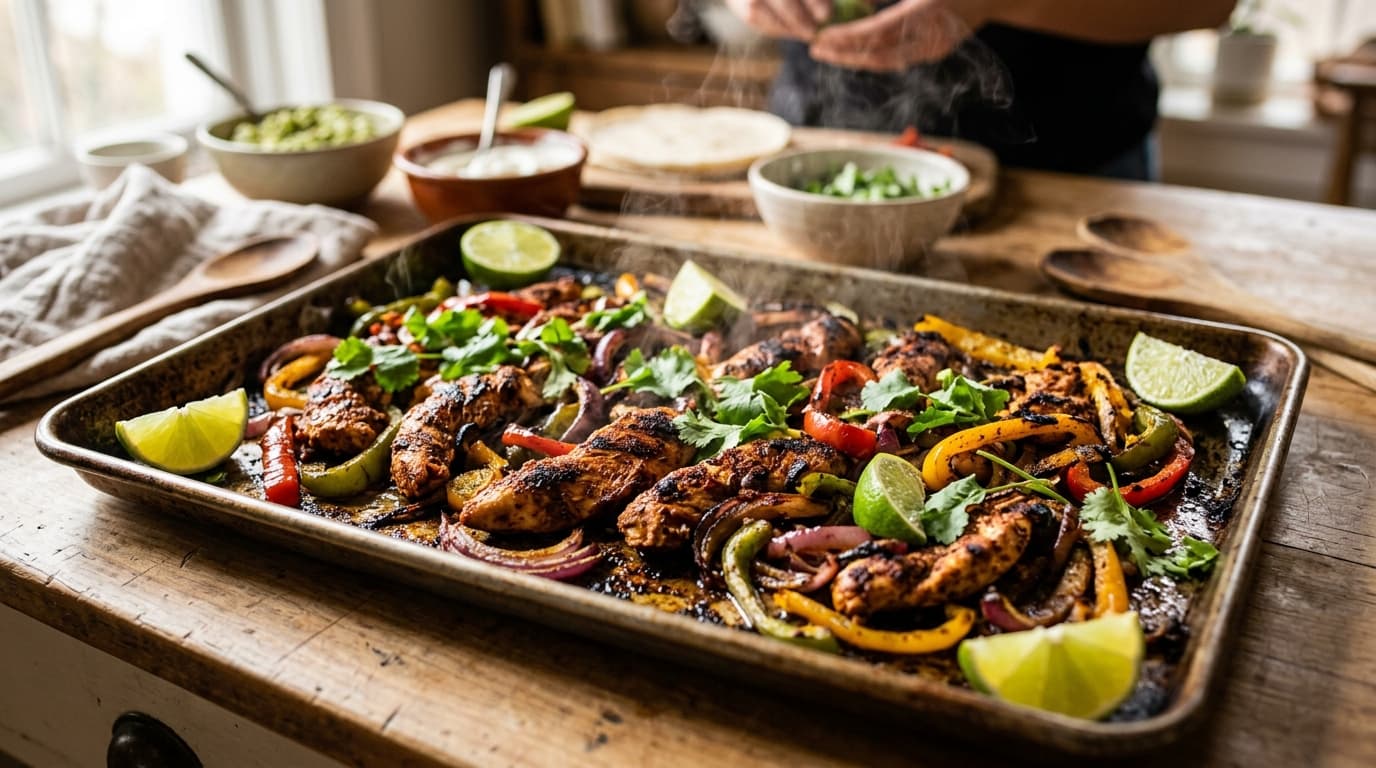
Sheet Pan Sizzling Chicken Fajitas
Tender spiced chicken breast, sweet bell peppers, and charred onions on one single pan.
TEMP425°F
TIME23 MIN
PROTEIN42G
Dead Simple
DIRECTIONS0009
porksheet pan
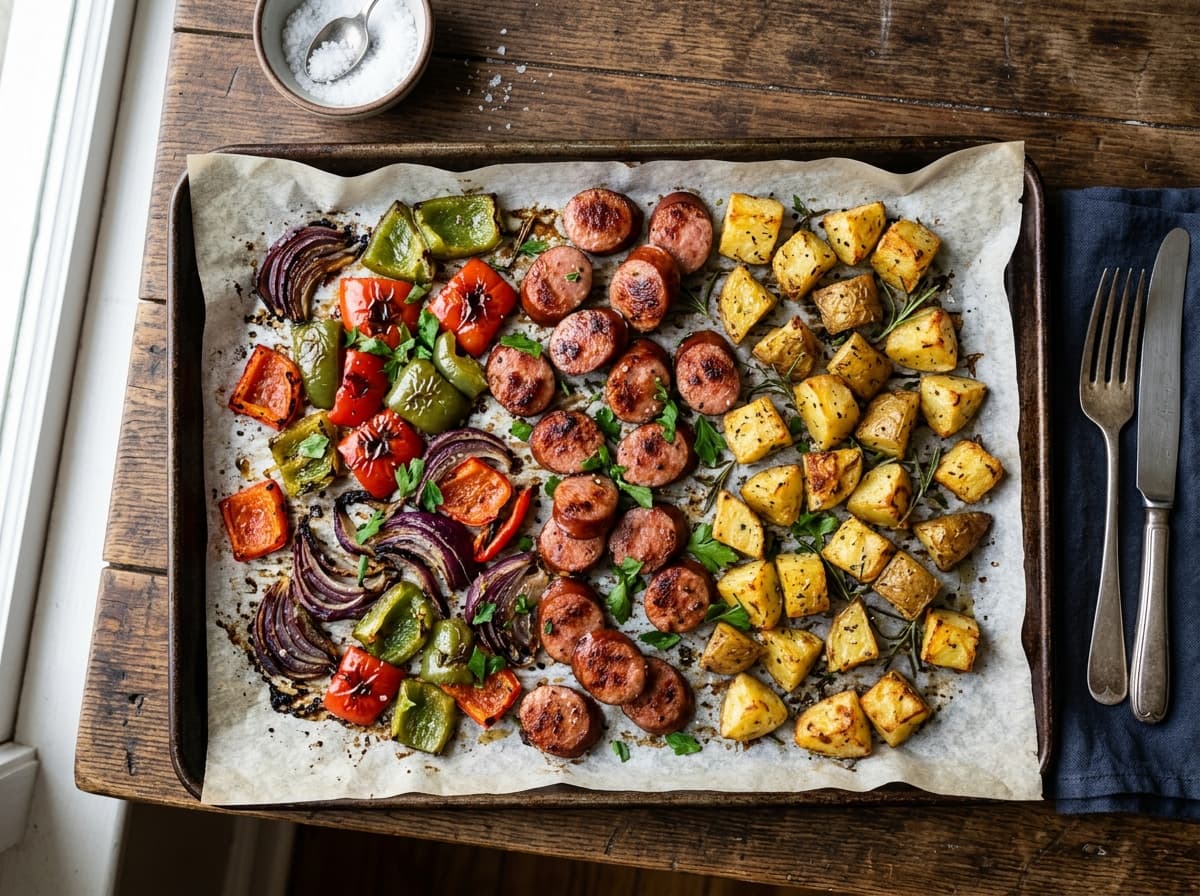
Sheet Pan Smoked Sausage, Peppers & Crispy Potatoes
Savory sliced sausage, blistered bell peppers, and golden potato cubes with zero scrubbing.
TEMP400°F
TIME35 MIN
PROTEIN20G
Dead Simple
DIRECTIONSVerified Cook-Time Datasheets
LAB-TESTED // EXACT SPECSMore Field Guides & Science
View All 50Culinary Technique & Physics
6 MIN READREAD →Reverse-Sear Steak Methodology: Low Thermal Gradients for 2-Inch Thick Cuts
Culinary Technique & Physics
6 MIN READREAD →Spatchcocking Poultry: Uniform Thermal Exposure, Accelerated Roasting, and Crisp Skin
Culinary Technique & Physics
5 MIN READREAD →