Sous-Vide + Cast Iron Sear: Decoupling Core Doneness from Exterior Maillard Crust
The thermodynamic brilliance of separating cooking time into two independent physical domains
- [1]In traditional cooking, core heating and crust searing happen concurrently, resulting in a compromised thermal gradient (gray band).
- [2]Sous-vide uses precision water bath circulation to bring the entire cut to the exact target temperature ($0.1^\circ\text{F}$ precision) with zero risk of overcooking.
- [3]Surface moisture from the water bath bag MUST be aggressively dried with paper towels and chilled for 5 minutes before the final sear.
- [4]The post-sous-vide sear should be limited to 45–60 seconds per side in a 500°F cast iron pan.
The Thermodynamic Conflict in Traditional Cooking
In standard pan-searing or grilling, a cook must balance two opposing physical objectives in one single operation:
- Objective A (The Surface): Reach 320°F+ (160°C) to trigger the Maillard browning reaction.
- Objective B (The Core): Never exceed 135°F (57°C) to prevent protein over-coagulation.
Because heat conducts inward from the outside, achieving Objective A almost always penalizes Objective B, creating an overcooked outer ring.
How Decoupling Solves the Problem
Sous-vide (precision water bath cooking) solves this by decoupling the two processes into independent physical operations:
- Domain 1: Core Precision (The Water Bath):
- Place vacuum-sealed steak into a water bath set to 130.0°F (54.4°C).
- Water conducts heat with extreme efficiency. Over 1.5 to 2 hours, the entire cut equilibrates to exactly 130.0°F from surface to core.
- It is thermodynamically impossible for the meat to exceed 130.0°F, even if left in the bath for 3 hours.
- Domain 2: Crust Synthesis (The Flash Sear):
- Remove steak from bag. Pat aggressively dry with paper towels.
- Place in freezer on a wire rack for 5 minutes (this cools only the outer 1mm of the surface and drives off residual moisture).
- Sear in 500°F cast iron with 1 tsp beef tallow for 45 seconds per side.
- Result: Explosive Maillard crust with 100% edge-to-edge medium-rare interior.
Optimal Sous-Vide Temperature Matrix
| Protein | Target Doneness | Water Bath Temp | Bath Dwell Time |
|---|---|---|---|
| Ribeye / Strip Steak | Medium-Rare | 131°F (55°C) | 1.5 to 2.5 hours |
| Filet Mignon | Rare / Med-Rare | 128°F (53.3°C) | 1.0 to 2.0 hours |
| Pork Tenderloin / Chops | Juicy Pink | 138°F (59°C) | 1.5 to 2.0 hours |
| Chicken Breast | Ultra-Juicy | 145°F–150°F | 1.5 to 2.0 hours |
| Salmon Fillet | Silky / Translucent | 122°F (50°C) | 45 minutes |
Technical FAQ
Q: Can I put butter in the sous-vide bag with my steak?
No! Liquid melted butter inside the bag absorbs fat-soluble flavor compounds from the beef and is discarded when you empty the bag. Season only with salt, pepper, and herbs in the bag; add butter during the final pan sear.
Tested Application Recipes
ZERO FLUFF // DIRECT EXECUTION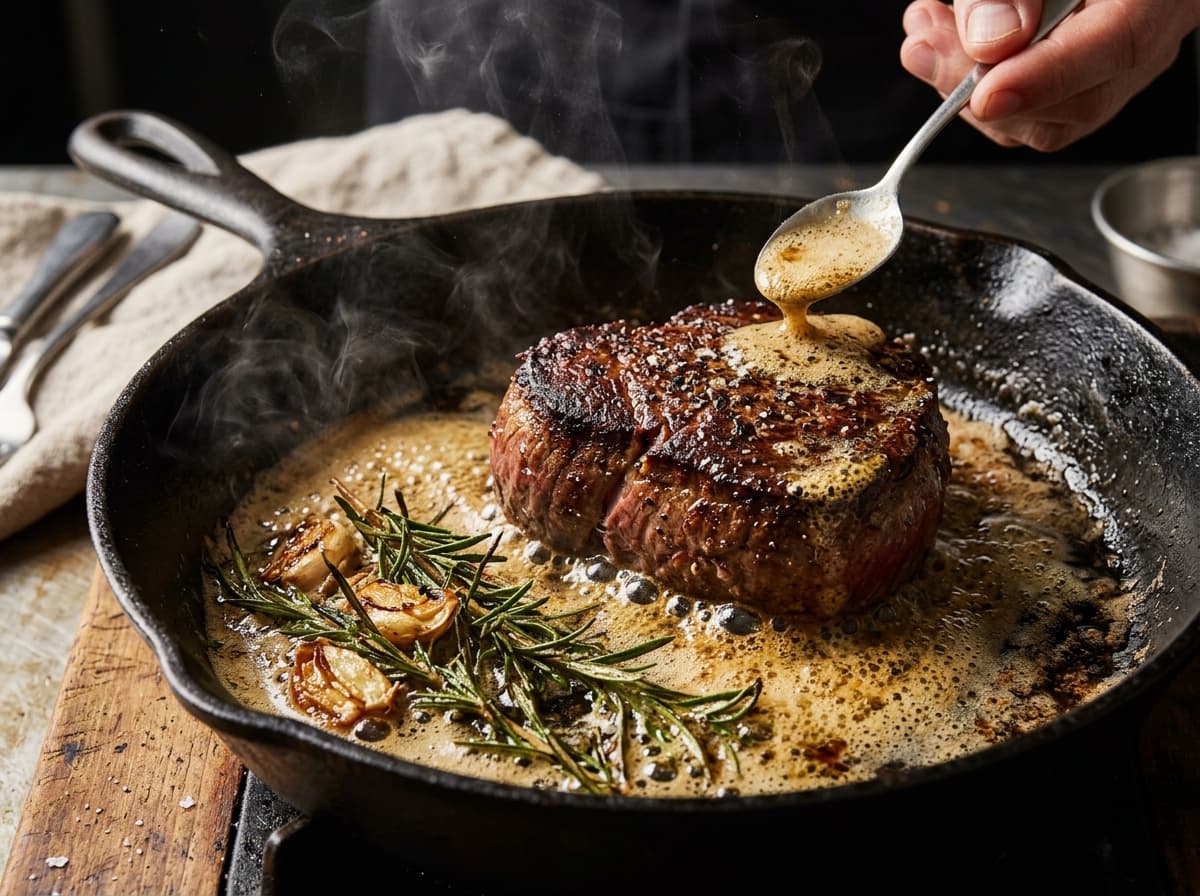
Cast Iron Filet Mignon
Tender 8-ounce beef tenderloin steaks seared in screaming-hot cast iron and basted in foaming garlic rosemary butter in 8 minutes.
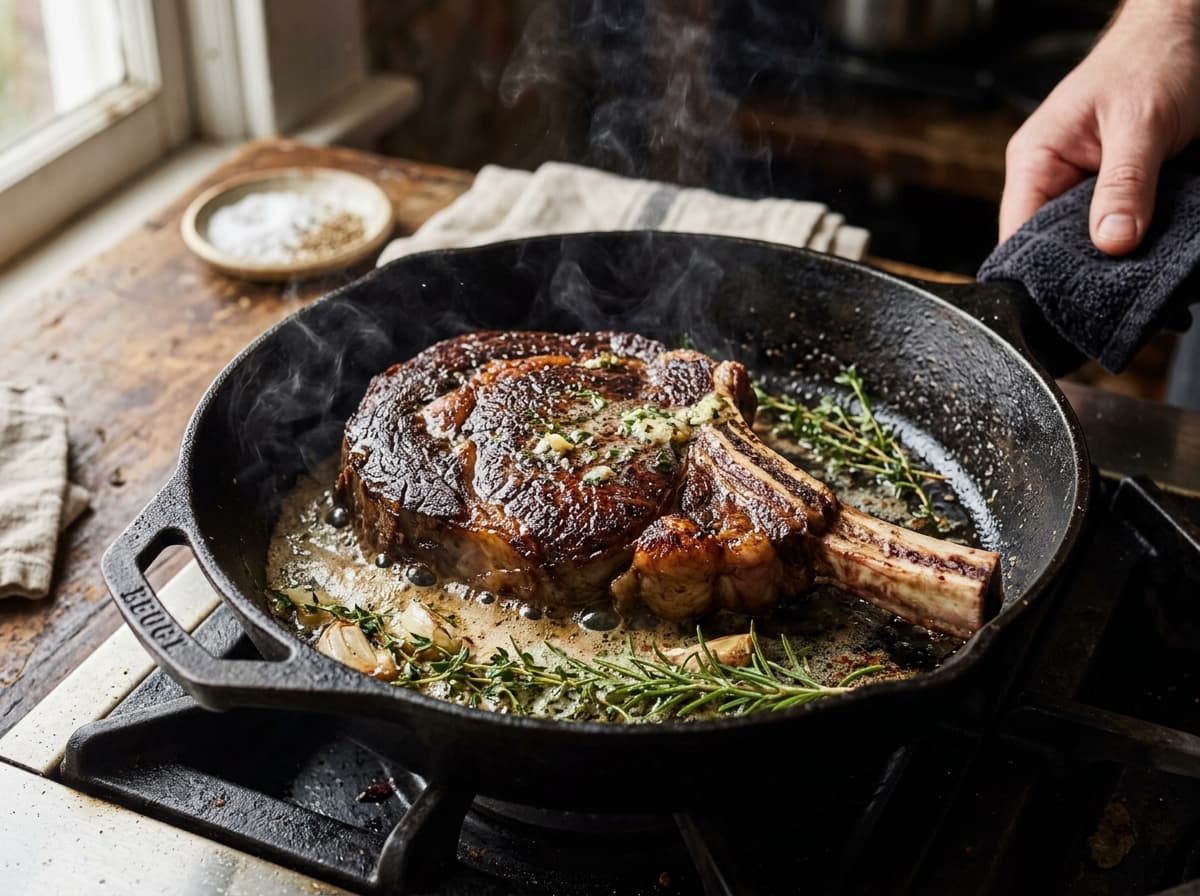
Cast Iron Butter-Basted Ribeye Steak
Restaurant-quality steakhouse sear with garlic herb butter pan basting in 8 minutes.