All Field Guides (85)SPEC NO: BLOG-020
Kitchen Hardware & Physics6 MIN READ•UPDATED 2026-08-28
The Physics of Crispy French Fries: Starch Gelatinization, Parboiling, and Double Frying
Why raw potatoes in an air fryer end up hollow and leathery instead of glass-crunchy
AUTHORED BY: Meal Instructions Research Team
VERIFIED CULINARY PHYSICS
EXECUTIVE SUMMARY // CORE TECHNICAL PRINCIPLES
- [1]Raw potato starches (amylose and amylopectin) are rigid crystalline granules that cannot crisp properly without prior hydration and gelatinization.
- [2]Parboiling in salted water with 1 tbsp vinegar gelatinizes surface starches while pectin remains structurally firm, preventing fries from turning to mush.
- [3]Vigorously shaking the drained parboiled potatoes creates a mashed-potato slurry on the exterior that hardens into thousands of crisp micro-craters.
- [4]A two-stage cook (325°F to dehydrate, followed by 400°F to blister) yields fries that stay crisp for 30 minutes.
The Double Starch Problem in Raw Potatoes
Potatoes (especially Russet / Idaho varieties) are dense storage organs packed with starch granules.
If you slice a raw potato and throw it straight into an air fryer or hot oil:
- Water on the exterior evaporates, forming a tough, leathery skin.
- Steam builds inside the raw center with nowhere to go, puffing the skin into a hollow bubble.
- Once removed from heat, steam cools and condenses, leaving you with limp, greasy, soggy fries.
The Three-Phase Starch Gelatinization Protocol
- Phase 1: The Acidified Parboil (Gelatinization & Pectin Preservation):
- Cut Russet potatoes into 3/8-inch batons.
- Submerge in cold water with 1 tbsp Diamond Crystal Kosher salt and 1 tbsp white vinegar.
- Bring to a boil and cook for 8–10 minutes until barely fork-tender.
- The Science: Vinegar lowers water pH. Acid strengthens pectin (the plant cell glue), allowing starch to gelatinize fully without the fry breaking apart.
- Phase 2: The Colander Shake (Micro-Fissuring):
- Drain the fries in a colander. Let steam evaporate for 2 minutes.
- Shake the colander vigorously.
- The Science: The tumbling action bruises the soft exterior, creating a thin layer of starch slurry and micro-fissures across every surface.
- Phase 3: The High-Heat Convection Blister:
- Toss with 1 tbsp avocado oil.
- Air fry at 400°F for 14–16 minutes, shaking every 4 minutes.
- The rough starch slurry fries into a brittle, glass-like golden crust around a fluffy baked-potato interior.
RELATED INTERACTIVE KITCHEN ENGINES
Technical FAQ
Q: Why Russet potatoes instead of Yukon Gold or Red potatoes?
Russet potatoes have the highest starch content (high solids, low sugar, low moisture). High starch creates a light, fluffy interior and a thick crisp shell. Waxy red potatoes have too much moisture and sugar, burning before crisping.
Tested Application Recipes
ZERO FLUFF // DIRECT EXECUTION0021
chickenair fryer
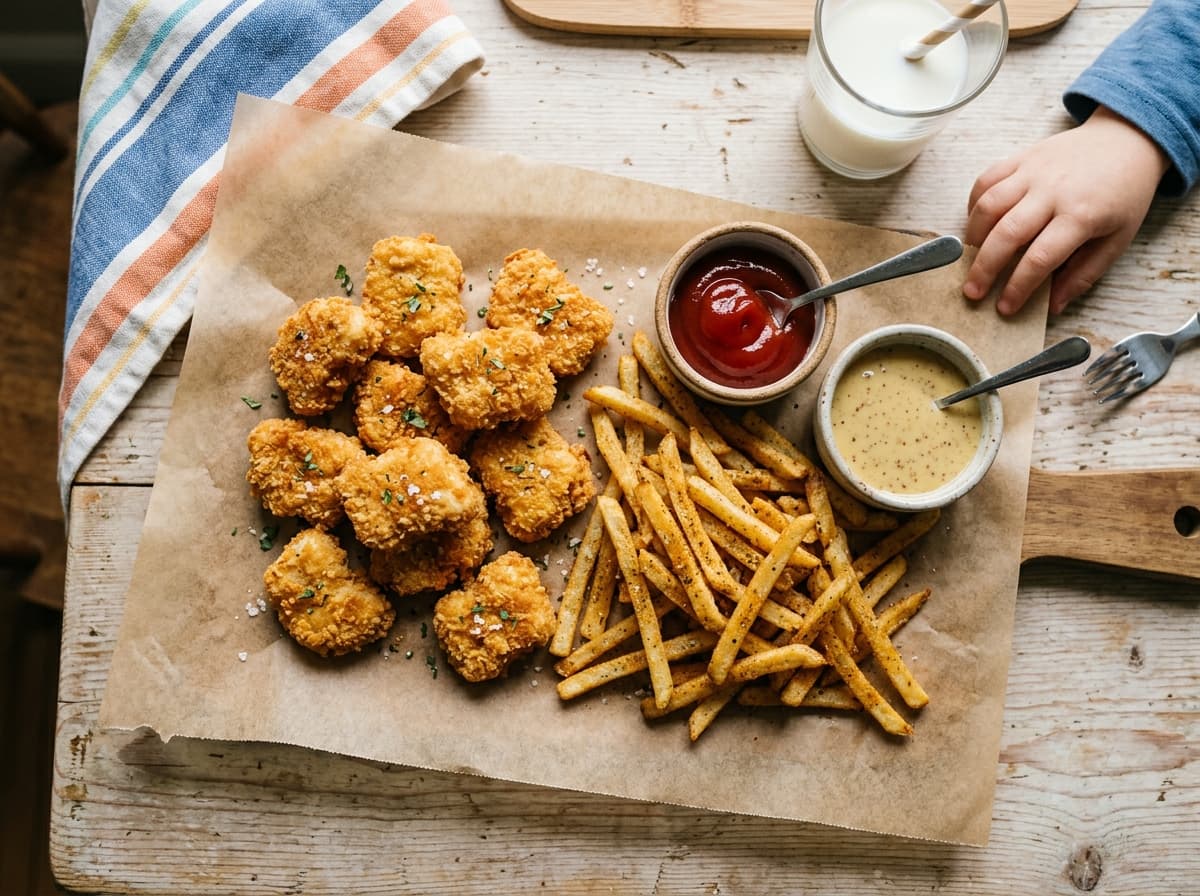
Air Fryer Frozen Chicken Nuggets & Fries
Cook frozen dinosaur nuggets and crispy shoestring fries in a single basket simultaneously with zero soggy spots.
TEMP400°F
TIME13 MIN
PROTEIN22G
Dead Simple
DIRECTIONS0001
chickenair fryer
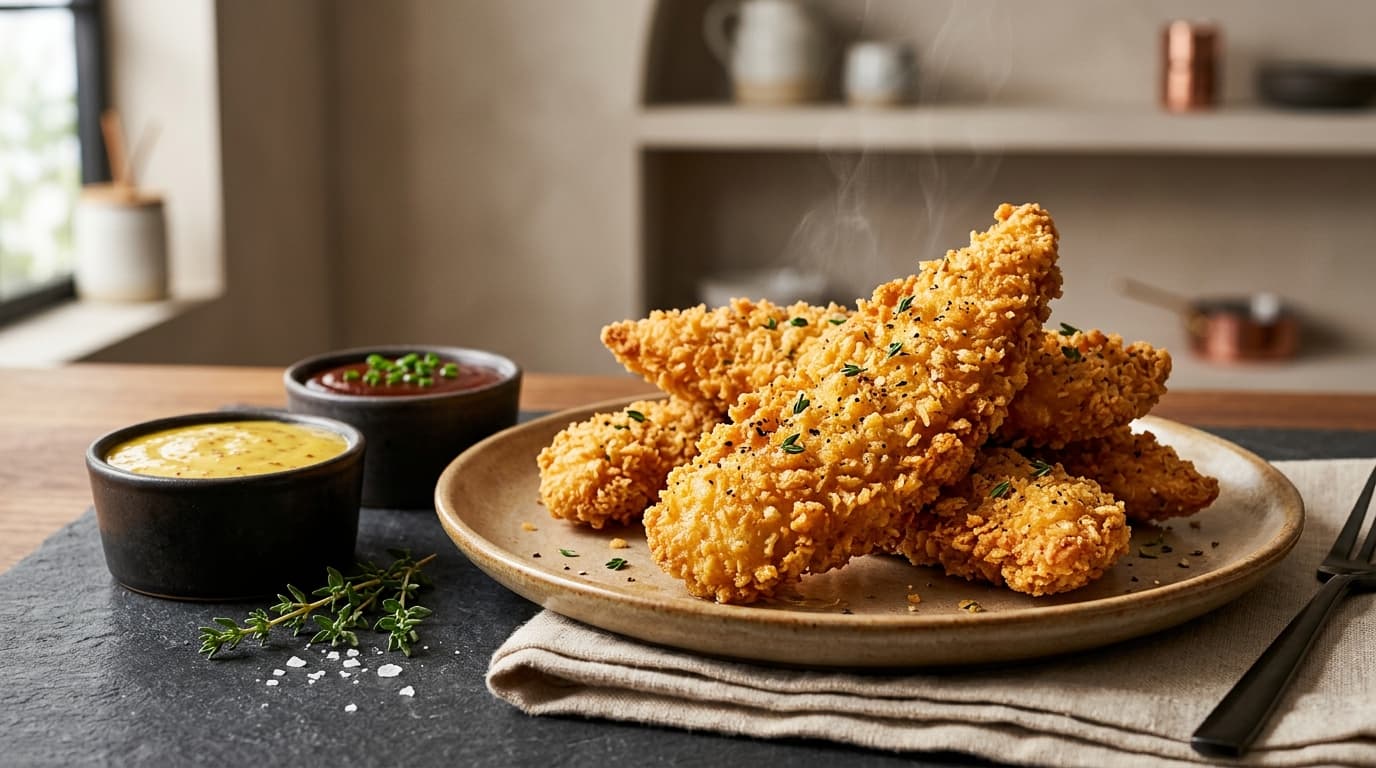
Crispy Air Fryer Chicken Tenders
Golden panko crunch outside, juicy inside in 10 minutes with zero hot oil splatter.
TEMP400°F
TIME15 MIN
PROTEIN42G
Dead Simple
DIRECTIONSVerified Cook-Time Datasheets
LAB-TESTED // EXACT SPECSMore Field Guides & Science
View All 50Kitchen Hardware & Physics
6 MIN READREAD →Air Fryer Convection Physics: How Boundary Layer Airflow Cuts Cooking Times
Kitchen Hardware & Physics
6 MIN READREAD →Cast Iron vs Carbon Steel vs Stainless Steel: Thermal Mass and Heat Retention
Kitchen Hardware & Physics
5 MIN READREAD →