Air Fryer Convection Physics: How Boundary Layer Airflow Cuts Cooking Times
Why high-velocity cyclone air cooks food 20% faster at 25°F lower temperatures than conventional ovens
- [1]In a conventional oven, evaporating moisture forms an insulating, stagnant "boundary layer" of cool air around food, slowing heat transfer.
- [2]An air fryer fan circulates air at high velocity (up to 2,000 RPM), violently stripping away the boundary layer and delivering direct convective thermal flux.
- [3]The Universal Air Fryer Conversion Rule: Reduce oven temperature by 25°F (15°C) and reduce cook time by 20%.
- [4]Overcrowding the basket blocks vertical airflow, converting your high-speed convective roaster into an inefficient steamer.
The Insulating Boundary Layer Problem
When food cooks in a standard conventional oven, the heat converts surface moisture into water vapor. In still air, this vapor forms a microscopic cushion of cool, humid air—known in fluid dynamics as the thermal boundary layer—resting directly against the food.
This boundary layer acts as a thermal insulator:
- Radiant heat from distant oven coils must slowly conduct through this stagnant layer.
- Heat transfer rates are relatively slow.
- Food takes 30 to 45 minutes to brown and crisp.
The Cyclone Convection Solution
An air fryer is not a deep fryer; it is an ultra-compact, high-velocity convective wind tunnel:
- A high-wattage heating element (typically 1,500W–1,800W) sits directly above a perforated basket in a small 4–6 quart chamber.
- A powerful fan directly above the coil spins at high RPM, forcing superheated air downwards through the food and recirculating it up through the perforated sides.
- This turbulent airflow strips away the boundary layer continuously, exposing raw food directly to constant, high-energy convective heat.
The convective heat transfer coefficient in an air fryer is 3 to 4 times higher than in a standard oven.
The Universal Oven-to-Air-Fryer Conversion Formula
To convert any standard oven recipe for the air fryer:
| Food Item | Standard Oven Spec | Air Fryer Convection Spec | Time Saved |
|---|---|---|---|
| Chicken Wings | 425°F for 45 mins | 390°F for 20 mins | 25 mins (55% faster) |
| Salmon Fillet (6 oz) | 400°F for 18 mins | 375°F for 9 mins | 9 mins (50% faster) |
| Frozen French Fries | 425°F for 24 mins | 400°F for 14 mins | 10 mins (42% faster) |
| Pork Chops (1-inch) | 375°F for 22 mins | 375°F for 12 mins | 10 mins (45% faster) |
The Overcrowding Trap
The most common air fryer failure is basket overcrowding.
If you stack chicken thighs or pile fries three layers deep:
- Airflow is physically blocked.
- Escaping steam cannot vent through the exhaust ports.
- The machine functions as a steam chamber, resulting in soggy, pale, rubbery food.
Rule: Keep food in a single layer with at least 1/4-inch space between pieces. Cook in two fast batches rather than one overloaded batch.
Technical FAQ
Q: Do I really need to preheat an air fryer?
For small cuts like tenders, bacon, or fries, preheating is optional (adds only 1–2 minutes). For thick steaks, burgers, or pork chops where you want immediate surface browning, preheating for 3 minutes at maximum temp ensures instant crust development.
Tested Application Recipes
ZERO FLUFF // DIRECT EXECUTION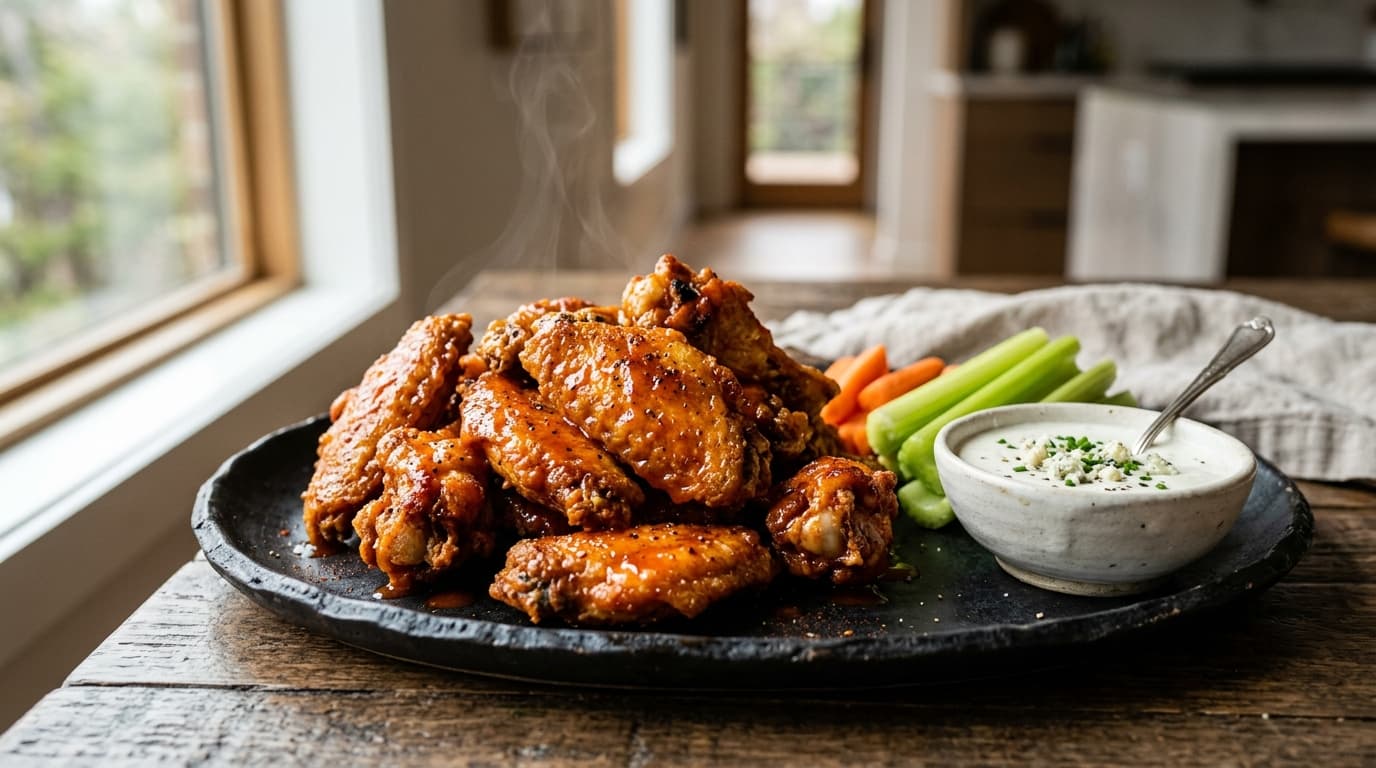
Air Fryer Crispy Garlic Parmesan Wings
Deep-fry crunch without hot oil, tossed in melted garlic butter and aged parmesan.
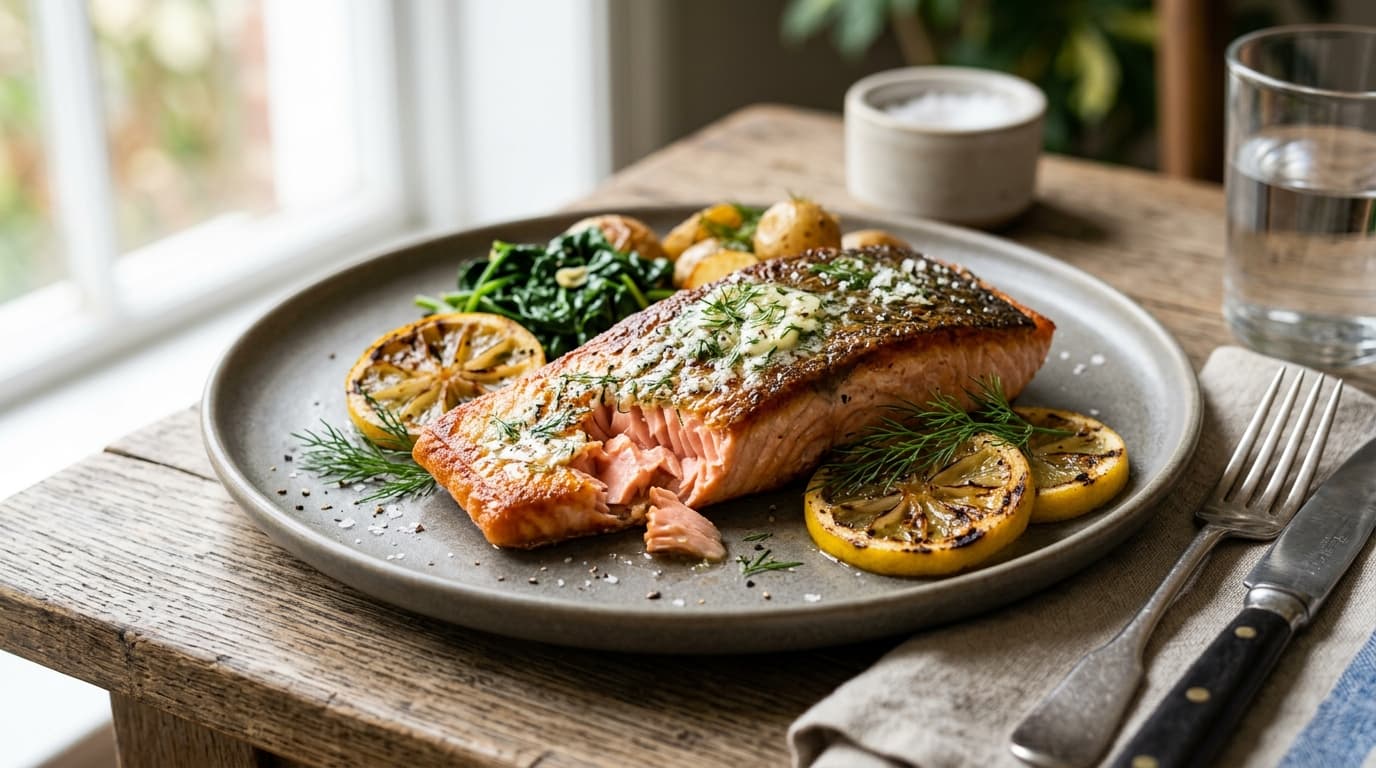
10-Minute Garlic Butter Air Fryer Salmon
Buttery, flaky salmon with crispy skin and garlic herb crust in under 10 minutes.
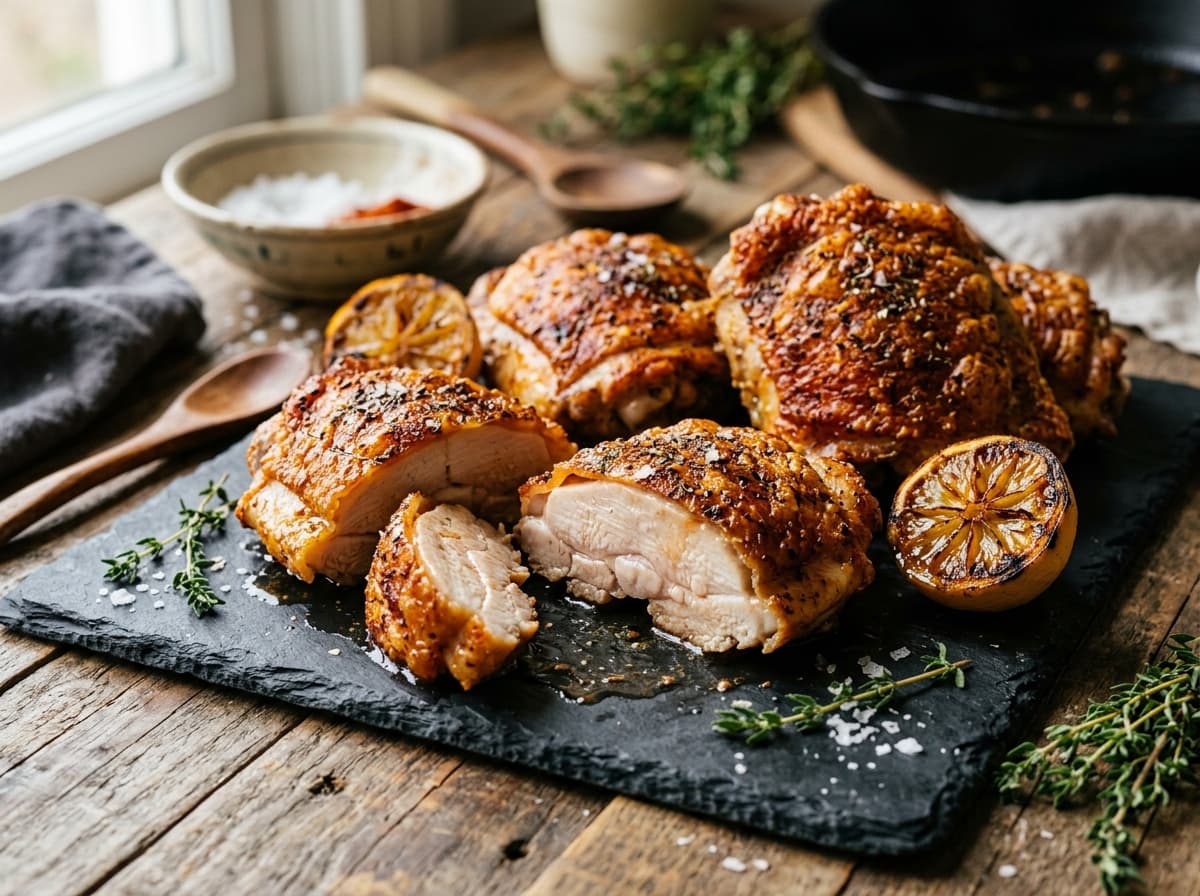
Air Fryer Crispy-Skin Bone-In Chicken Thighs
Shatteringly crisp chicken skin on the outside with fall-apart juicy meat inside using the cheapest cut in the poultry aisle.