Cast Iron vs Carbon Steel vs Stainless Steel: Thermal Mass and Heat Retention
Choosing the right pan based on thermal conductivity, volumetric heat capacity, and pan reactivity
- [1]Cast iron has high volumetric heat capacity; when a cold 1-lb steak hits it, the pan temperature barely drops, guaranteeing an instant sear.
- [2]Carbon steel offers 80% of cast iron's thermal mass with half the weight and much faster response to burner adjustments.
- [3]Stainless steel is non-reactive (impervious to acidic tomato or wine sauces) and forms superior fond for pan reductions.
- [4]Cast iron and carbon steel heat unevenly due to poor thermal conductivity; always preheat them for 5–7 minutes on medium heat to eliminate hot spots.
The Material Science of Cookware Metals
Every skillet material represents a unique trade-off between thermal conductivity (how fast heat travels across the metal) and volumetric heat capacity (how much thermal energy the pan stores).
| Material | Thermal Conductivity | Heat Retention (Thermal Mass) | Reactivity (Acid Safe?) | Best Use Case |
|---|---|---|---|---|
| Cast Iron | Low (~52 W/m·K) | Extreme (Very Heavy) | Reactive (Degrades with long acid simmers) | Thick steaks, smash burgers, cornbread |
| Carbon Steel | Low (~54 W/m·K) | Moderate–High | Reactive (Requires seasoning) | Eggs, stir-fries, fish searing, sautéing |
| Tri-Ply Stainless | High (Alu core ~237) | Moderate | Non-Reactive (100% Acid Safe) | Pan sauces, deglazing, braises, chicken cutlets |
| Enameled Cast Iron | Low (Iron core) | Extreme | Non-Reactive (Glass Shield) | Dutch oven stews, chili, tomato sauces |
When to Use Cast Iron
Cast iron is a thermal battery. A typical 12-inch cast iron skillet weighs 8 lbs.
- When you drop a cold 1.5-inch ribeye into a preheated 450°F cast iron pan, the pan's vast thermal reserve prevents the surface temperature from crashing.
- Use cast iron whenever you need maximum Maillard crust on high-density proteins.
When to Use Stainless Steel (Tri-Ply)
Stainless steel consists of an aluminum or copper core sandwiched between layers of 18/10 stainless steel.
- Proteins naturally stick slightly to stainless steel before releasing, creating a rich golden residue on the pan floor called fond.
- Deglazing this fond with wine, broth, or lemon juice yields luscious pan sauces that cannot be safely made in bare seasoned cast iron (where acids strip the seasoning layer).
When to Use Carbon Steel
Carbon steel is composed of 99% iron and 1% carbon (pressed thin rather than cast).
- It develops a slick, nonstick polymerized oil patina just like cast iron.
- It heats and cools in 1/3 the time of heavy cast iron, making it ideal for delicate fish, eggs, and rapid weeknight vegetable sautés.
Technical FAQ
Q: Can I wash seasoned cast iron with dish soap?
Yes! Modern dish soap contains mild surfactants that dissolve food oils, but will NOT harm the polymerized oil seasoning layer (which is a hardened plastic-like polymer bonded to the iron). The myth originated in the 1800s when soap contained lye (sodium hydroxide), which does strip seasoning.
Tested Application Recipes
ZERO FLUFF // DIRECT EXECUTION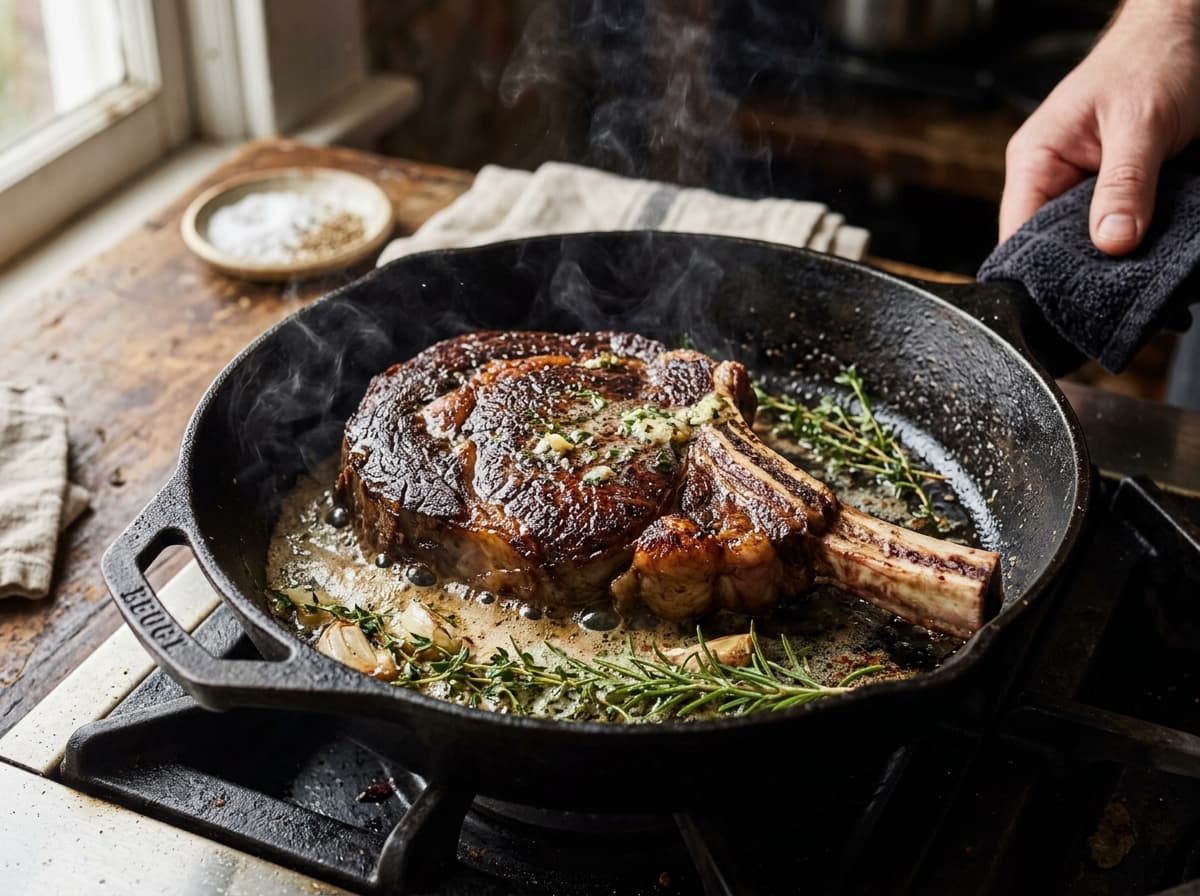
Cast Iron Butter-Basted Ribeye Steak
Restaurant-quality steakhouse sear with garlic herb butter pan basting in 8 minutes.
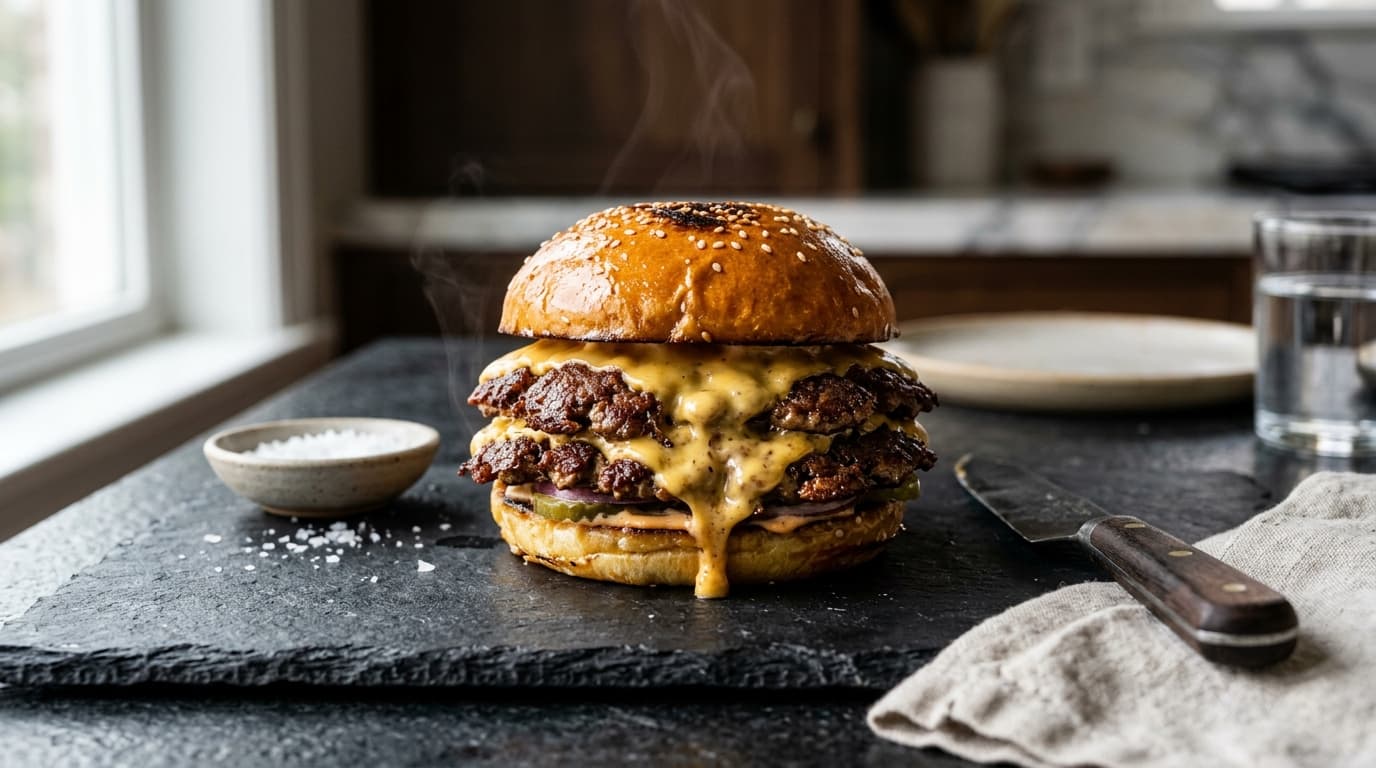
Cast-Iron Lacy-Edge Smash Burgers
Ultra-crispy caramelized edges, double American cheese, and secret burger sauce in 5 minutes.
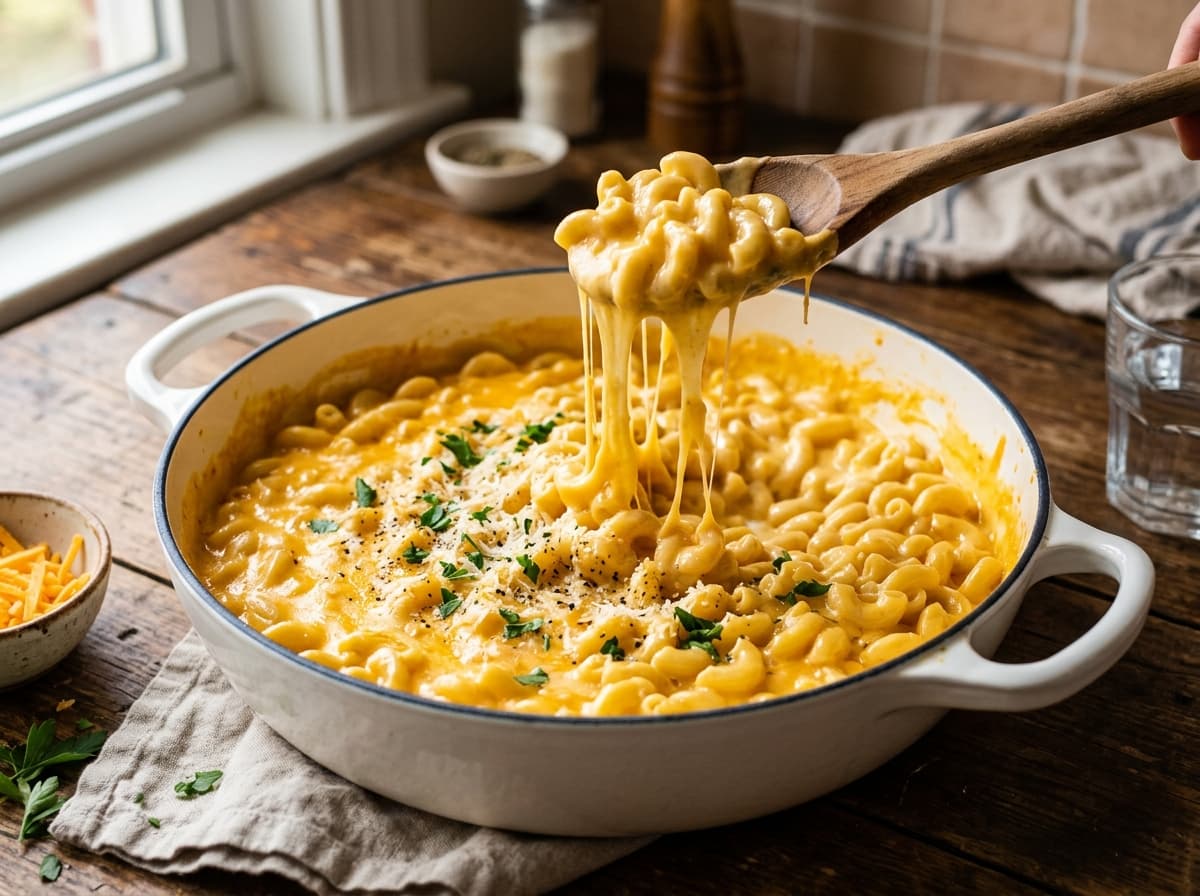
One-Pot Dutch Oven Mac & Cheese
Ultra-creamy stovetop macaroni and cheese where the pasta cooks directly in milk and water — zero draining, zero roux, ready in 15 minutes.