The Chemistry of Seasoning Cast Iron: Polymerization of Polyunsaturated Fats
How heating unsaturated fatty acids past their smoke point creates a slick, hydrophobic polymer shield
- [1]Seasoning is the product of oil polymerization and carbonization under heat (400°F–500°F), forming a tough, slick, hydrophobic cross-linked plastic.
- [2]Oils high in polyunsaturated fatty acids (like grapeseed, sunflower, or canola) contain multiple double carbon bonds that cross-link aggressively into durable matrices.
- [3]The #1 seasoning mistake is using too much oil; wipe the pan so dry it looks bare before baking, or you will get sticky, gummy brown splotches.
- [4]Three ultra-thin coats baked at 450°F for 1 hour provide a lifelong corrosion-resistant nonstick base.
What Seasoning Actually Is
Seasoning is not a layer of dried cooking oil or grease.
Seasoning is a synthetic-like, cross-linked bio-polymer created through two sequential chemical reactions:
- Thermal Polymerization: When an unsaturated oil is heated past its smoke point, fatty acid double bonds break and form free radicals. These radicals bond with adjacent fatty acid chains, cross-linking into a rigid, solid three-dimensional polymeric matrix.
- Pyrolysis & Carbonization: Further heating drives off volatile organic components, leaving carbon-reinforced polymer locked microscopically into the porous crystalline structure of the cast iron.
The resulting surface is slick, hydrophobic (water-repelling), and chemically resistant.
The Science of Selecting the Best Seasoning Oil
Oils are categorized by their iodine value (the measure of unsaturation / available double bonds):
| Oil Type | Polyunsaturated Fat % | Iodine Value | Seasoning Suitability |
|---|---|---|---|
| Grapeseed Oil | 70% | 130–140 | Best overall (Durable, smooth, high smoke point 420°F) |
| Canola Oil | 28% | 110–120 | Excellent budget choice (Reliable, accessible) |
| Flaxseed Oil | 73% | 175–200 | Good hardness, but prone to flaking if applied thick |
| Lard / Bacon Grease | 10%–12% | 50–65 | Poor (Low polymer density, leaves sticky residue) |
| Olive Oil / Butter | <10% | Low | Unsuitable (Smokes low, burns, fails to polymerize cleanly) |
The 4-Step Flawless Seasoning Protocol
- Step 1: Clean & Strip: Scrub the skillet with warm water, soap, and a stiff brush. Dry completely on the stovetop over low heat for 5 minutes.
- Step 2: Micro-Coat with Grapeseed Oil: Add 1/2 teaspoon of grapeseed oil to the warm pan. Rub it over every surface (inside, outside, handle) with a paper towel.
- Step 3: The "Dry Wipe" Rule: Take a clean, dry cloth or paper towel and wipe the pan vigorously as if trying to remove all the oil. The metal should look completely matte and dry. (Microscopic oil trapped in the iron pores is all that is needed).
- Step 4: Bake at 450°F for 60 Minutes: Place the pan upside down in an oven preheated to 450°F (232°C). Bake for 1 hour, then turn off the oven and allow it to cool completely inside.
Technical FAQ
Q: Why is my newly seasoned pan sticky and spotted?
You used too much oil. The excess oil pooled into droplets before it could polymerize, creating gummy, semi-cured spots. Scrub with coarse kosher salt and a scouring pad, wipe 100% dry, and re-bake.
Tested Application Recipes
ZERO FLUFF // DIRECT EXECUTION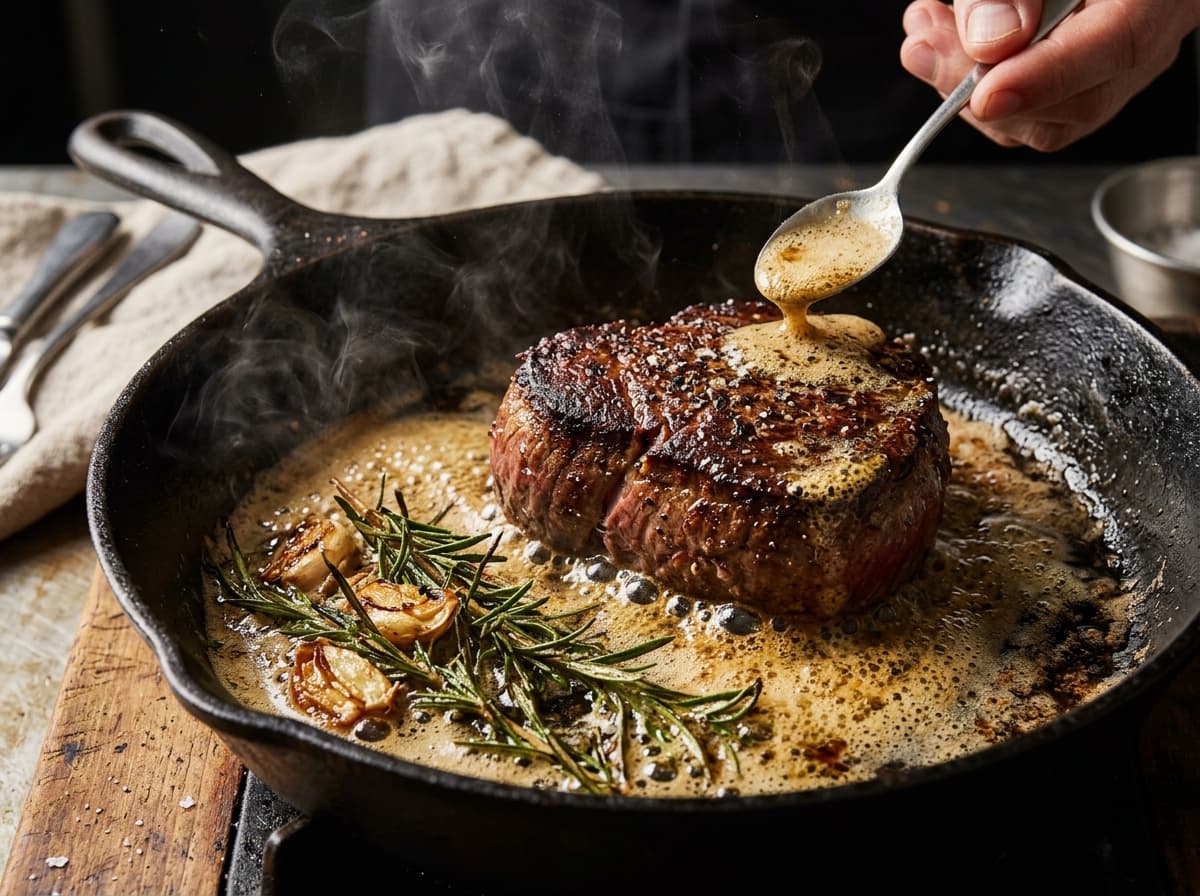
Cast Iron Filet Mignon
Tender 8-ounce beef tenderloin steaks seared in screaming-hot cast iron and basted in foaming garlic rosemary butter in 8 minutes.
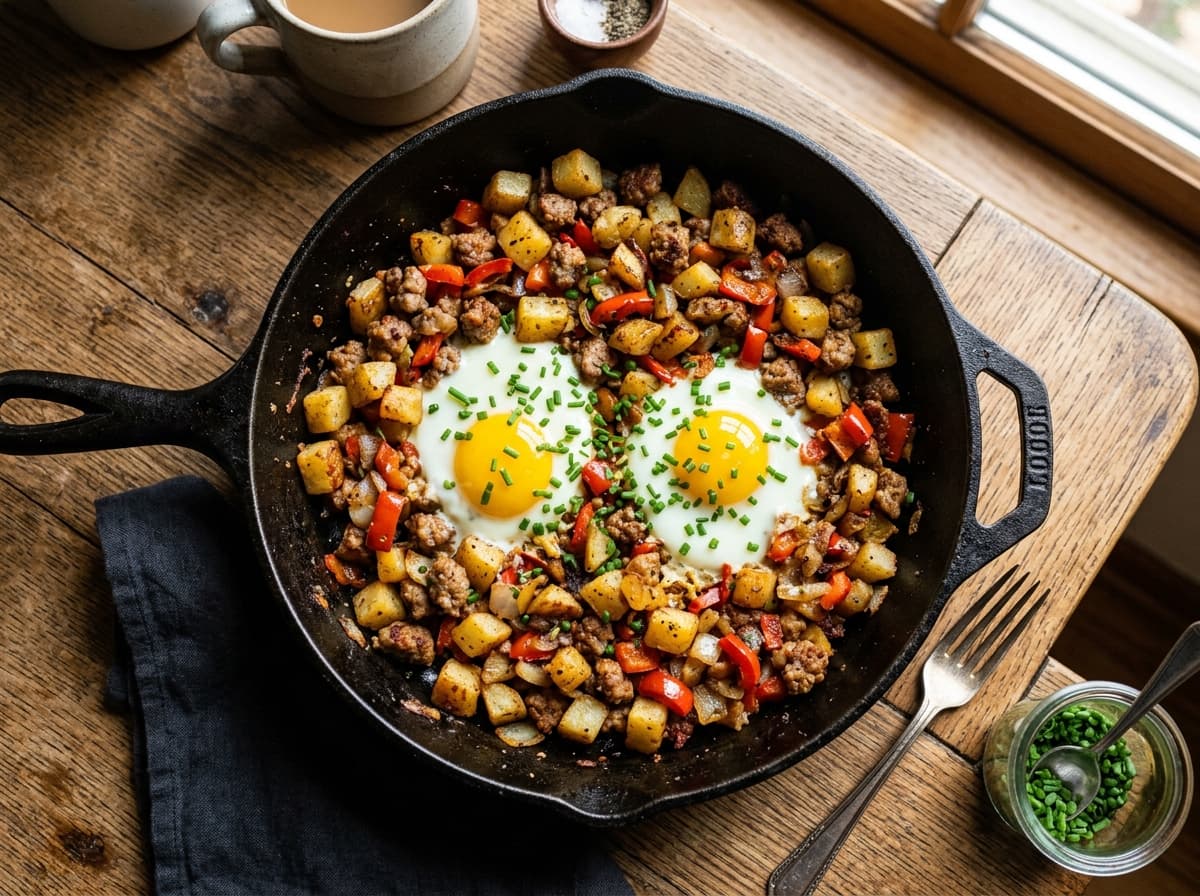
Cast Iron Breakfast Hash & Eggs
Crispy diced potatoes fried in rendered bacon fat with peppers, onions, and sunny-side-up eggs cooked right in the skillet.
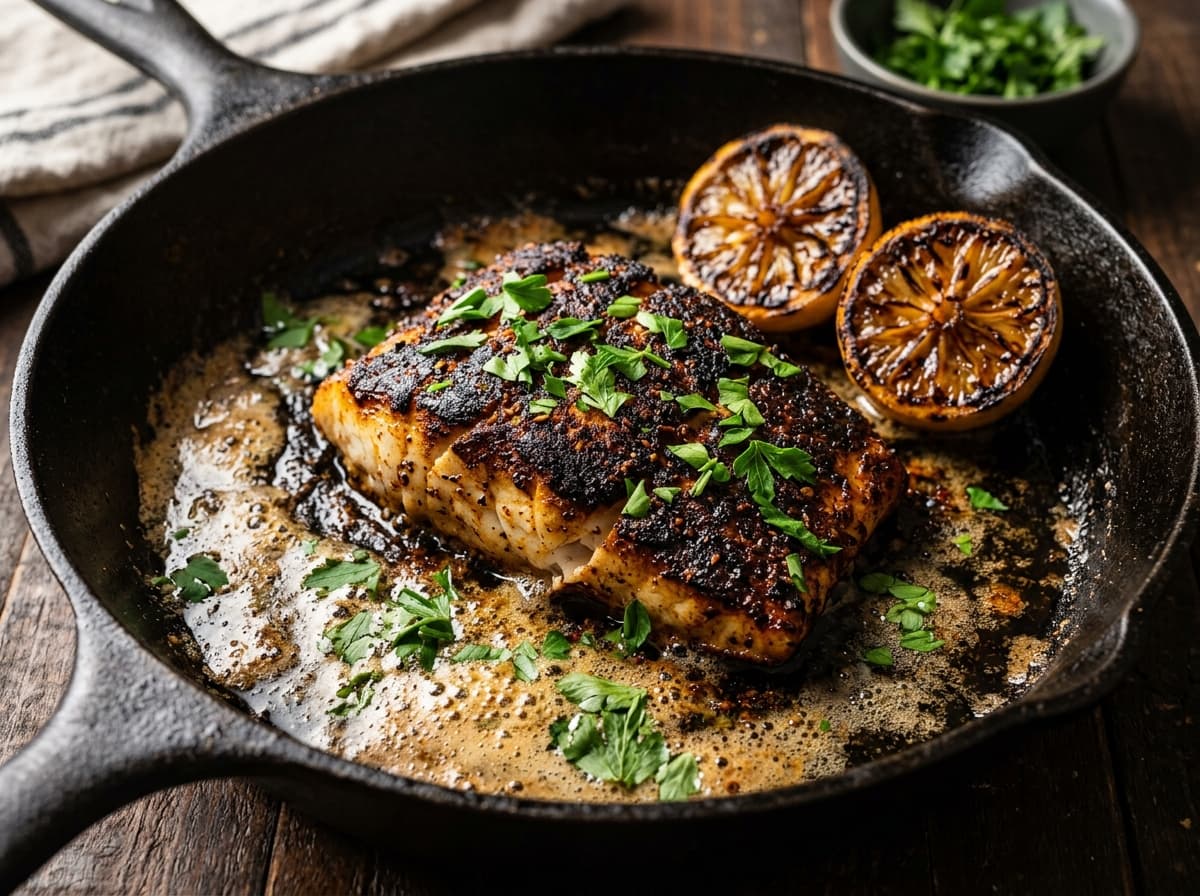
Cast Iron Blackened Cod
Tender flaky wild cod fillets coated in Cajun spices and seared in screaming-hot cast iron butter for restaurant-style blackened fish in 8 minutes.