Pan Deglazing Physics: Solubilizing Maillard Fond with Acidic and Aqueous Liquids
The science of converting stuck browned proteins into restaurant-grade pan sauces
- [1]Fond (French for "base") is the caramelized layer of browned proteins, amino acids, and sugars bonded to the pan bottom.
- [2]Aqueous liquids (stock, wine, vinegar, water) act as polar solvents, breaking the electrostatic bonds between fond and stainless steel.
- [3]Deglazing immediately drops the pan surface temperature, creating steam that physically lifts the caramelized fond from the metal.
- [4]Monter au beurre (swirling cold butter off the heat) forms a stable oil-in-water emulsion that thickens the sauce without flour or cornstarch.
What Is Fond?
When meat or vegetables are seared in a stainless steel or enameled cast iron pan, juices containing proteins, sugars, and gelatin drip onto the hot metal. As water evaporates, these compounds undergo intense Maillard reactions, dehydrating into a deep golden-brown glaze welded to the pan.
This is fond. It is not burnt food—it is the most concentrated reservoir of savory umami flavor in the entire cooking process.
The Chemical Physics of Deglazing
- Polar Solvent Dissolution:
- Fond compounds are polar and water-soluble.
- When an aqueous liquid (dry white wine, chicken stock, bourbon, cider vinegar) hits the hot pan, liquid molecules penetrate the crystalline fond structure and dissolve it back into solution.
- Thermal Steam Lift:
- The cold liquid causes the metal pan to contract microscopically while generating high-pressure steam at the pan base.
- This thermal shock lifts the fond instantly from the metal floor.
- Scraping:
- Use a flat-front wooden spatula to scrape the dissolved fond cleanly into the simmering reduction.
The 3-Minute Pan Sauce Protocol
| Stage | Action | Science |
|---|---|---|
| 1. Pour Out Excess Fat | Leave 1 tsp fat in pan; discard burned grease | Prevents sauce from turning oily |
| 2. Add Aromatics | Sauté 1 minced shallot for 45s on medium | Releases fat-soluble flavor compounds |
| 3. Deglaze & Reduce | Add 1/2 cup wine or stock; reduce by 75% | Evaporates water/alcohol, concentrating acids and fond |
| 4. Monter au Beurre | Remove from heat, swirl in 2 tbsp cold butter | Milk proteins in cold butter emulsify fat droplets into a glossy sauce |
Technical FAQ
Q: Why did my pan sauce separate and turn greasy?
You boiled the sauce after adding butter. Boiling breaks the delicate oil-in-water emulsion. Always swirl cold butter off the heat, or over the lowest possible setting.
Tested Application Recipes
ZERO FLUFF // DIRECT EXECUTION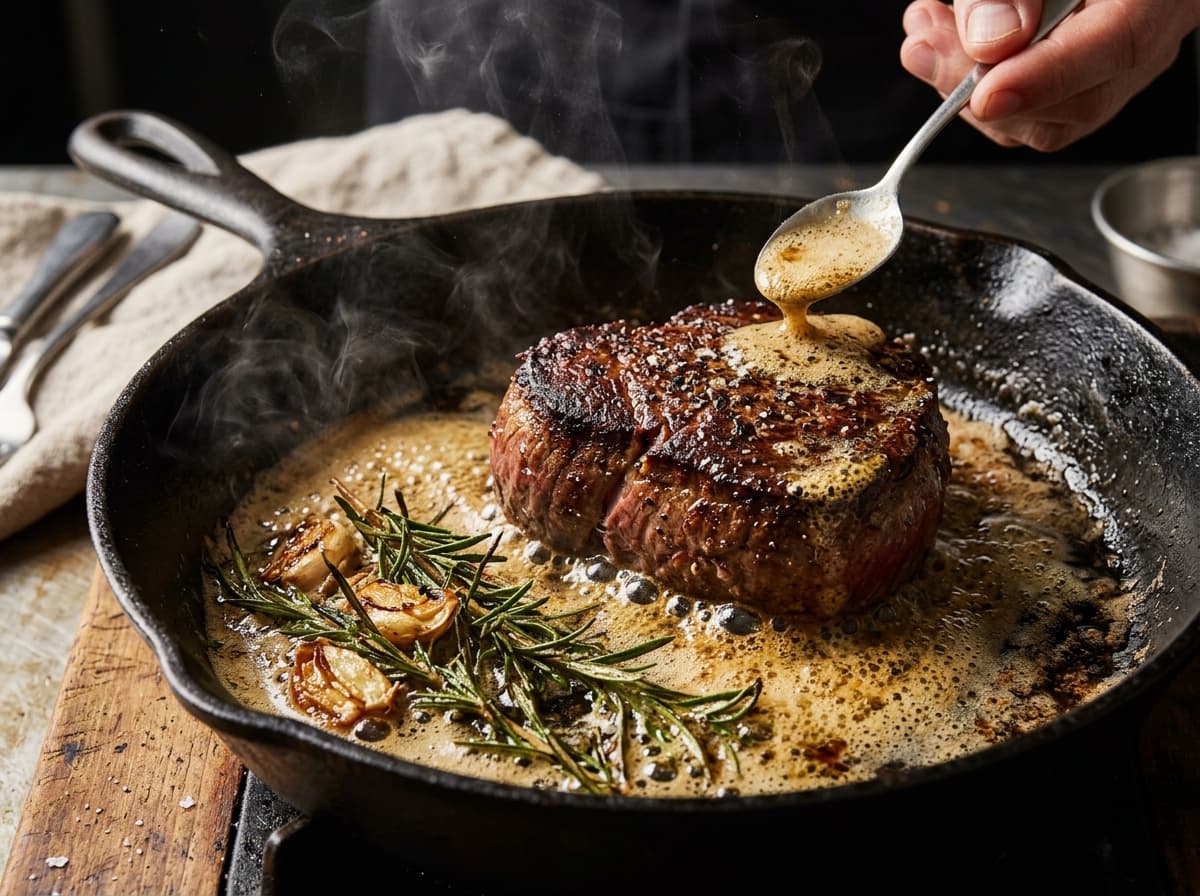
Cast Iron Filet Mignon
Tender 8-ounce beef tenderloin steaks seared in screaming-hot cast iron and basted in foaming garlic rosemary butter in 8 minutes.
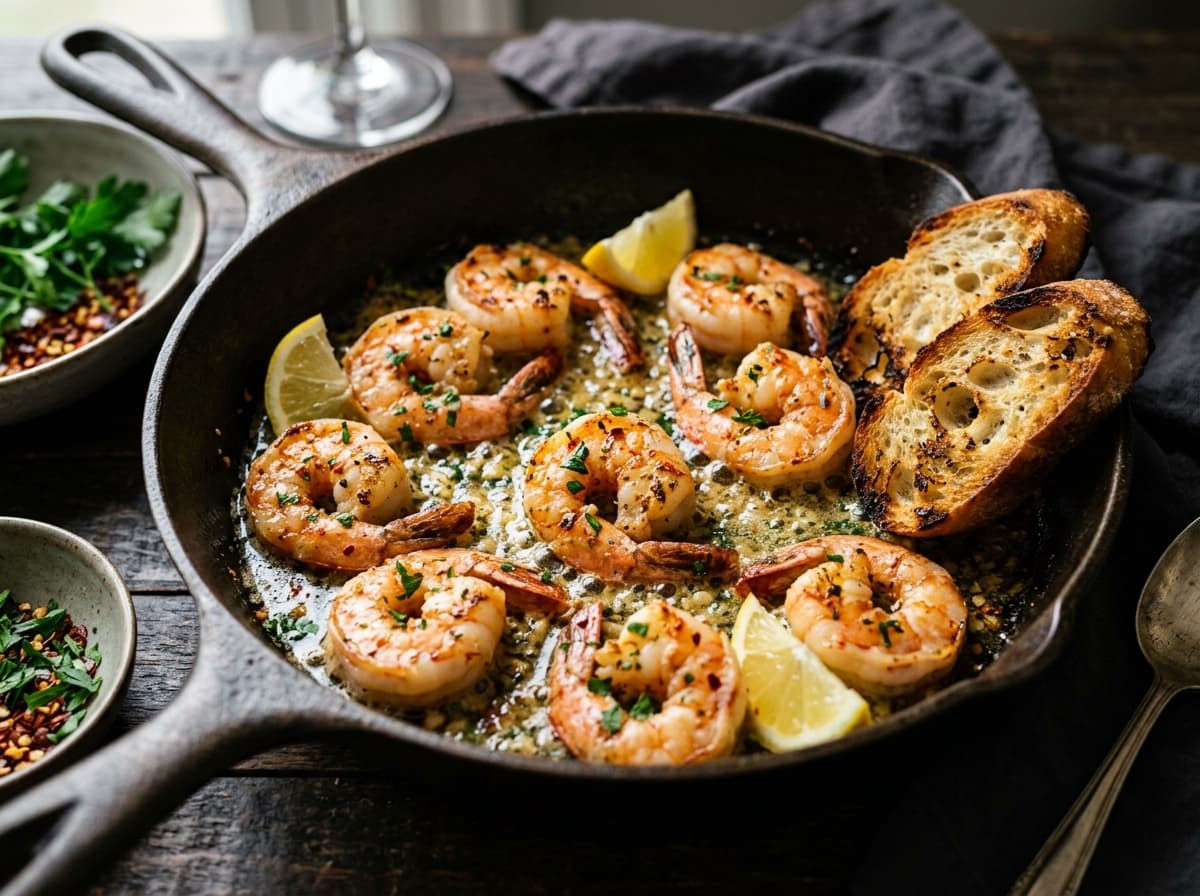
15-Minute Skillet Lemon Garlic Butter Shrimp
Sweet jumbo shrimp seared in foaming garlic herb butter with fresh lemon in 6 minutes.
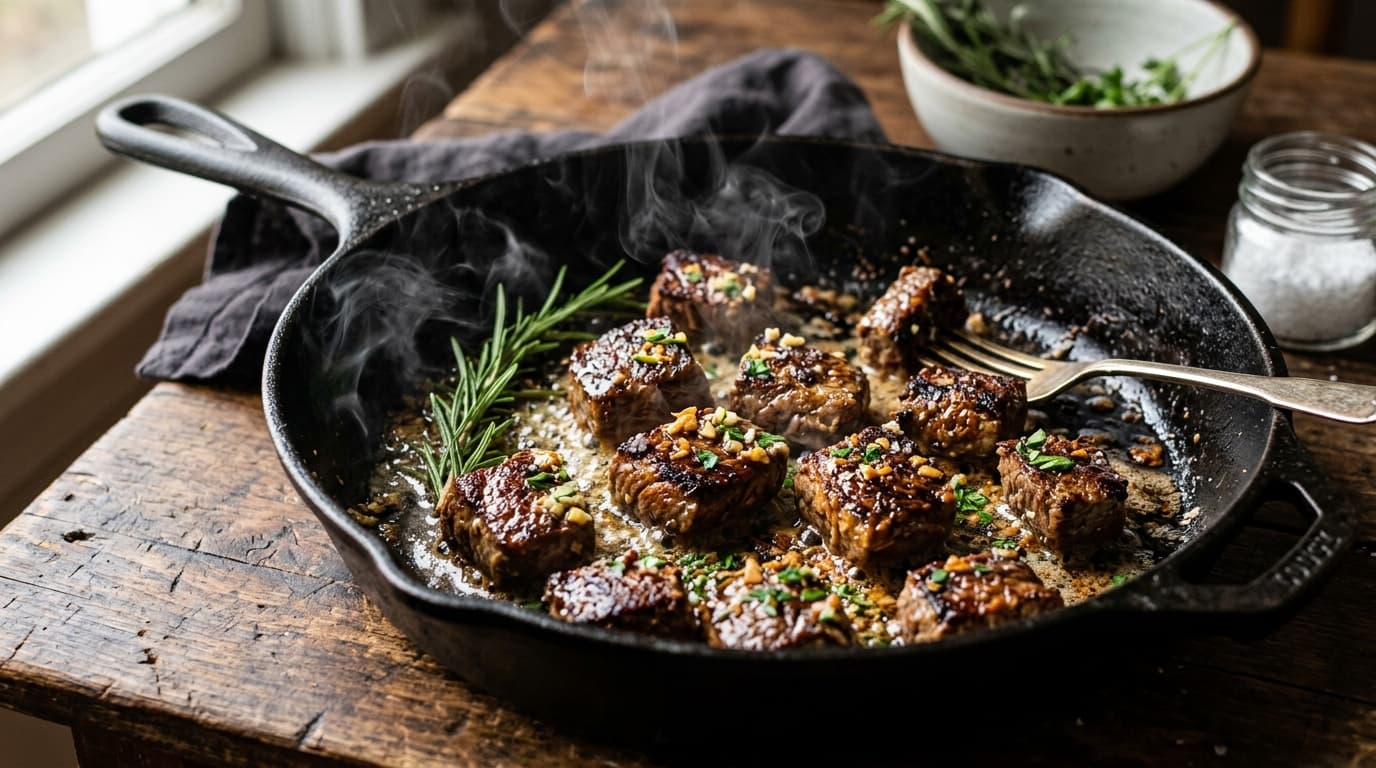
Skillet Steak Bites & Crispy Potatoes
Tender garlic butter sirloin steak cubes seared over high heat with crispy golden potato cubes in a single skillet in 15 minutes.