Smoke Point Chemistry of Cooking Fats: Ghee, Avocado Oil, Tallow, Butter, and Olive Oil
Free fatty acid breakdown, acrolein formation, and when to use saturated vs monounsaturated fats
- [1]A fat's smoke point is determined by its Free Fatty Acid (FFA) content, refinement level, and presence of water/proteins.
- [2]Whole butter burns at 320°F (160°C) due to milk solids (casein/whey); clarifying butter into Ghee raises the smoke point to 485°F (252°C).
- [3]Refined Avocado Oil has the highest smoke point of any common culinary fat at 520°F (271°C).
- [4]Rendered Beef Tallow (420°F) provides high thermal stability and rich savory flavor for smash burgers, fries, and cast iron steaks.
What Happens When Cooking Fat Smokes?
When a fat is heated, thermal energy begins to break the ester bonds holding the triglyceride molecules together, releasing Free Fatty Acids (FFAs) and glycerol.
As heating continues:
- Glycerol dehydrates into acrolein ($C_3H_4O$)—a volatile, pungent chemical that irritates eyes and mucous membranes.
- FFAs oxidize into free radicals, hydroperoxides, and polymeric resins.
- Food cooked in smoking oil acquires an acrid, bitter, burnt flavor.
The fewer free fatty acids in an oil (i.e., the higher its refinement and purity), the higher its smoke point.
The Master Culinary Fat Matrix
| Cooking Fat | Smoke Point | Primary Lipid Structure | Ideal Kitchen Role |
|---|---|---|---|
| Refined Avocado Oil | 520°F (271°C) | Monounsaturated (Oleic acid) | 500°F Cast Iron Searing, Air Fryer High Crisp |
| Ghee (Clarified Butter) | 485°F (252°C) | Saturated + Monounsaturated | High-Heat Sautéing, Fish Searing, Popcorn |
| Refined Coconut Oil | 450°F (232°C) | Saturated (Medium-chain) | High-Heat Roasting, Baking |
| Rendered Beef Tallow | 420°F (215°C) | Saturated + Monounsaturated | Smash Burgers, French Fries, Brisket Basting |
| Canola / High-Oleic Sunflower | 400°F–425°F | Monounsaturated / Poly | Neutral deep frying, general sauté |
| Extra Virgin Olive Oil (EVOO) | 375°F (190°C) | Monounsaturated (Rich Polyphenols) | Dressings, Finishing, Low-Heat Pan Roasting |
| Unsalted Whole Butter | 300°F–320°F | Saturated + Water + Milk Proteins | Final pan-basting, baking, scrambled eggs |
The Butter Paradox: Why Butter Basting Works
If butter burns at 320°F, why do top steakhouses baste steaks with butter in scorching cast iron?
The Secret Technique:
- Steaks are seared initially in high-smoke-point fat (tallow or avocado oil).
- Butter is added in the final 45–60 seconds after turning the heat down or removing the pan from the burner.
- The cold butter melts, and water in the butter rapidly boils, foaming and lowering the pan surface temperature to ~300°F.
- The milk solids brown gently into hazelnut-scented brown butter (beurre noisette) without burning black.
Technical FAQ
Q: Is it dangerous to cook with Extra Virgin Olive Oil on medium heat?
No. Despite having a moderate smoke point (375°F), EVOO is packed with natural antioxidants (polyphenols) that protect the monounsaturated fats from oxidizing during standard 350°F skillet cooking. It is only unsuitable for ultra-high heat searing above 400°F.
Tested Application Recipes
ZERO FLUFF // DIRECT EXECUTION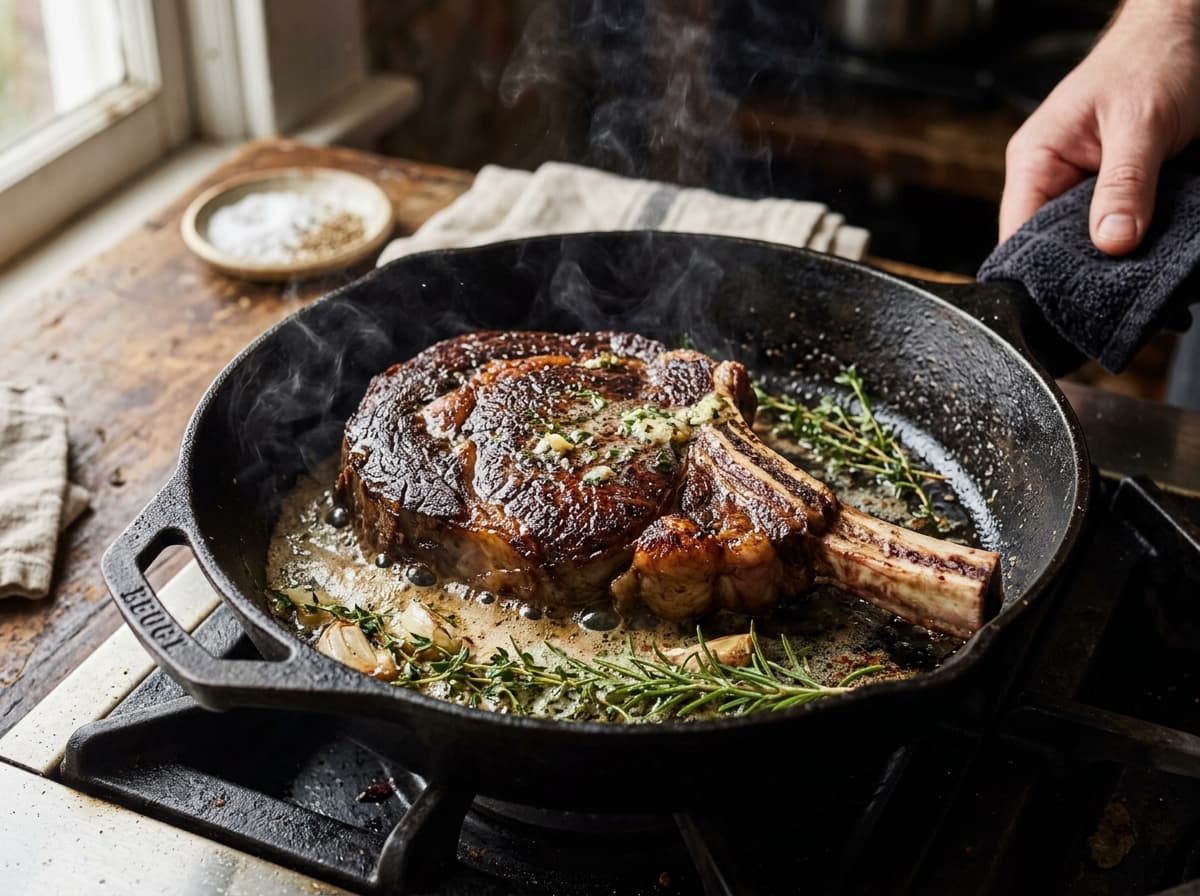
Cast Iron Butter-Basted Ribeye Steak
Restaurant-quality steakhouse sear with garlic herb butter pan basting in 8 minutes.
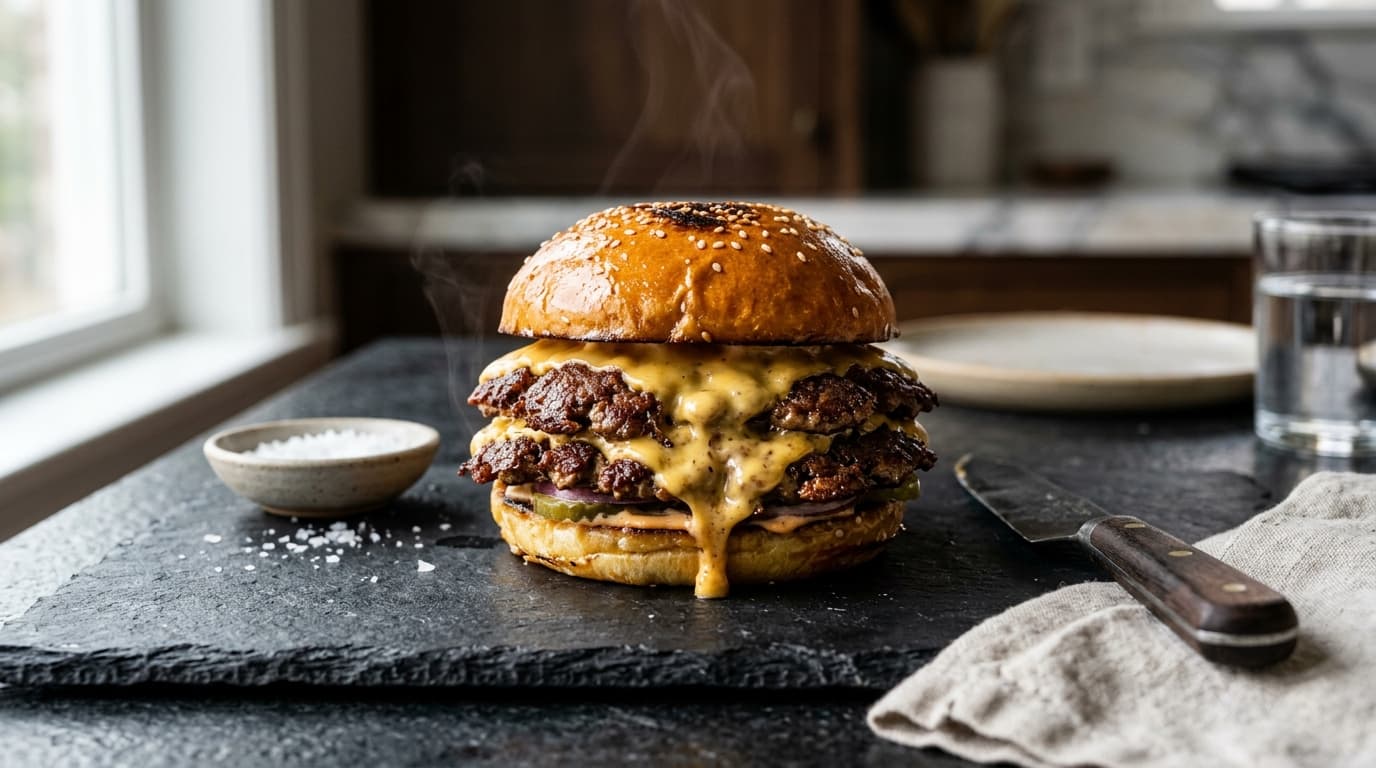
Cast-Iron Lacy-Edge Smash Burgers
Ultra-crispy caramelized edges, double American cheese, and secret burger sauce in 5 minutes.
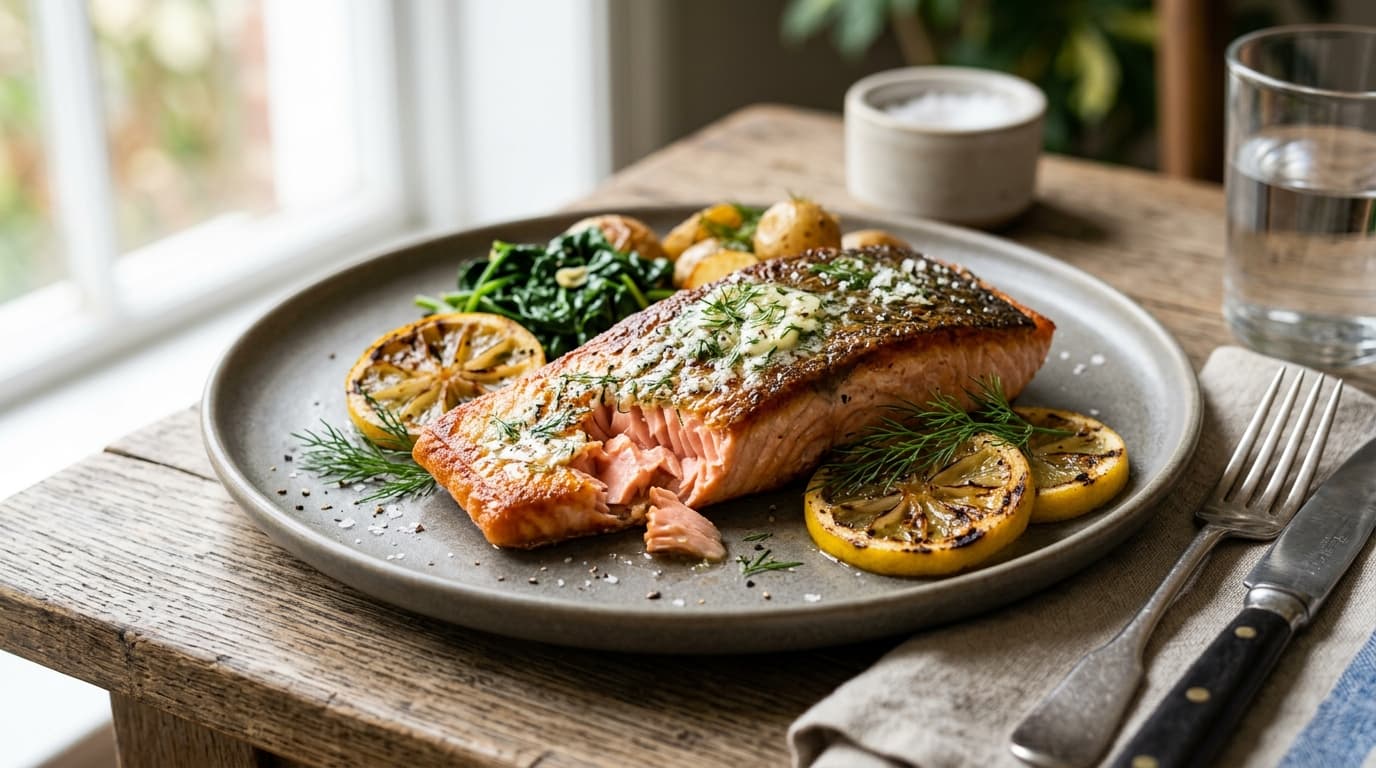
10-Minute Garlic Butter Air Fryer Salmon
Buttery, flaky salmon with crispy skin and garlic herb crust in under 10 minutes.