Why Wet Steaks Never Brown: The Surface Moisture Science of the Maillard Reaction
Thermodynamics of evaporative cooling and how surface dehydration creates glass-like crusts
- [1]The Maillard reaction requires temperatures between 280°F and 330°F (140°C–165°C) to synthesize melanoidin flavor compounds.
- [2]Surface moisture caps temperature at 212°F (100°C) due to water's latent heat of vaporization (2,260 J/g).
- [3]Patting dry with paper towels removes bulk water, but an uncovered refrigerator dry-brine for 12–24 hours creates an ultra-thin desiccated pellicle.
- [4]A dry surface browns in 90 seconds per side, preventing deep heat penetration and gray overcooked bands.
The 212°F Steam Ceiling
When meat hits a hot skillet, two competing thermodynamic processes begin:
- Evaporative Cooling: Liquid water absorbs thermal energy and converts to steam at 212°F (100°C).
- Maillard Browning: Amino acids and reducing sugars recombine above 280°F (140°C) to form hundreds of complex aromatic compounds.
Because water has an exceptionally high latent heat of vaporization (2,260 Joules per gram), every calorie of heat transferred from the cast iron pan is consumed turning surface moisture into vapor before the meat surface can exceed 212°F.
If your steak has even a thin film of surface moisture, you are not searing—you are boiling and steaming the meat in its own expelled juices. By the time the surface water finally evaporates, heat has conducted deep into the core, creating a thick, gray, overcooked ring of rubbery meat before any crust forms.
The Surface Pellicle: Why Dry-Brining Works
Paper towels remove bulk liquid on the surface, but cellular moisture quickly wicks back up through capillary action once heated.
To achieve true surface dehydration:
- Salt 12–24 Hours Ahead: Apply 1.0% kosher salt by weight (about 1/2 tsp Diamond Crystal per pound).
- Elevate on a Wire Rack: Place the meat on a wire cooling rack set inside a rimmed baking sheet.
- Uncovered in the Refrigerator: The cold, dry convective airflow of a modern refrigerator evaporates surface moisture, creating a tight, shiny outer layer called a pellicle.
When a dry-brined steak hits 450°F cast iron with a thin film of high-smoke-point fat, thermal conduction immediately drives the surface to 320°F+. Browning occurs in 60 to 90 seconds—fast enough to create an intense crunchy crust without overcooking the interior medium-rare center.
Step-by-Step Execution Protocol
| Step | Action | Physics / Rationale |
|---|---|---|
| 1. Salt & Rack | 12–24 hrs prior, salt at 1% by weight on wire rack | Salt extracts water via osmosis, dissolves, reabsorbs into muscle fibers |
| 2. Chill Uncovered | Keep exposed in fridge at 34°F–38°F | Low-humidity refrigeration air dehydrates outer 0.5mm layer |
| 3. Pan Preheat | Heavy cast iron at medium-high for 5–7 mins | Maximizes thermal mass to prevent pan temperature drop upon contact |
| 4. Fat Layer | 1 tsp beef tallow or avocado oil (smoke point >450°F) | Liquid fat fills microscopic air gaps between meat and pan metal |
| 5. High-Pressure Sear | 60–90 seconds per side with direct downward contact | Eliminates air pockets; fast crust formation minimizes gray band |
Troubleshooting Gray Steak
- Symptom: Gray exterior with zero crust.
- Cause: Wet meat surface or pan overcrowded.
- Fix: Next time, dry-brine overnight. If cooking immediately, pat with 4 changes of dry paper towels and sear in batches.
- Symptom: Smoking pan but burnt black spots instead of even golden crust.
- Cause: Pepper or dry herb rub scorched before meat browned.
- Fix: Only salt before searing. Add black pepper, garlic, and butter in the final 30 seconds of cooking.
Technical FAQ
Q: Can I sear a steak straight from the fridge?
Yes. In fact, a cold interior buys you more time to develop a heavy sear on the outside without overcooking the center. The old myth about leaving steak on the counter for an hour only raises internal temp by 3°F–5°F while increasing bacterial activity.
Q: Does pressing the steak down squeeze out juices?
No. Brief, gentle downward pressure during the first 30 seconds ensures 100% contact between the pan and the meat, eliminating uneven air pockets without compressing interior muscle fibers.
Tested Application Recipes
ZERO FLUFF // DIRECT EXECUTION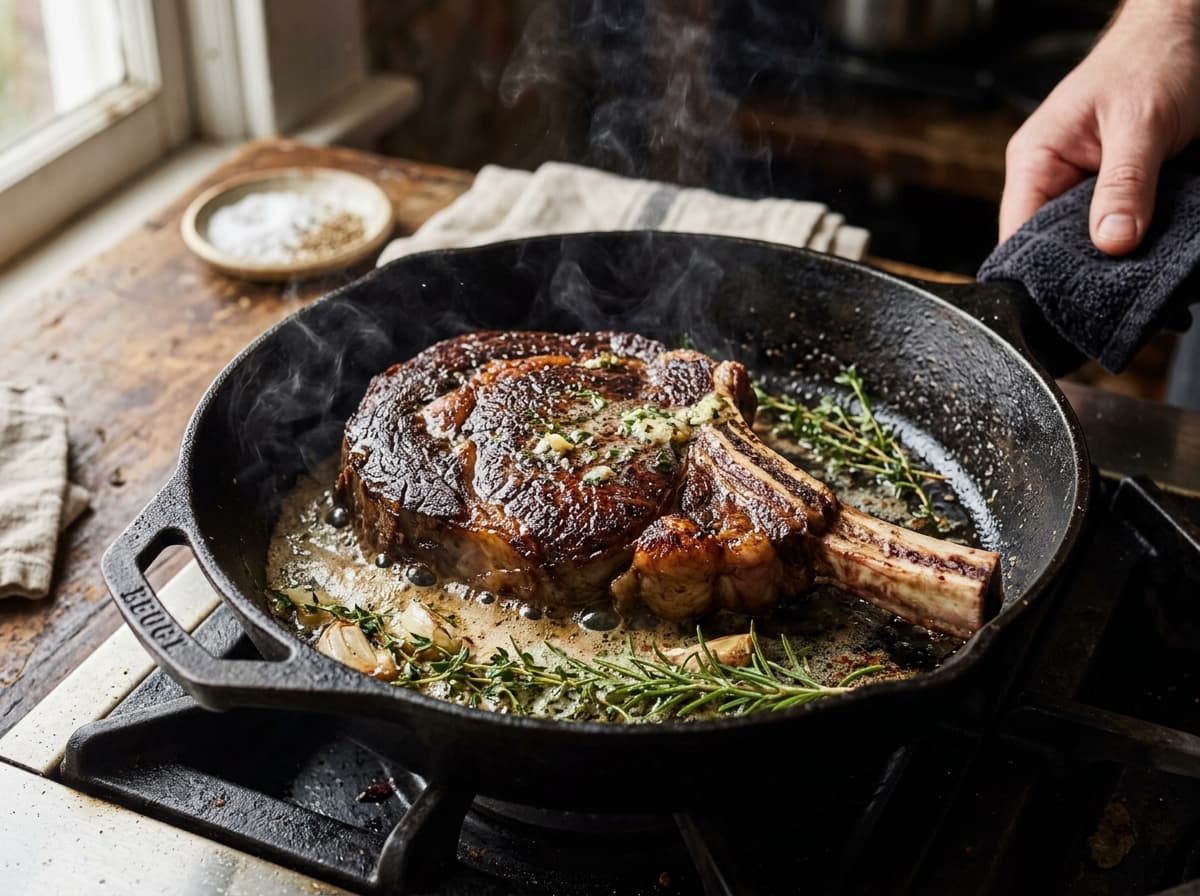
Cast Iron Butter-Basted Ribeye Steak
Restaurant-quality steakhouse sear with garlic herb butter pan basting in 8 minutes.
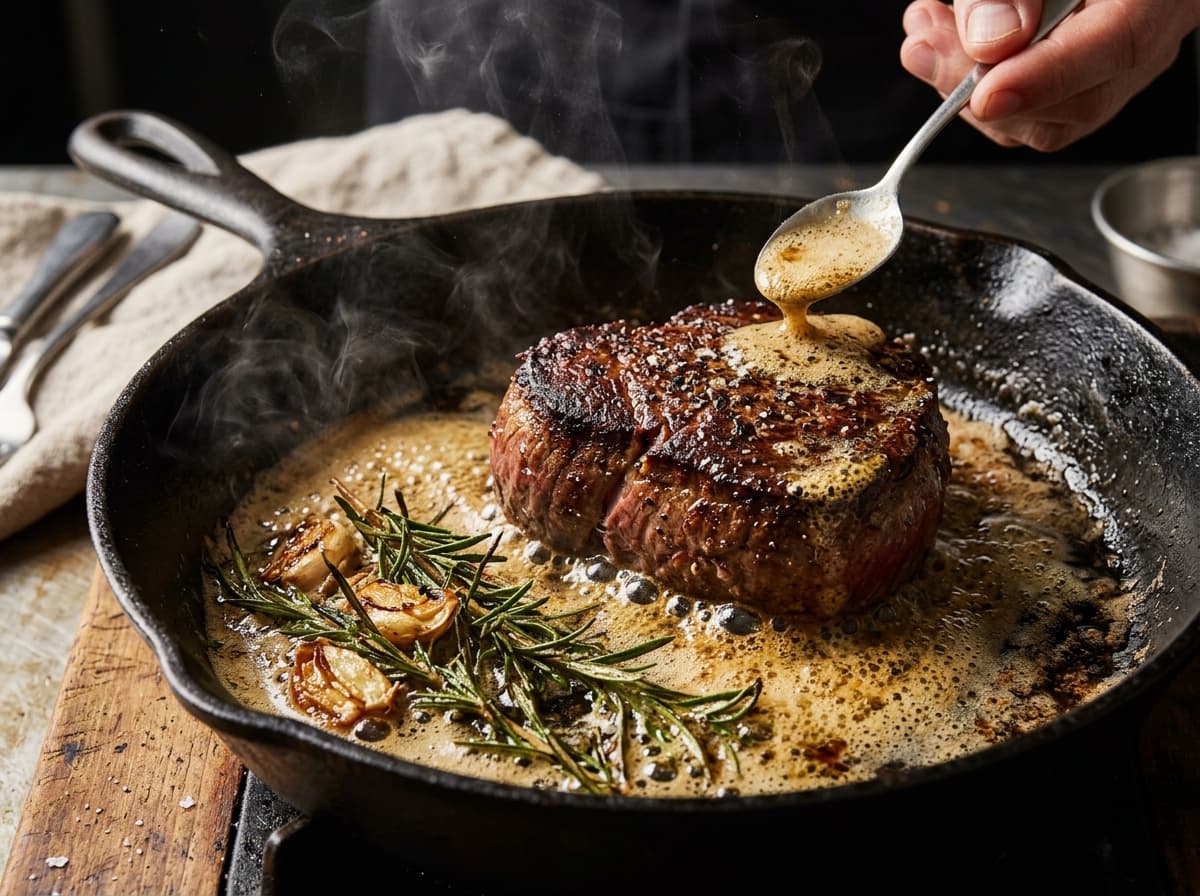
Cast Iron Filet Mignon
Tender 8-ounce beef tenderloin steaks seared in screaming-hot cast iron and basted in foaming garlic rosemary butter in 8 minutes.
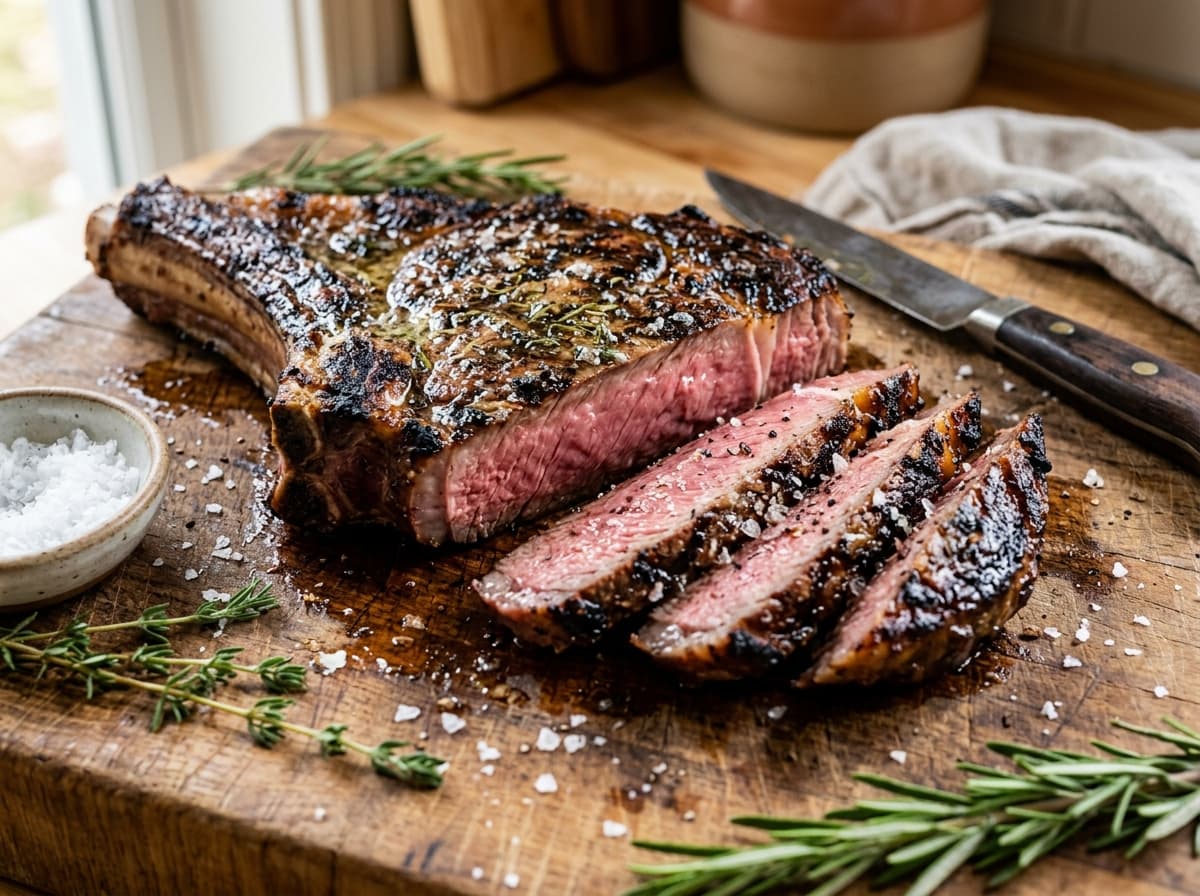
Grilled Reverse-Sear Ribeye
Thick-cut 1.5-inch bone-in ribeye gently roasted over low indirect heat to 115°F, then finished over screaming direct flame for wall-to-wall medium-rare perfection.