Dry Brining vs Wet Brining: Osmosis, Protein Denaturation, and Moisture Retention
Why soaking turkey and pork chops in salt water dilutes flavor while dry salting amplifies it
- [1]Wet brining forces excess tap water into the meat via capillary action, leading to a spongy texture and diluted meat flavor.
- [2]Dry brining draws out natural meat juices via osmosis, dissolves the salt into a concentrated brine, and reabsorbs into the muscle matrix.
- [3]Salt ions (Na+ and Cl-) weaken structural cross-links in muscle filaments, allowing them to hold onto their own natural moisture during cooking.
- [4]Wet brines make skin rubbery because the skin is saturated with water; dry brining produces shatteringly crisp skin.
Osmosis and the Three Phases of Dry Brining
Dry brining is the process of salting raw meat hours or days ahead of cooking without adding any liquid. It works through a three-stage biochemical sequence:
- Phase 1: Osmotic Draw (Minutes 0–15): Salt crystals on the meat surface create a hypertonic environment. Water is drawn out of the muscle cells through osmosis, forming beads of liquid on the meat surface.
- Phase 2: Salt Dissolution (Minutes 15–30): The extracted meat juices dissolve the salt crystals into a concentrated surface brine.
- Phase 3: Deep Diffusion & Reabsorption (Minutes 30–120+): Through diffusion, the concentrated brine migrates back into the meat fibers. The sodium and chloride ions interact with muscle proteins (myosin), causing them to unwind and swell.
When cooked, the unwound protein matrix holds tightly to moisture that would otherwise be expelled as juice.
Comparison: Dry Brining vs Wet Brining
| Metric | Dry Brining | Wet Brining |
|---|---|---|
| Meat Flavor | Deep, concentrated, pure | Diluted, watery, spongy |
| Skin / Crust Crispy Potential | Maximum (dry skin crisps fast) | Poor (soaked skin steams and turns rubbery) |
| Kitchen Mess | Zero (just a baking sheet and rack) | High (sloshing 5-gallon buckets of raw poultry water) |
| Optimal Timing | 4 to 24 hours before cooking | 8 to 18 hours (over-brining turns meat mushy) |
| Salt Distribution | Uniform throughout the muscle | Heavy at perimeter, light at bone |
How to Dry-Brine Any Cut
| Cut / Protein | Salt Ratio (by weight) | Diamond Crystal Kosher | Morton Kosher | Timing |
|---|---|---|---|---|
| Steaks (1.5"–2") | 1.0% | 1/2 tsp per lb | 1/4 tsp + 1/8 tsp per lb | 12–24 hrs |
| Pork Chops / Tenderloin | 0.8%–1.0% | 1/2 tsp per lb | 1/4 tsp per lb | 4–12 hrs |
| Whole Chicken / Turkey | 1.2% | 3/4 tsp per lb | 1/2 tsp per lb | 24–48 hrs |
| Salmon / Fish Fillets | 0.6% | 1/4 tsp per lb | 1/8 tsp per lb | 30–45 mins |
Technical FAQ
Q: Do I need to rinse off the salt before cooking a dry-brined steak?
No! The salt has completely dissolved and migrated into the interior meat fibers. Rinsing re-introduces surface water and ruins your sear.
Q: Can I dry-brine with regular table salt?
Yes, but be extremely careful with measurements. Table salt is twice as dense as Diamond Crystal Kosher salt. Use half the volume measurement.
Tested Application Recipes
ZERO FLUFF // DIRECT EXECUTION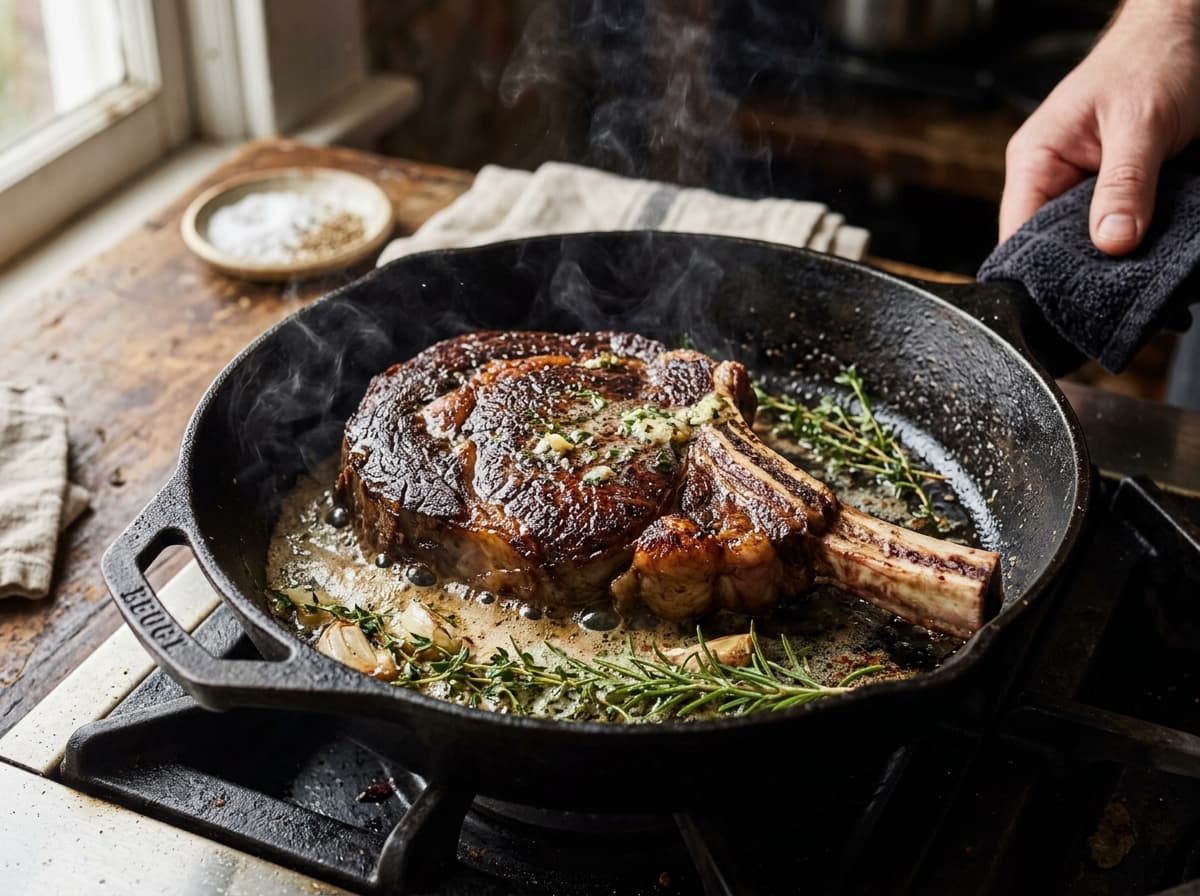
Cast Iron Butter-Basted Ribeye Steak
Restaurant-quality steakhouse sear with garlic herb butter pan basting in 8 minutes.
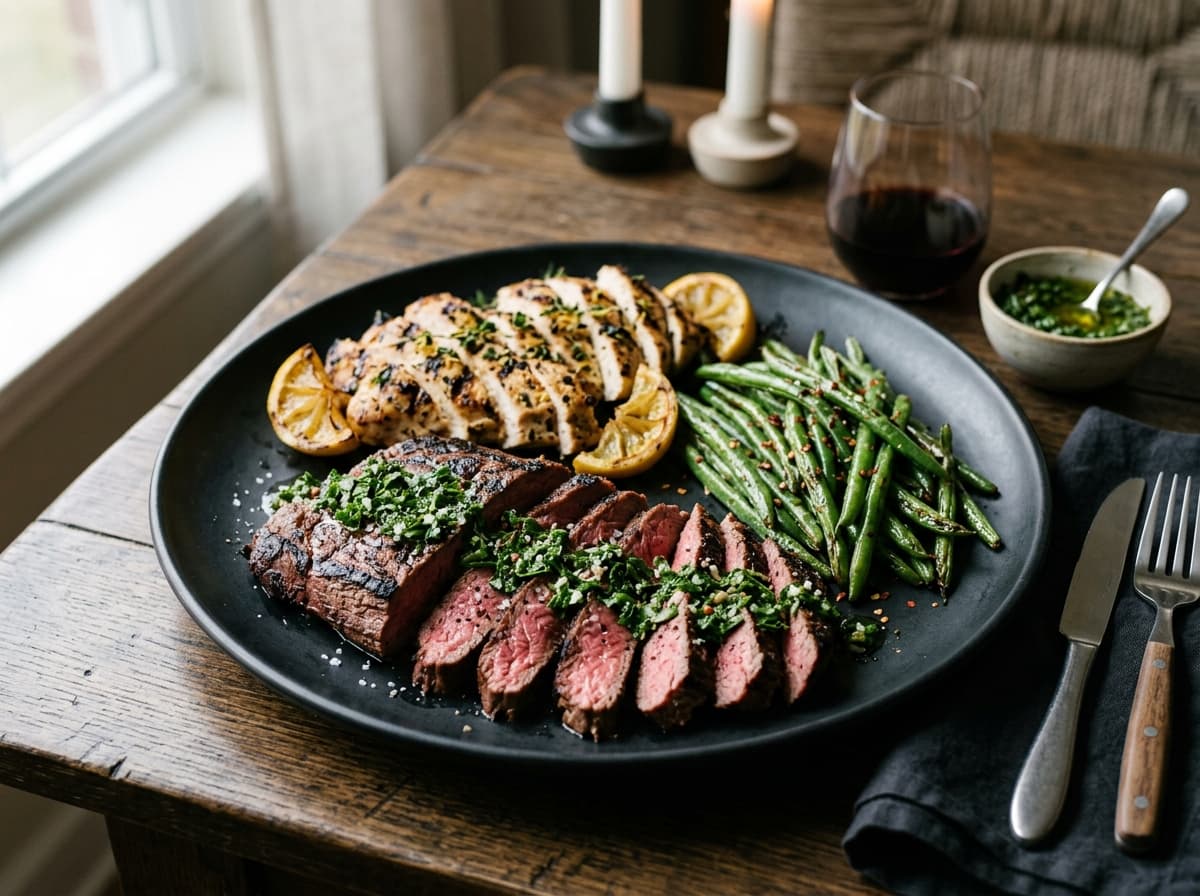
Smoked Turkey Breast
Juicy, herb butter-basted bone-in turkey breast infused with sweet applewood smoke and carved into thick succulent deli slices in 3 hours.
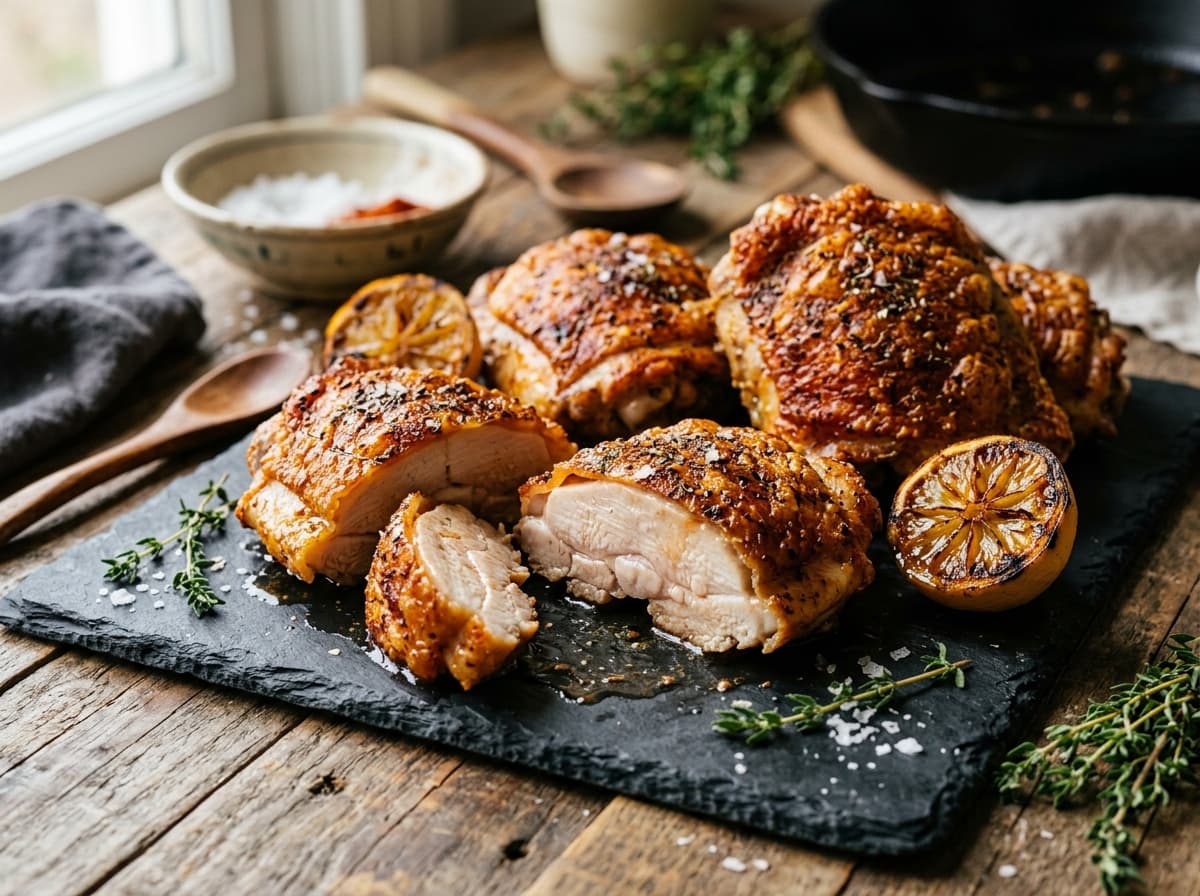
Air Fryer Crispy-Skin Bone-In Chicken Thighs
Shatteringly crisp chicken skin on the outside with fall-apart juicy meat inside using the cheapest cut in the poultry aisle.