Carryover Cooking Thermodynamics: Calculating Resting Temperature Rise by Meat Thickness
Why a 2-inch ribeye gains 8°F on the cutting board while a 1/2-inch flank steak gains only 2°F
- [1]Carryover cooking is driven by the thermal gradient between the searing hot outer crust (300°F+) and the cooler core.
- [2]Thick roasts and 2-inch steaks experience a 7°F–10°F internal rise; thin cutlets (<3/4 inch) rise by only 1°F–3°F.
- [3]Resting allows muscle fibers to relax and intracellular pressure to drop, reducing juice loss upon slicing from 25% down to under 5%.
- [4]Never tightly wrap hot resting meat in foil—tent it loosely to prevent steam from softening the crispy crust.
The Thermal Gradient Inside Meat
When meat is cooked over high heat, it does not heat uniformly. The outer 2–3 millimeters reach pan temperatures between 250°F and 350°F, while the center core may only be at 125°F.
When you remove the meat from the heat source:
- Heat radiates outward into the ambient room air.
- Simultaneously, the intense residual heat trapped in the outer crust conducts inward toward the cold center.
This inward heat transfer causes the core temperature to continue climbing for 5 to 15 minutes after the meat has left the pan. This phenomenon is carryover cooking.
Carryover Rise by Cut Thickness & Appliance
| Cut & Thickness | Cooking Method | Pull Temperature | Peak Resting Temp | Expected Rise | Rest Time |
|---|---|---|---|---|---|
| Thin Flank / Skirt (<0.75") | High-heat Skillet / Grill | 130°F (Medium-Rare) | 132°F–133°F | +2°F–3°F | 3–4 mins |
| Thick Ribeye / NY Strip (1.5") | Cast Iron Pan-Sear | 127°F (Medium-Rare) | 133°F–135°F | +6°F–8°F | 6–8 mins |
| Bone-In Pork Chop (1.25") | Air Fryer / Grill | 138°F (Juicy Pork) | 145°F (USDA Safe) | +7°F | 5 mins |
| Whole Chicken Breast (8 oz) | Skillet / Air Fryer | 158°F–160°F | 165°F (USDA Safe) | +5°F–7°F | 5 mins |
| Prime Rib / Pork Roast (4–6 lbs) | Low Oven / Smoker | 120°F–122°F | 130°F–133°F | +10°F–12°F | 15–20 mins |
The Fluid Dynamics of Resting
Why does resting make meat juicier?
- During cooking, muscle proteins (actin and myosin) denature and tighten like wringing out a wet sponge, forcing water toward the cooler center.
- As meat rests off the heat, muscle fibers cool slightly, relax, and reabsorb moisture into the protein matrix.
- Slicing a piping-hot steak immediately dumps up to 25% of total liquid volume onto the cutting board. Waiting 6–8 minutes drops moisture loss to less than 4%.
The Foil Trap
Many cooks tightly wrap resting steaks in aluminum foil. Do not do this.
Tightly sealed foil traps escaping steam, condensates on the meat surface, and destroys the crisp Maillard crust you worked so hard to build. Instead:
- Set meat on a warm plate or cutting board.
- Tent foil loosely over the top with open sides to allow steam to escape while retaining radiant warmth.
Technical FAQ
Q: Why did my reverse-seared steak have almost zero carryover rise?
Because reverse-searing cooks the steak at a very low ambient temperature (225°F), creating a uniform internal temperature with almost no thermal gradient between the surface and core. Only high-heat methods produce large 8°F+ carryover spikes.
Q: Should I slice meat with the grain or against the grain after resting?
Always against the grain (perpendicular to the muscle fibers). Slicing across the fibers mechanically cuts the tough muscle strands short, ensuring every bite is tender.
Tested Application Recipes
ZERO FLUFF // DIRECT EXECUTION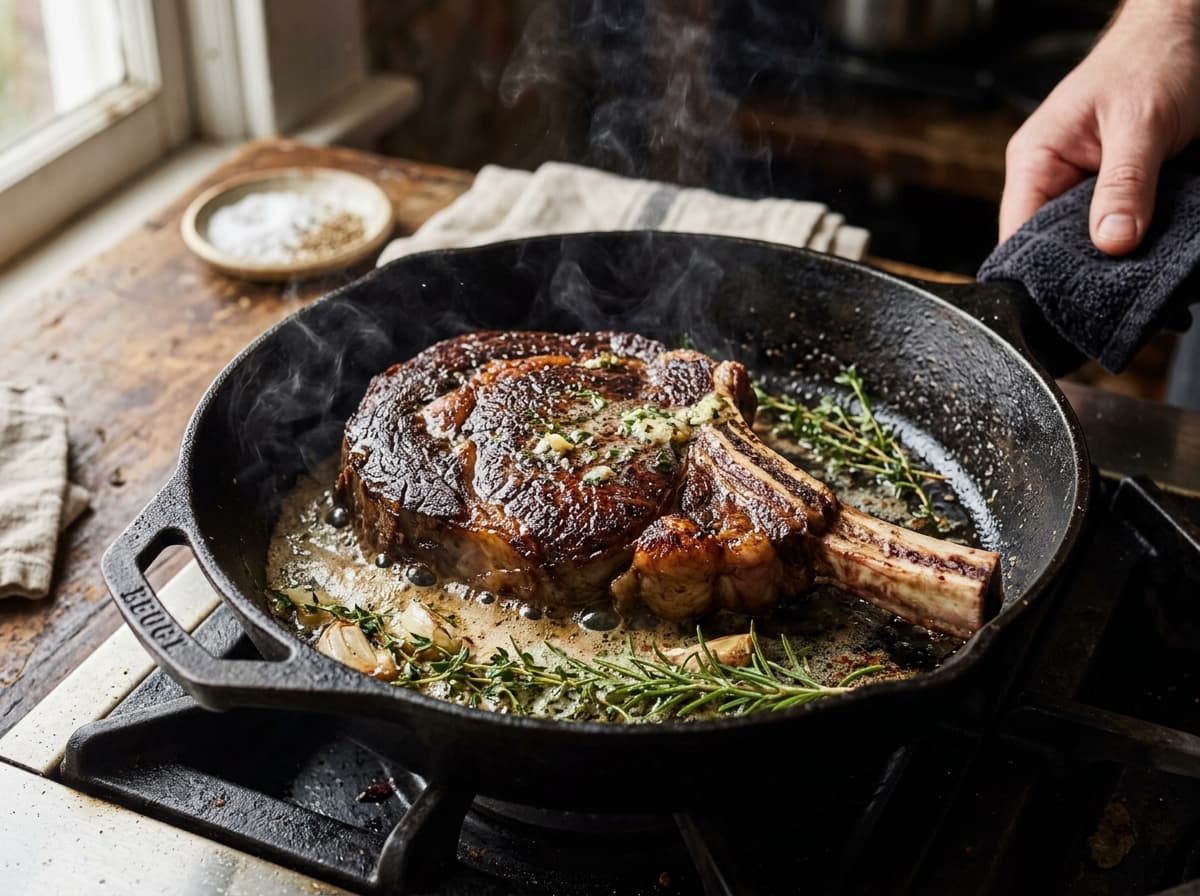
Cast Iron Butter-Basted Ribeye Steak
Restaurant-quality steakhouse sear with garlic herb butter pan basting in 8 minutes.
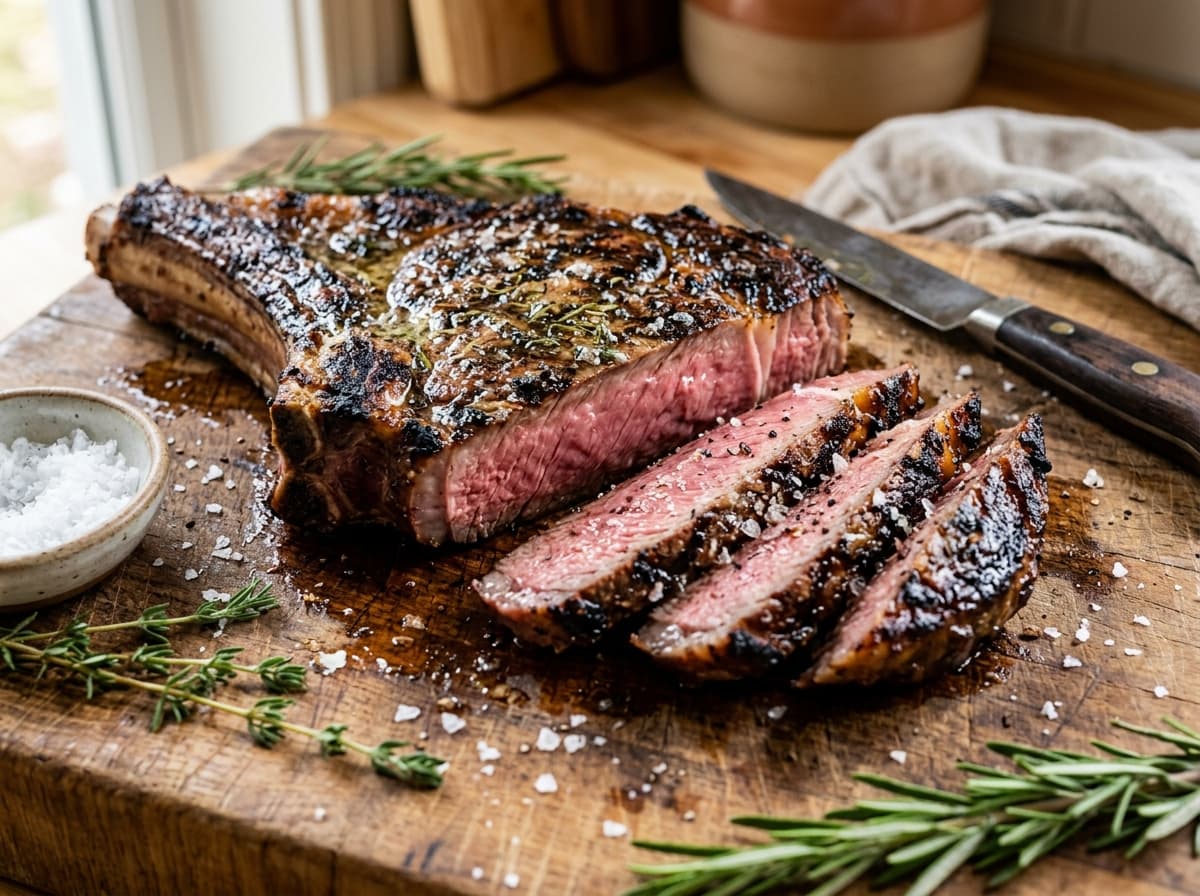
Grilled Reverse-Sear Ribeye
Thick-cut 1.5-inch bone-in ribeye gently roasted over low indirect heat to 115°F, then finished over screaming direct flame for wall-to-wall medium-rare perfection.
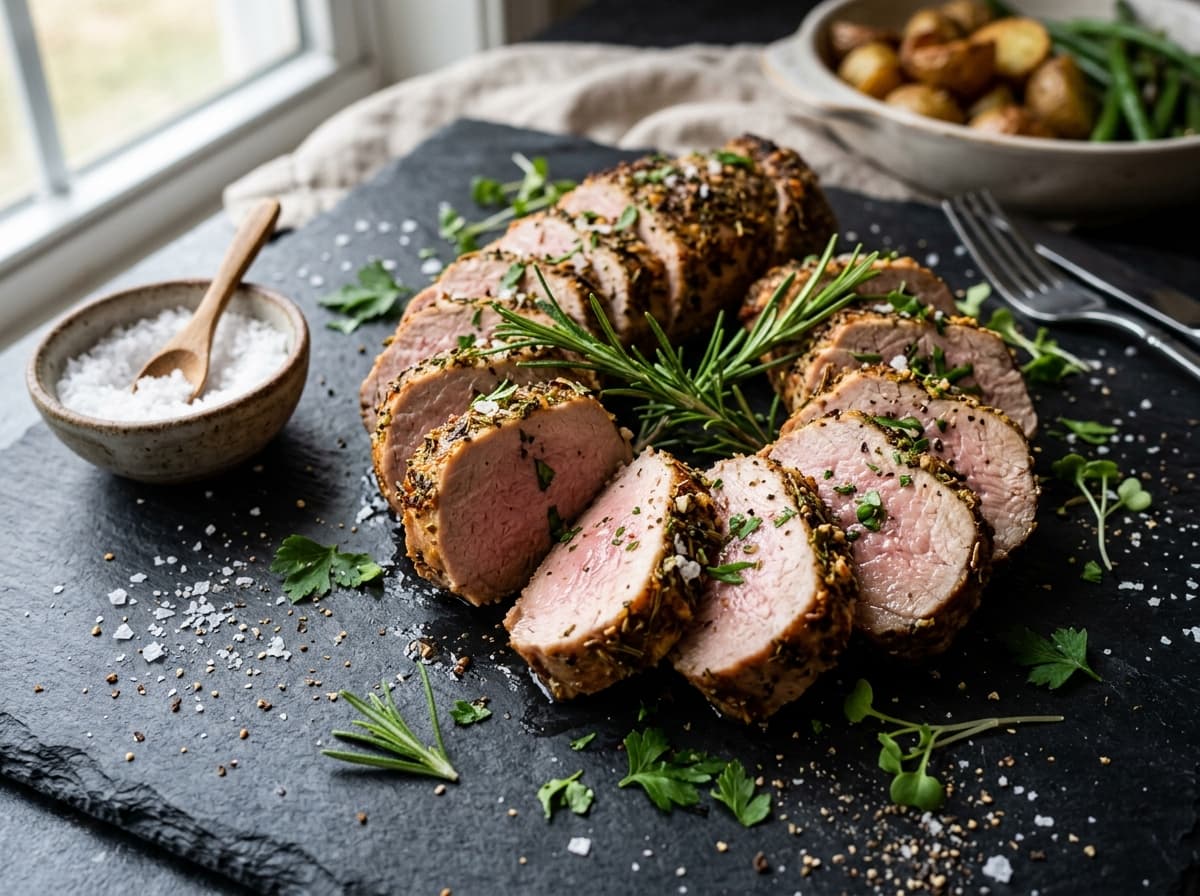
Air Fryer Pork Tenderloin
Juicy, herb-crusted pork tenderloin with a caramelized brown crust and a tender pink center in 18 minutes.