Why Chicken Breasts Turn Rubbery: Muscle Fiber Contraction at 155°F vs 165°F
Understanding myosin and actin denaturation thresholds to prevent dry, chalky poultry
- [1]Myosin denatures at 140°F (providing structure), while Actin contracts aggressively at 150°F–158°F, expelling cellular moisture.
- [2]USDA 165°F is an *instantaneous* 7-log10 (99.99999%) reduction of Salmonella, but 155°F held for 44 seconds achieves the exact same safety with 150% more juiciness.
- [3]Pulling chicken breast at 158°F–160°F with a 5-minute rest easily achieves safe pasteurization while keeping meat tender.
- [4]Pounding chicken breasts to a uniform 3/4-inch thickness prevents the thin tapered tail from overcooking while the thick lobe finishes.
Protein Denaturation in White Poultry Meat
Chicken breast is lean muscle composed of approximately 75% water, 20% protein, and 3%–5% fat. The two primary contractile proteins are myosin and actin.
- 140°F (60°C): Myosin coagulates. Meat turns opaque and firms up slightly, but remains tender and moist.
- 150°F (66°C): Collagen begins to dissolve slowly into gelatin.
- 158°F–165°F (70°C–74°C): Actin denatures violently. Muscle filaments contract longitudinally and transversely, shrinking the protein matrix and squeezing out bound cellular water like a hydraulic press.
Cooking chicken breast to 165°F–175°F expels up to 30% of its moisture, resulting in stringy, chalky, rubbery meat.
The USDA Pasteurization Curve (Time vs Temperature)
Most home cooks believe chicken is only safe if it touches 165°F on an instant-read thermometer. This is a simplification intended for high-speed commercial cafeterias.
USDA FSIS guidelines establish that bacterial lethality is a function of both temperature and time:
| Internal Temperature | Required Dwell Time for 7-log10 Salmonella Kill | Resulting Meat Texture |
|---|---|---|
| 165°F (74°C) | Instant (<1 second) | Dry, stringy, chalky |
| 160°F (71°C) | 14 seconds | Juicy, firm |
| 155°F (68°C) | 44 seconds | Extremely juicy, silky |
| 150°F (66°C) | 2.7 minutes | Maximum moisture retention |
When you pull a thick chicken breast at 158°F–160°F and tent it with foil for 5 minutes, internal temperatures naturally climb to 163°F–165°F and remain above 155°F for several minutes—easily exceeding the required 44-second safety threshold.
The Uniform Thickness Rule
A natural chicken breast is shaped like a wedge: 1.5 inches thick at the shoulder, tapering down to 1/4 inch at the tail.
If cooked as-is:
- By the time the thick shoulder reaches 158°F, the tail has reached 185°F and is inedibly tough.
- If you pull when the tail is ready, the shoulder is raw and unsafe.
The Fix: The 10-Second Butterfly or Flattening
Place the chicken breast inside a zip-top bag and gently strike the thick shoulder with a meat mallet, rolling pin, or heavy skillet until the entire cutlet is an even 3/4-inch thickness. It will cook in exactly 8–10 minutes with zero dry spots.
Technical FAQ
Q: Is it safe to eat chicken breast with a slight pink tint near the center?
Yes, if validated with a calibrated digital thermometer at or above safe time-temperature thresholds. Young chickens have porous bones that allow myoglobin and hemoglobin to leach into adjacent muscle, causing harmless pink discoloration even when fully pasteurized.
Q: Does soaking chicken in milk or yogurt tenderize it?
Mildly. The lactic acid and calcium in yogurt break down surface proteins, but penetration is limited to 1–2 millimeters. Dry brining with kosher salt penetrates far deeper and retains more moisture.
Tested Application Recipes
ZERO FLUFF // DIRECT EXECUTION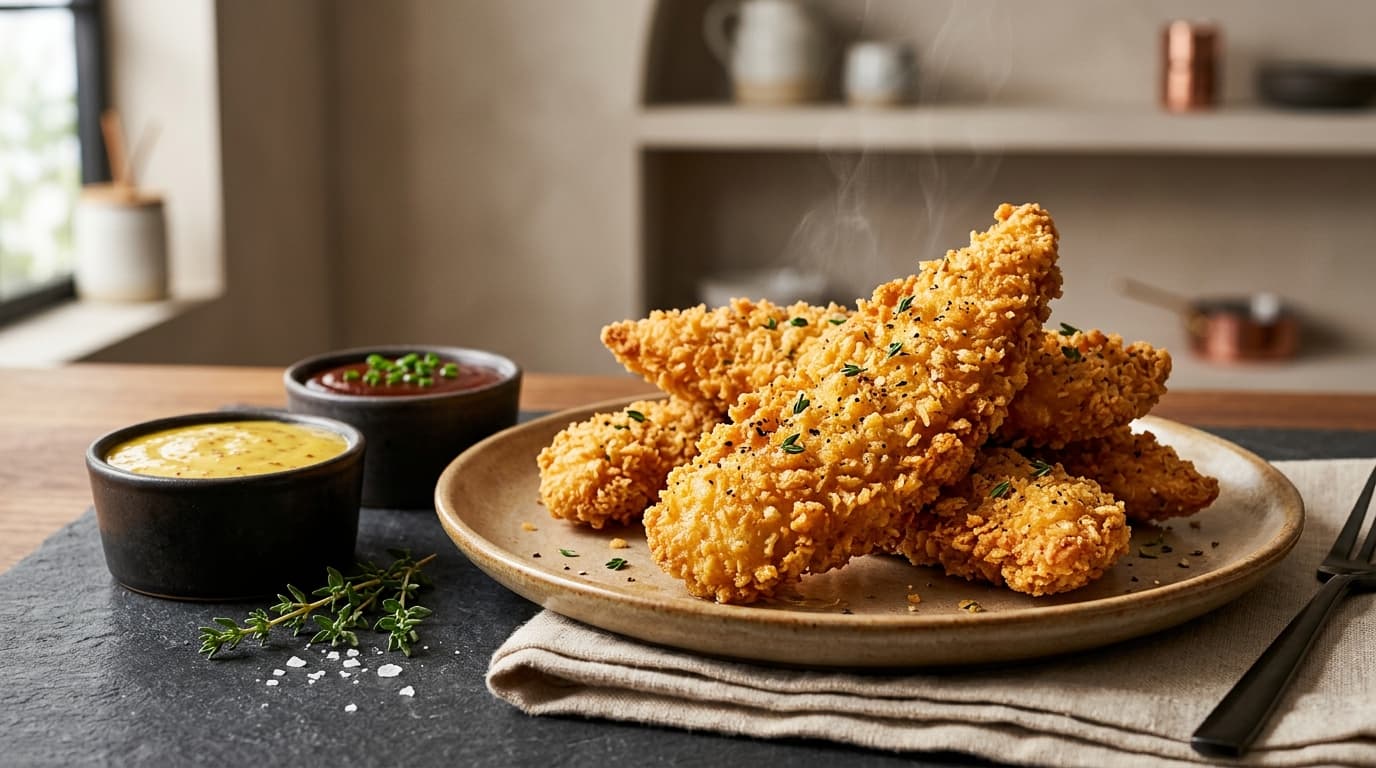
Crispy Air Fryer Chicken Tenders
Golden panko crunch outside, juicy inside in 10 minutes with zero hot oil splatter.
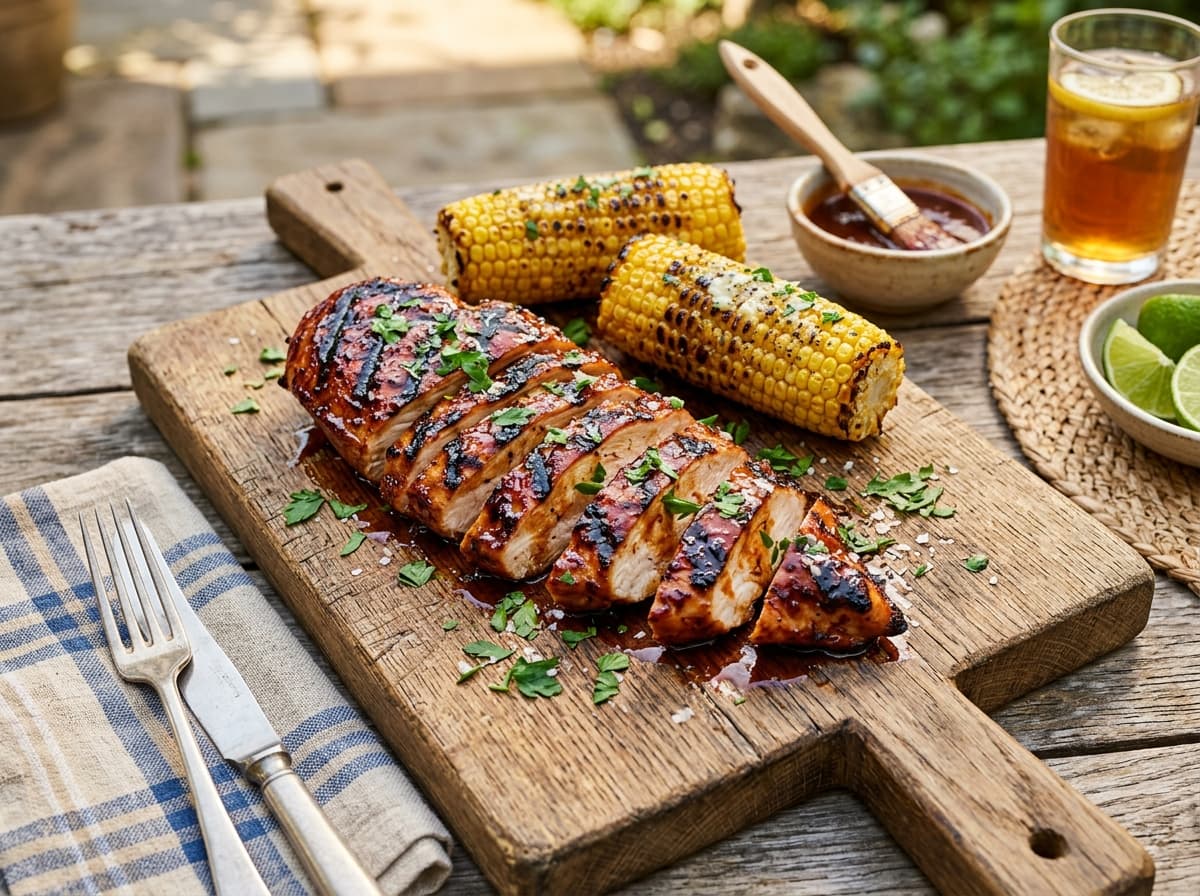
Grilled BBQ Chicken Breasts That Aren't Dry
Juicy, caramelized barbecue chicken breasts using the 2-zone indirect heat method so sauce glazes without scorching.
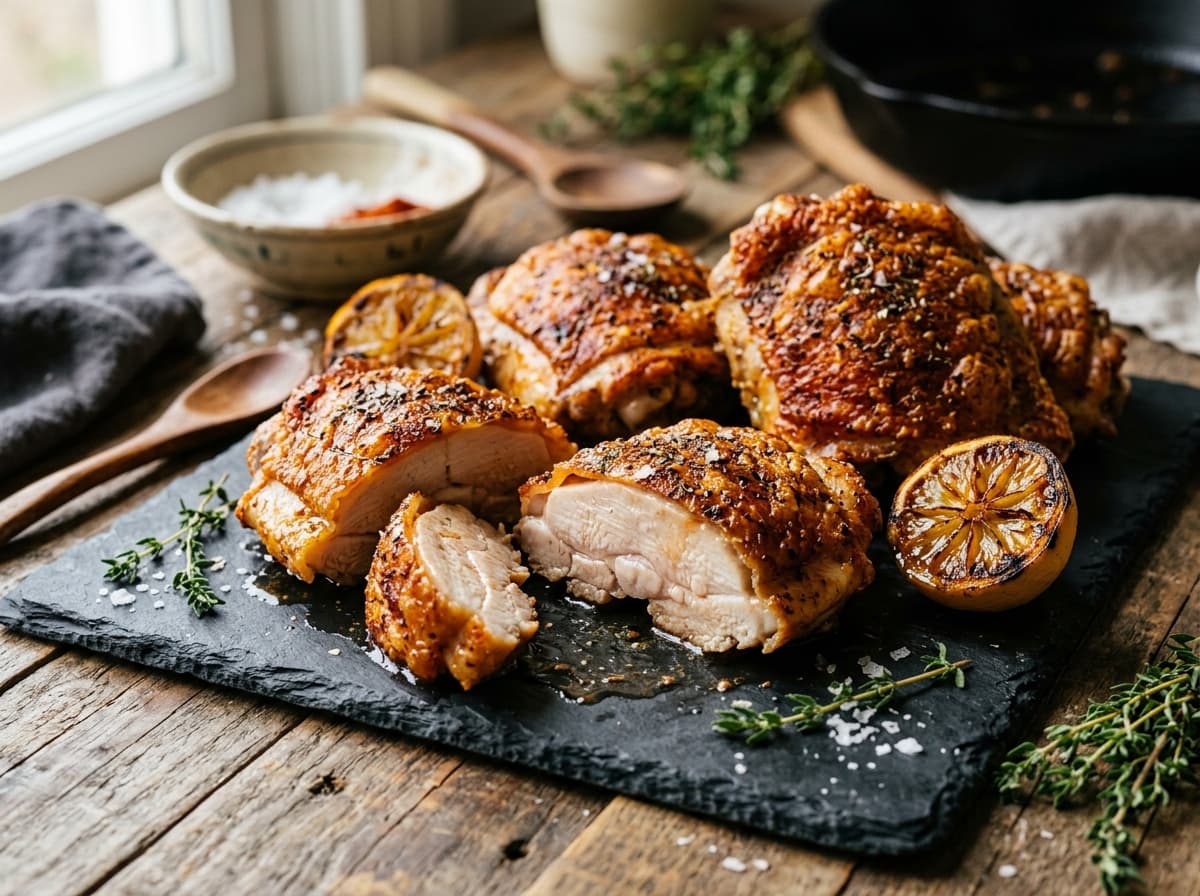
Air Fryer Crispy-Skin Bone-In Chicken Thighs
Shatteringly crisp chicken skin on the outside with fall-apart juicy meat inside using the cheapest cut in the poultry aisle.