All Field Guides (85)SPEC NO: BLOG-029
Food Science & Chemistry5 MIN READ•UPDATED 2026-08-28
Starch Gelatinization in Rice: Amylose vs Amylopectin, Rinsing, and Steam Rest
Why your jasmine rice turns gummy and how starch rinsing and resting unlock fluffy grains
AUTHORED BY: Meal Instructions Research Team
VERIFIED CULINARY PHYSICS
EXECUTIVE SUMMARY // CORE TECHNICAL PRINCIPLES
- [1]Rice starch consists of linear Amylose (which cooks firm and distinct) and branched Amylopectin (which cooks sticky and gelatinous).
- [2]Rinsing raw rice in cold water washes away free surface starch dust created by milling friction, preventing grains from gluing together.
- [3]The true water ratio for cooked rice is 1:1 by volume for water absorption, plus a fixed amount (approx. 1/3 cup) to account for steam evaporation.
- [4]The 10-Minute Off-Heat Steam Rest allows moisture within each grain to equilibrate from exterior to core, preventing wet mush.
Amylose vs Amylopectin: The Starch Ratio
All rice varieties contain two forms of starch molecules:
- Amylose: Long, straight, linear glucose polymers. Grains high in amylose (Basmati ~22%, American Long Grain ~20%) hold their shape, cook into dry, separate, fluffy grains, and resist burst swelling.
- Amylopectin: Highly branched, bushy glucose polymers. Grains high in amylopectin (Short Grain Sushi Rice, Arborio, Sweet Glutinous Rice) gelatinize readily, leaking sticky starch and bonding grains together.
Jasmine rice sits in the middle (~15% amylose), offering aromatic softness with delicate grain separation if handled correctly.
The 3 Rules of Flawless Rice
- Rule 1: The Triple Cold Rinse:
- Industrial rice milling rubs grains against each other, creating a powdery coating of broken starch granules.
- If cooked unrinsed, this free starch gelatinizes into a sticky glue.
- Swirl rice in cold water and drain 3 times until the water runs mostly clear.
- Rule 2: Accurate Water Evaporation Math:
- Rice grains absorb water in an exact 1:1 volumetric ratio at 212°F regardless of batch size.
- Any extra water in standard recipes (e.g., "1.5:1 ratio") is purely to compensate for steam escaping through the pot lid.
- Formula for Stovetop Pot: 1 cup rice + 1.25 cups water.
- Rule 3: The Mandatory 10-Minute Lid Rest:
- When the timer sounds and water is absorbed, do not remove the lid and do not stir.
- Turn off the heat and leave untouched for 10 minutes.
- The Science: Freshly cooked grains have wet, fragile exteriors and firm centers. The steam rest allows moisture to redistribute evenly throughout the entire grain while surface starches firm up.
RELATED INTERACTIVE KITCHEN ENGINES
Technical FAQ
Q: Why should I never fluff rice with a metal fork or spoon immediately?
Immediately after cooking, rice cell walls are hot and fragile. Stirring immediately crushes grains, releasing amylopectin and turning fluffy rice into paste. Fluff gently with a wide wooden or plastic rice paddle after the 10-minute rest.
Tested Application Recipes
ZERO FLUFF // DIRECT EXECUTION0035
dairy eggsskillet
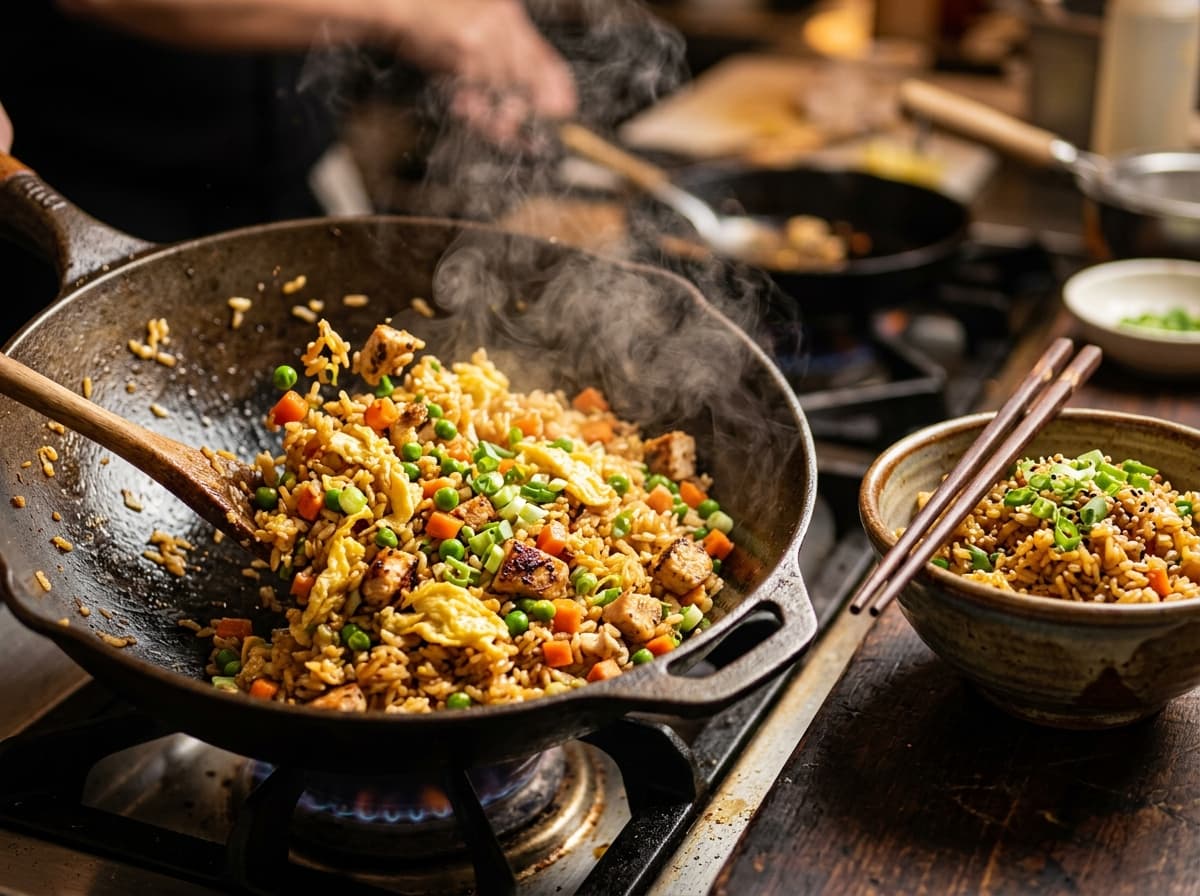
Dad's Skillet Fried Rice (Leftover Rescue)
Transform cold leftover takeout rice into restaurant-quality garlic butter fried rice with scrambled eggs and peas in 10 minutes.
TEMPHigh
TIME11 MIN
PROTEIN10G
Dead Simple
DIRECTIONS0034
chickenskillet
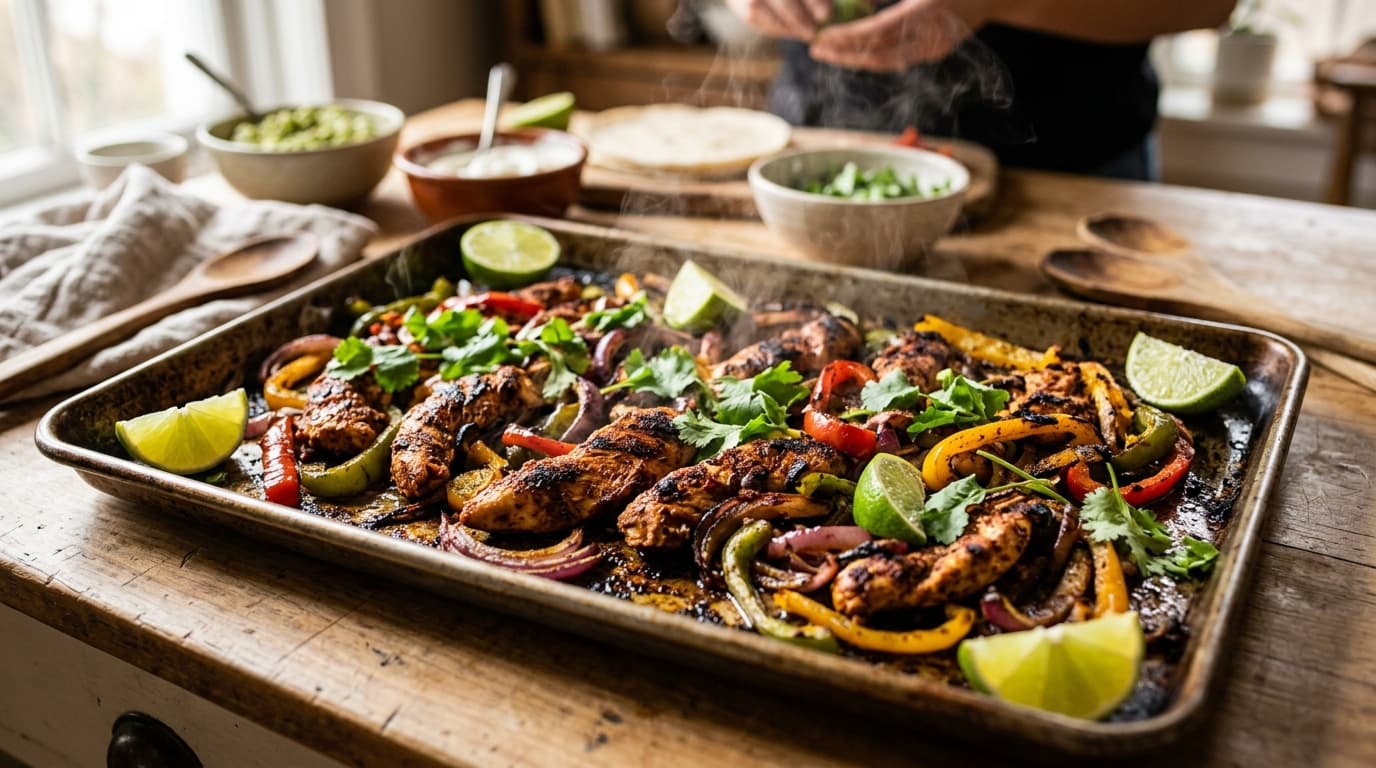
Skillet Chicken Thigh Fajita Bowls
Seared seasoned chicken thigh strips, caramelized peppers, and onions over warm rice in 15 minutes.
TEMPHigh
TIME15 MIN
PROTEIN34G
Easy
DIRECTIONSVerified Cook-Time Datasheets
LAB-TESTED // EXACT SPECSMore Field Guides & Science
View All 50Food Science & Physics
6 MIN READREAD →Why Wet Steaks Never Brown: The Surface Moisture Science of the Maillard Reaction
Food Science & Physics
5 MIN READREAD →Carryover Cooking Thermodynamics: Calculating Resting Temperature Rise by Meat Thickness
Food Science & Physics
6 MIN READREAD →