Why Is My Steak Tough and Chewy
The three most common causes of tough steak and how to fix each one
- [1]Overcooking is the most common cause -- muscle fibers tighten and expel moisture above 145°F, making the steak progressively tougher.
- [2]Using the wrong cut for the wrong method produces tough results. High-collagen cuts like chuck need low-and-slow; tender cuts like ribeye need fast, hot searing.
- [3]Skipping the 5-10 minute rest causes juices to pour out when sliced, leaving dry, chewy meat behind.
- [4]Slicing against the grain shortens muscle fibers and dramatically improves perceived tenderness.
The three most common reasons your steak is tough and chewy are overcooking past medium (above 145°F), using a cut that needs slow cooking for a fast method, or not letting the steak rest before slicing. Fixing even one of these will noticeably improve tenderness.
Cause 1: Overcooking
This is the single most frequent mistake. As steak cooks, muscle proteins (primarily myosin and actin) contract and squeeze out water:
| Internal Temp | Doneness | Texture |
|---|---|---|
| 120°F-125°F | Rare | Very soft, almost no resistance |
| 130°F-135°F | Medium-rare | Tender, yielding, juicy |
| 140°F-145°F | Medium | Firmer, still moist |
| 150°F-155°F | Medium-well | Noticeably tough, drier |
| 160°F+ | Well-done | Very tough, dry, chewy |
The fix: Use an instant-read thermometer. Pull the steak 5°F below your target temperature because carryover cooking will continue raising the temperature for several minutes after removal.
Cause 2: Wrong Cut for the Method
Not all beef is created equal. Cuts with heavy connective tissue and collagen need extended heat to break that tissue into gelatin:
- Fast-cook cuts (sear, grill, broil): Ribeye, NY strip, filet mignon, sirloin, flank (when sliced thin)
- Slow-cook cuts (braise, smoke, stew): Chuck roast, brisket, short ribs, shank, round
If you grill a chuck steak like a ribeye, the collagen stays intact and creates a tough, chewy texture. That same cut braised for 3 hours becomes fall-apart tender.
The fix: Match the cut to the method. Ask your butcher which cuts are best for grilling versus braising.
Cause 3: No Resting Time
When you cut into a steak immediately after cooking, the pressurized juices inside the contracted muscle fibers rush out onto the plate. The meat left behind is dry and tough.
The fix: Rest the steak on a cutting board (not a cold plate) for 5 minutes for standard cuts, 10 minutes for thick-cut steaks over 1.5 inches. Loosely tent with foil if desired, but it is not required.
Bonus: Slice Against the Grain
Even a perfectly cooked steak will feel chewy if sliced parallel to the muscle fibers. Identify the direction of the grain (the visible lines running through the meat) and slice perpendicular to them. This shortens the fibers, making each bite easier to chew.
Technical FAQ
Q: Can I fix a steak that is already tough after cooking?
Slice it as thin as possible against the grain and serve with a sauce or compound butter to add moisture. For severely overcooked steak, slice thinly and repurpose in stir-fries, tacos, or sandwiches where the small pieces and added sauces compensate for the lost tenderness.
Q: Does marinating make steak more tender?
Acidic marinades (citrus, vinegar, wine) can tenderize the outer 1-2 millimeters of the surface, but they do not penetrate deeply enough to tenderize a thick steak throughout. Enzymatic marinades (pineapple, kiwi, papaya) are more effective but can turn the surface mushy if left too long. A better approach for tenderizing is salt-brining for 1-2 hours.
Q: Why is my expensive steak still tough?
Even premium cuts become tough when overcooked. A $50 ribeye cooked to well-done will be tougher than a $10 chuck steak braised properly. Price indicates marbling and flavor potential, but the cooking execution determines tenderness. Use a thermometer regardless of what you paid.
Tested Application Recipes
ZERO FLUFF // DIRECT EXECUTION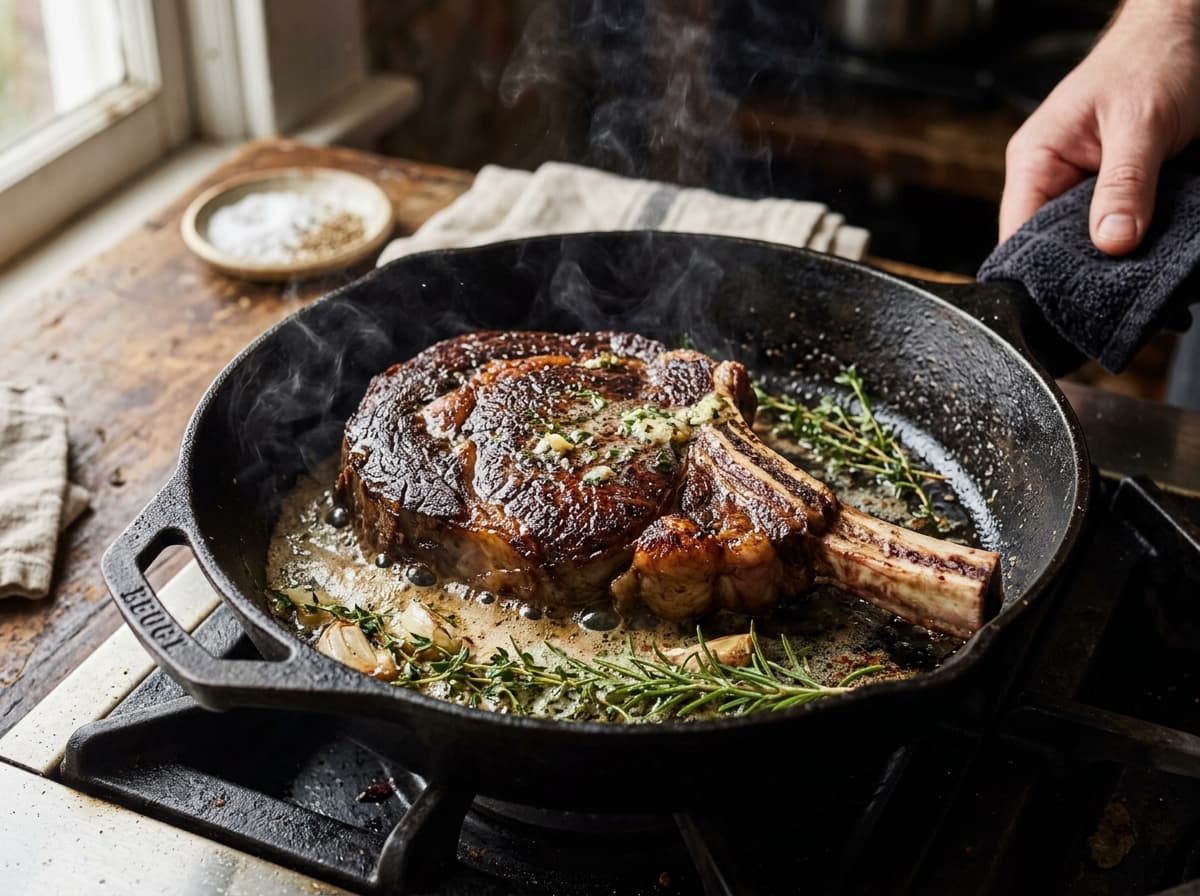
Cast Iron Butter-Basted Ribeye Steak
Restaurant-quality steakhouse sear with garlic herb butter pan basting in 8 minutes.