The Chemistry of Emulsified Pan Sauces: Monter au Beurre, Starch Suspensions, and Pan Reductions
How to bind water and butterfat into a glossy, velvety sauce that clings to meat without breaking
- [1]An emulsion is a uniform suspension of microscopic fat droplets dispersed within a continuous water phase.
- [2]Butter is an emulsion of 80% butterfat, 16% water, and 4% milk proteins (casein/whey); boiling butter destroys this native emulsion.
- [3]"Monter au Beurre" requires cold butter (straight from the fridge) swirled into a hot reduction off the heat to melt fat slowly while milk proteins act as natural emulsifiers.
- [4]Adding 1 tbsp of gelatin-rich stock or starchy pasta water provides physical thickening that prevents sauce separation.
The Mechanics of an Oil-in-Water Emulsion
Oil and water are chemically immiscible: water is polar, while lipids are non-polar. Left alone, fat droplets coalesce and float to the surface, creating an oily, greasy separation.
In a restaurant-grade pan sauce:
- The continuous phase is your concentrated, acidic deglazing liquid (wine, stock, shallot juices).
- The dispersed phase consists of millions of microscopic butterfat droplets.
- The emulsifier is the milk proteins (casein and whey phospholipids) present in butter.
When properly emulsified, the sauce turns opaque, thick, and glossy, clinging perfectly to the back of a spoon (nappe).
Why Pan Sauces Break (The 3 Deadly Mistakes)
- Mistake 1: Using Warm or Melted Butter:
- Warm butter dumps liquid fat into the pan all at once, overwhelming the emulsifying power of the proteins.
- The Science: Cold butter straight from the fridge contains solid fat crystals that melt gradually as you whisk, giving proteins time to coat each droplet as it shears off.
- Mistake 2: Boiling the Sauce After Adding Butter:
- Heating above 185°F (85°C) denatures milk proteins, causing them to precipitate out. The fat instantly separates into a yellow puddle of grease.
- Rule: Butter is strictly added off the heat.
- Mistake 3: Insufficient Liquid Reduction:
- If you add butter to 1 cup of watery broth, the fat droplets are too diluted to create viscosity. Reduce liquid by 75% until syrupy before mounting with butter.
The Universal 4-Step Pan Sauce Formula
- Step 1: After searing meat, pour off excess grease, leaving 1 tsp in pan.
- Step 2: Sauté 1 minced shallot or garlic clove for 30 seconds on medium heat.
- Step 4: Pour in 1/2 cup wine or stock. Scrape fond vigorously. Simmer hard until reduced to 2 tablespoons (about 2 minutes).
- Step 5: Remove pan completely from heat. Add 2 tablespoons of diced fridge-cold butter. Swirl and shake the pan continuously until the butter melts into a creamy, glossy glaze. Season with a squeeze of fresh lemon and fresh herbs.
Technical FAQ
Q: How can I fix a pan sauce that just broke and turned greasy?
Add 1 tablespoon of ice-cold water or heavy cream, remove from heat, and whisk violently with a small wire whisk. The cold water lowers the temperature and re-establishes the continuous water phase, pulling the emulsion back together.
Tested Application Recipes
ZERO FLUFF // DIRECT EXECUTION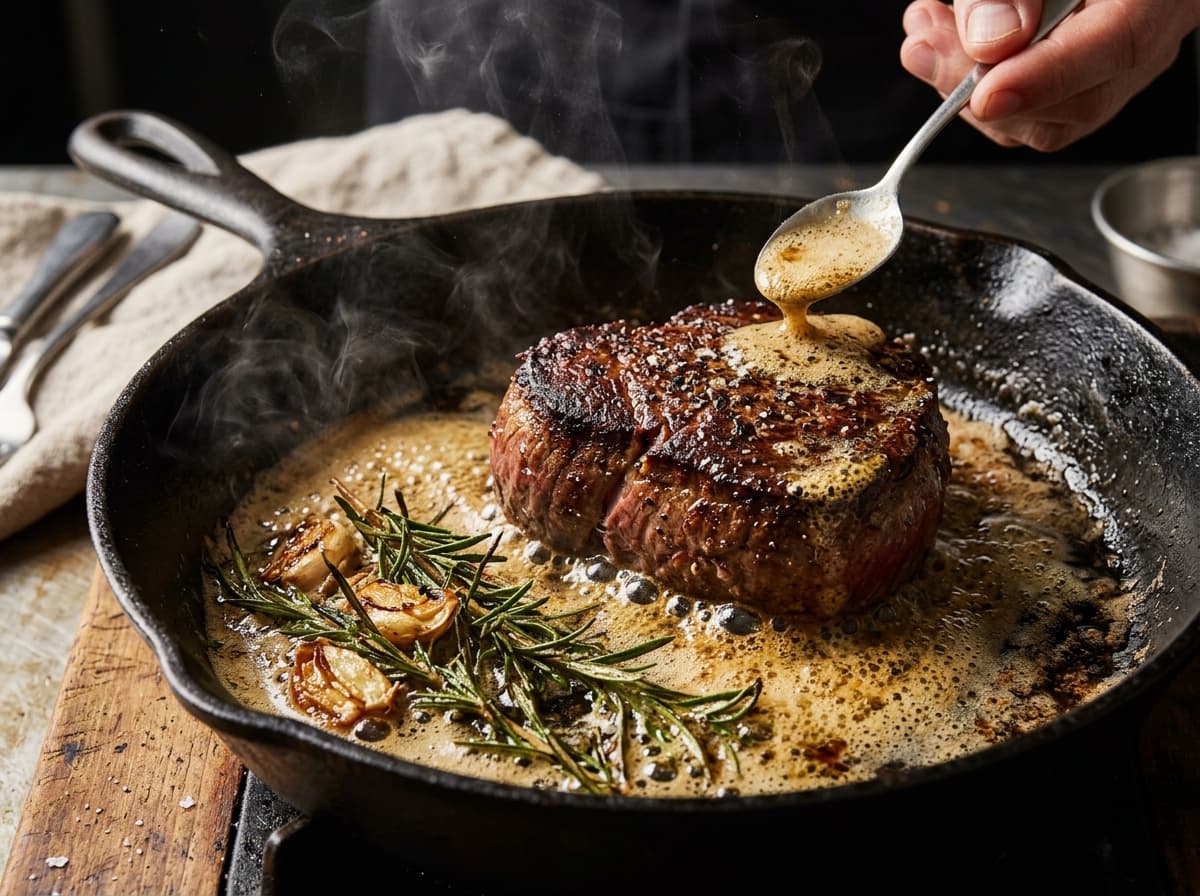
Cast Iron Filet Mignon
Tender 8-ounce beef tenderloin steaks seared in screaming-hot cast iron and basted in foaming garlic rosemary butter in 8 minutes.
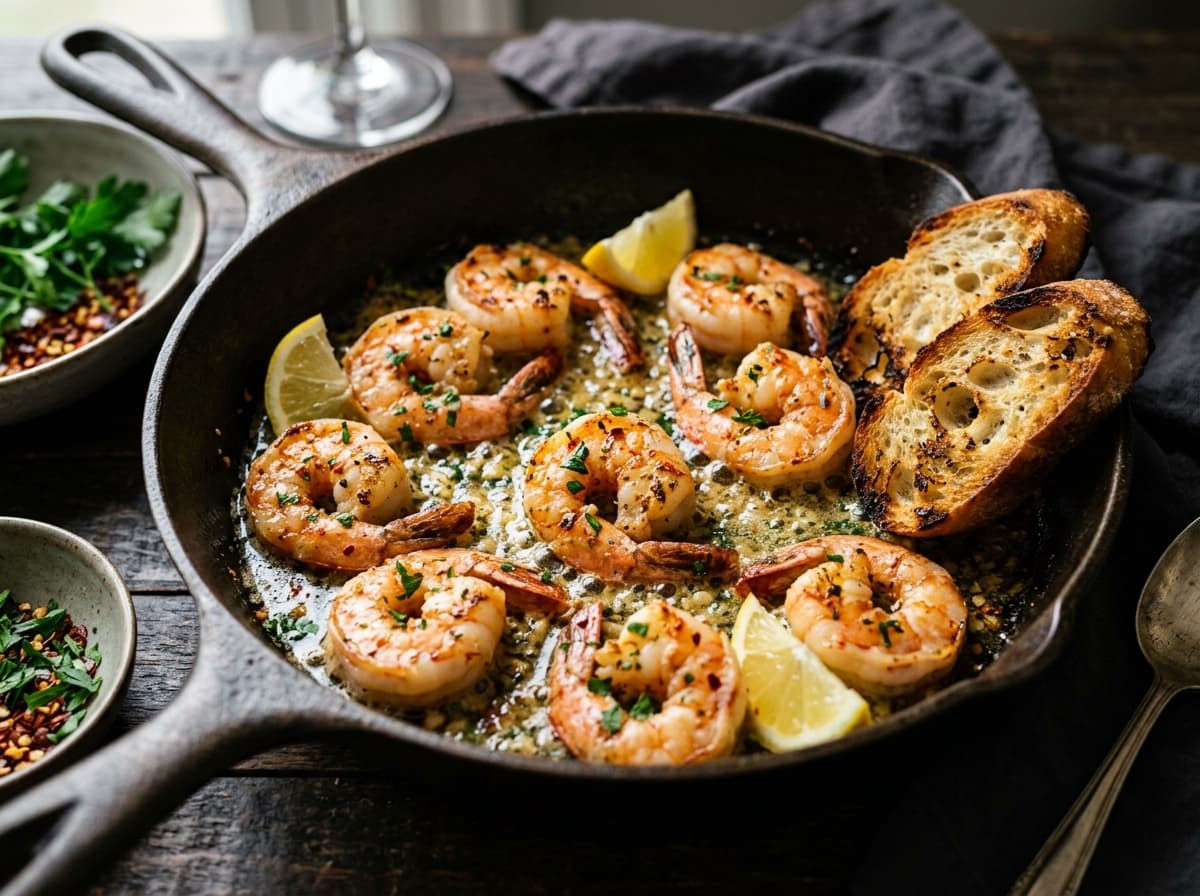
15-Minute Skillet Lemon Garlic Butter Shrimp
Sweet jumbo shrimp seared in foaming garlic herb butter with fresh lemon in 6 minutes.
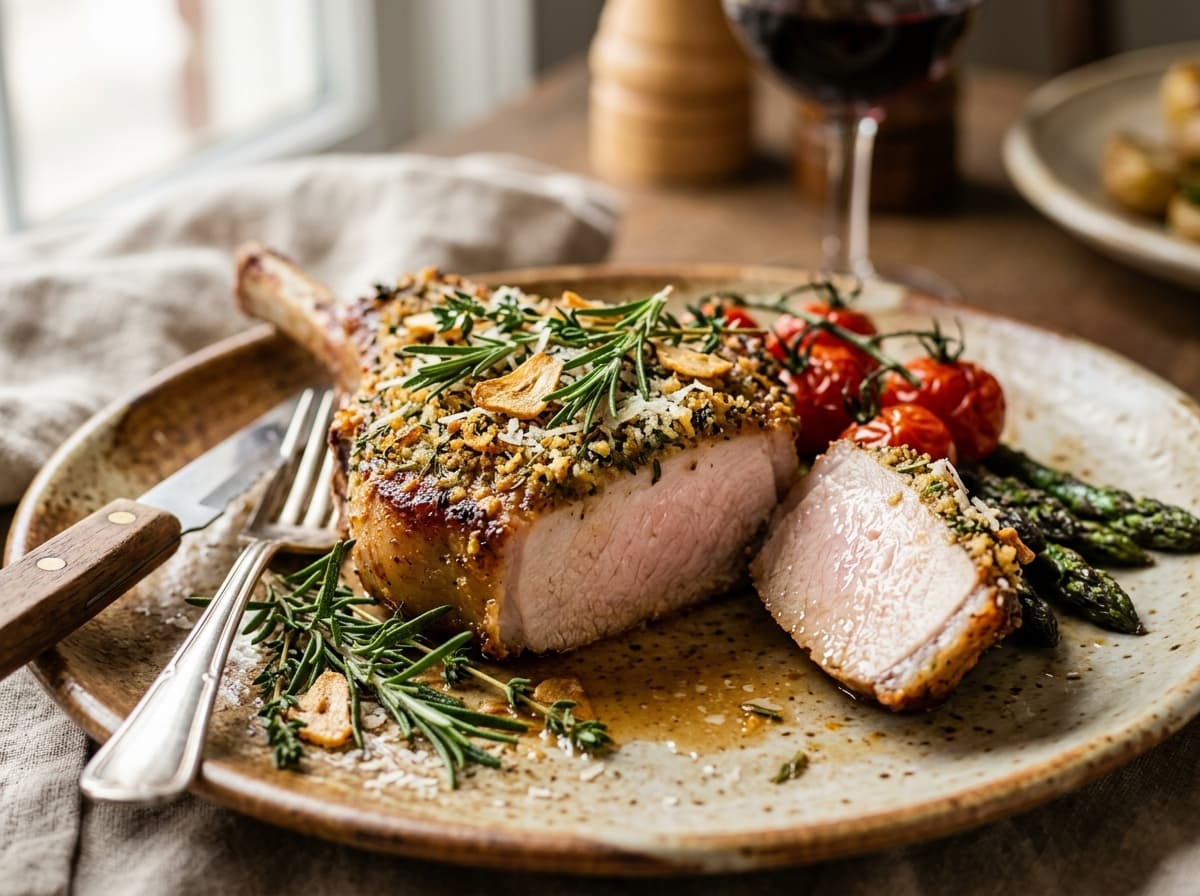
Air Fryer Crispy Parmesan Crusted Pork Chops
Juicy bone-in pork chops with a golden garlic parmesan crust in 12 minutes.