Hard-Boiled Egg Peeling Physics: Protein-Membrane Adhesion, Age, and Ice Shock
Why fresh eggs stick to their shells and how boiling-water starts and thermal shock guarantee clean peels
- [1]In fresh eggs, albumen (white) has a low pH (~7.6) and binds tightly to the inner keratin shell membrane (chitin).
- [2]Starting eggs in cold water heats proteins slowly, allowing them to fuse permanently with the shell membrane.
- [3]Lowering eggs into **already boiling water (212°F) or a 270°F air fryer** instantly denatures surface proteins, shrinking the albumen away from the membrane.
- [4]A 5-minute ice water bath contracts the egg interior faster than the rigid shell, creating a vacuum gap that lets shells slide off in 2 pieces.
Why Egg Whites Stick to the Shell
An egg shell is lined on the inside with two thin, tough membranes made of keratin and collagen.
When an egg is fresh:
- The egg white (albumen) has a relatively low, slightly acidic pH (~7.6–8.0).
- The albumen proteins are chemically sticky.
If you place eggs in cold water and slowly bring the pot to a boil:
- The albumen warms up gradually.
- The proteins denature slowly, forming strong chemical and physical bonds with the keratin membrane.
- When you peel the egg, the membrane rips away chunks of egg white, leaving a mangled, pitted cratered egg.
The Hot-Start & Thermal Shock Protocol
- Step 1: The Boiling-Water or Hot Air-Fryer Start:
- Always start eggs in already-boiling water (212°F), a steamer basket, or an air fryer preheated to 270°F.
- The Science: Intense sudden heat causes the outer layer of albumen proteins to denature and coagulate instantly into a firm solid before they have a chance to bond to the shell membrane.
- Step 2: Exact Timing:
- Soft-Boiled (Jammy yolk): 6.5 minutes
- Medium-Boiled (Fudge center): 8.5 minutes
- Hard-Boiled (Solid yellow, zero gray sulfur ring): 11.0 minutes
- Step 3: The 5-Minute Ice Water Shock:
- Transfer eggs immediately from boiling water into a bowl with 50% ice and 50% cold water.
- The Science: The solid egg white contracts rapidly as it cools, while the rigid calcium carbonate shell cannot shrink. This thermal differential breaks any remaining micro-adhesions, pulling water into the gap.
The Green-Gray Sulfur Ring
If hard-boiled yolks have a chalky texture with an unappetizing dark green-gray outer ring:
- The Cause: Overcooking. Iron in the egg yolk reacts with hydrogen sulfide in the white, forming ferrous sulfide ($FeS$).
- The Prevention: Never cook past 12 minutes, and always plunge into ice water immediately to halt carryover heat.
Technical FAQ
Q: Does adding vinegar or baking soda to boiling water help peeling?
Not significantly compared to a hot-water start. Extensive double-blind testing confirms that starting in boiling water and shocking in ice water dictates 98% of peel ease, rendering vinegar additives unnecessary.
Tested Application Recipes
ZERO FLUFF // DIRECT EXECUTION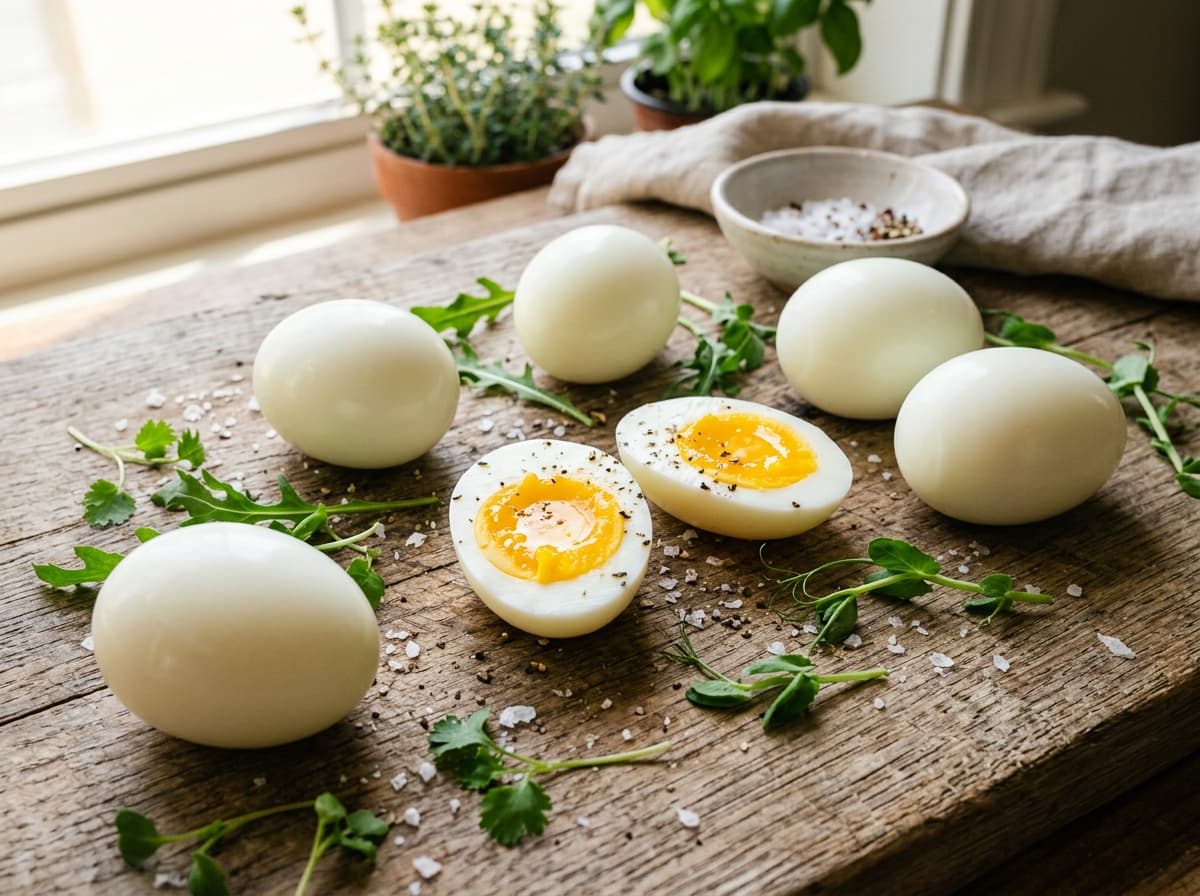
Air Fryer "Hard-Boiled" Eggs
Zero boiling water, zero watching the stove — perfectly jammy or firm hard-cooked eggs that peel effortlessly in one piece.
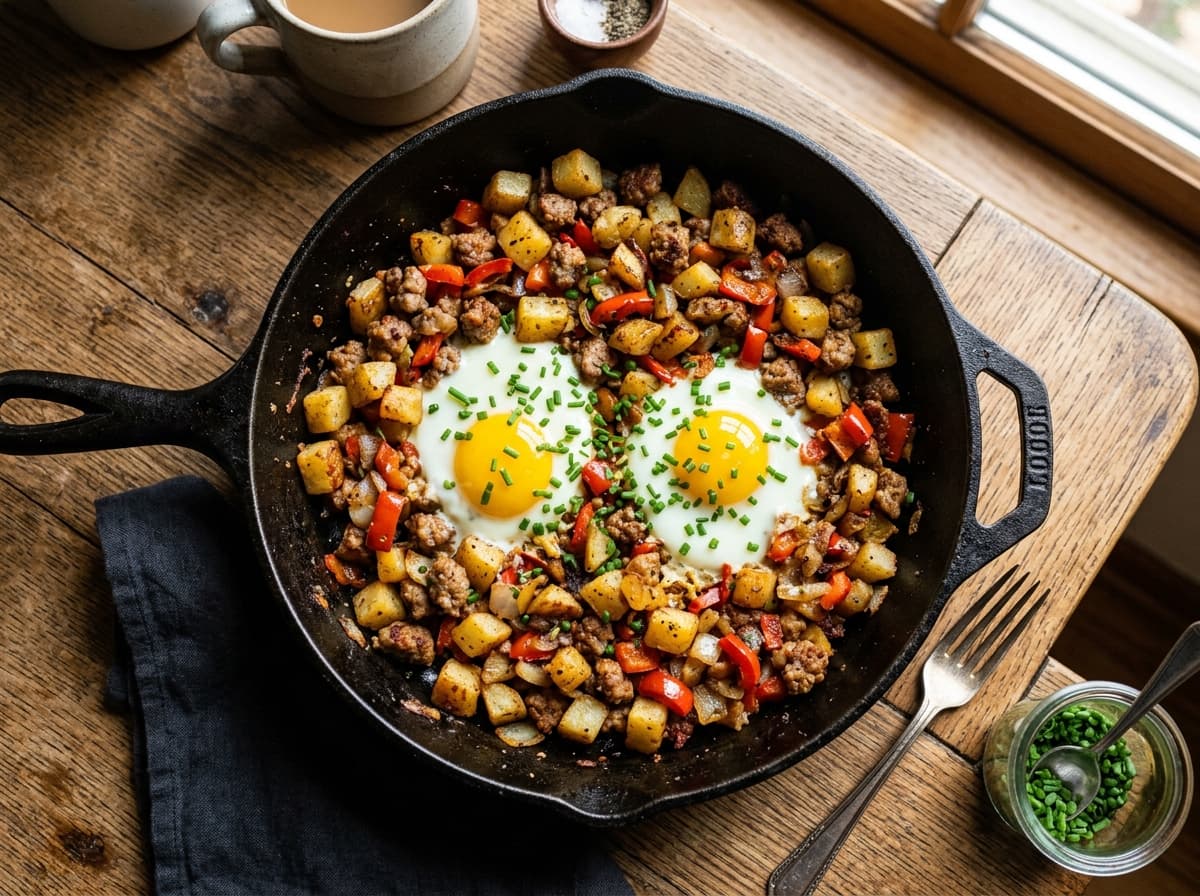
Cast Iron Breakfast Hash & Eggs
Crispy diced potatoes fried in rendered bacon fat with peppers, onions, and sunny-side-up eggs cooked right in the skillet.