All Field Guides (85)SPEC NO: BLOG-017
Kitchen Hardware & Physics5 MIN READ•UPDATED 2026-08-28
Managing Indoor Searing Smoke: High Smoke-Point Tallow, Ventilation, and Splatter Guards
How to sear ribeyes at 500°F without setting off fire alarms or covering your kitchen in grease mist
AUTHORED BY: Meal Instructions Research Team
VERIFIED CULINARY PHYSICS
EXECUTIVE SUMMARY // CORE TECHNICAL PRINCIPLES
- [1]Smoke alarms are triggered by aerosolized sub-micron oil droplets and vaporized acrolein from burning low-smoke fats.
- [2]Turn on range hoods on HIGH 2 minutes *before* heating the pan to establish directional laminar airflow.
- [3]Swap butter and olive oil for rendered Beef Tallow (420°F) or Avocado Oil (520°F) during the initial sear.
- [4]A fine-mesh stainless steel splatter guard captures 95% of airborne oil droplets while allowing water steam to vent freely.
Why Smoke Alarms Trigger During Searing
Indoor smoke detectors (both photoelectric and ionization models) trigger when:
- Photoelectric Sensors: Detect light scattering caused by dense airborne oil aerosol droplets (>0.3 microns).
- Ionization Sensors: Detect ionic disruption caused by microscopic soot particles from combusted fats.
The root cause is almost always:
- Using fats with low smoke points (e.g., butter burning at 320°F).
- Moisture exploding into steam, propelling micro-droplets of oil into the air.
- Lack of pre-established airflow.
The 4-Step Zero-Smoke Searing Protocol
- Step 1: Pre-Establish Laminar Airflow: Turn your range hood to maximum speed 2 full minutes before turning on the burner. This establishes a low-pressure column that pulls rising vapors directly outside rather than letting them billow across the ceiling.
- Step 2: Use Ultra-Refined High Smoke-Point Fats:
- Ditch butter during the sear. Use refined beef tallow or avocado oil.
- Apply oil directly to the meat surface with your hands rather than pouring puddles of oil into the pan.
- Step 3: Deploy a Stainless Mesh Splatter Screen:
- Never use a solid lid (which traps steam and boils the crust).
- A fine wire mesh screen traps 90%+ of airborne oil splatter while letting dry water vapor escape.
- Step 4: Butter Basting Only in the Final 30 Seconds:
- Add cold butter, crushed garlic, and rosemary only after the flame is reduced or turned off. The residual pan heat will melt and foam the butter without scorching milk solids.
RELATED INTERACTIVE KITCHEN ENGINES
Technical FAQ
Q: What if my apartment range hood only recirculates air into the room?
Open the nearest window and place a small box fan facing *outward* to create positive outward exhaust, and use the Reverse-Sear method (bake in oven first, sear for only 45 seconds per side).
Tested Application Recipes
ZERO FLUFF // DIRECT EXECUTION0010
beefcast iron
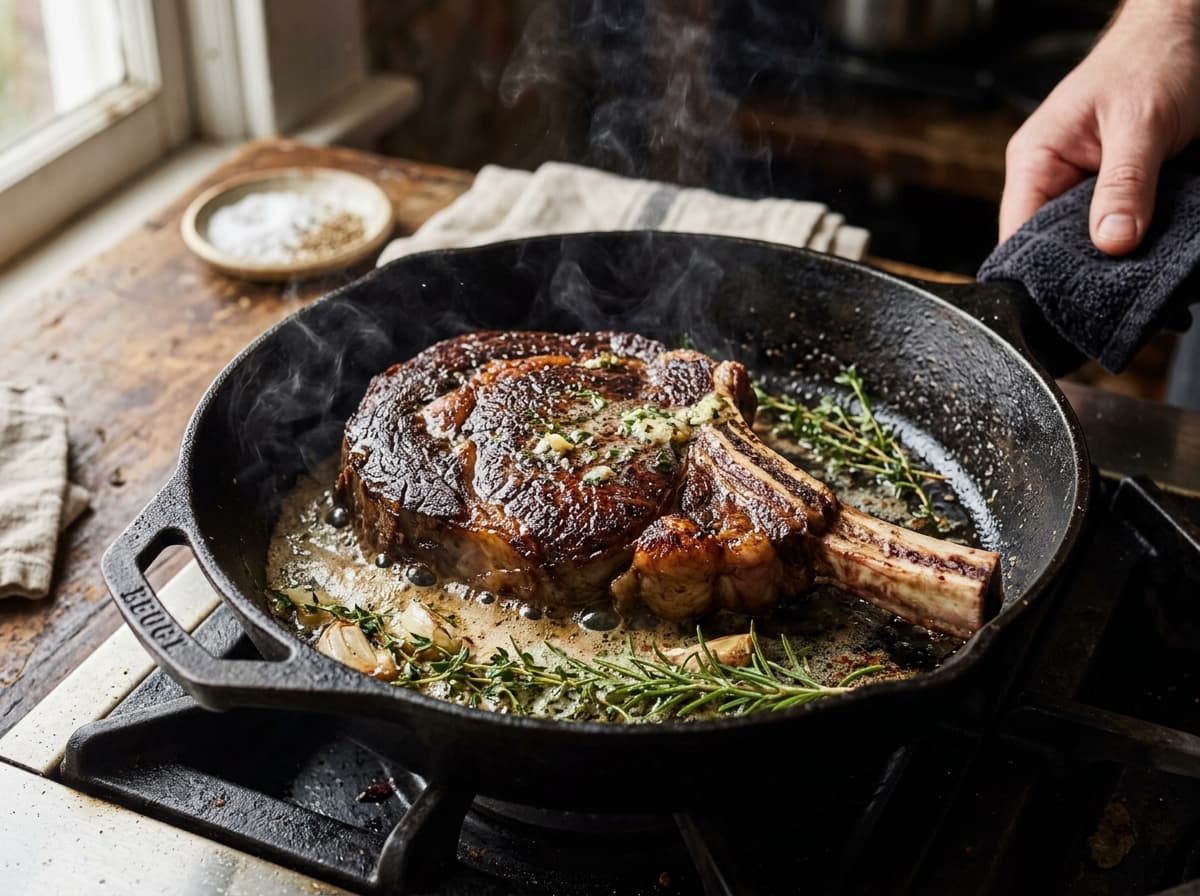
Cast Iron Butter-Basted Ribeye Steak
Restaurant-quality steakhouse sear with garlic herb butter pan basting in 8 minutes.
TEMPSmoking
TIME18 MIN
PROTEIN52G
Easy
DIRECTIONS0004
beefcast iron
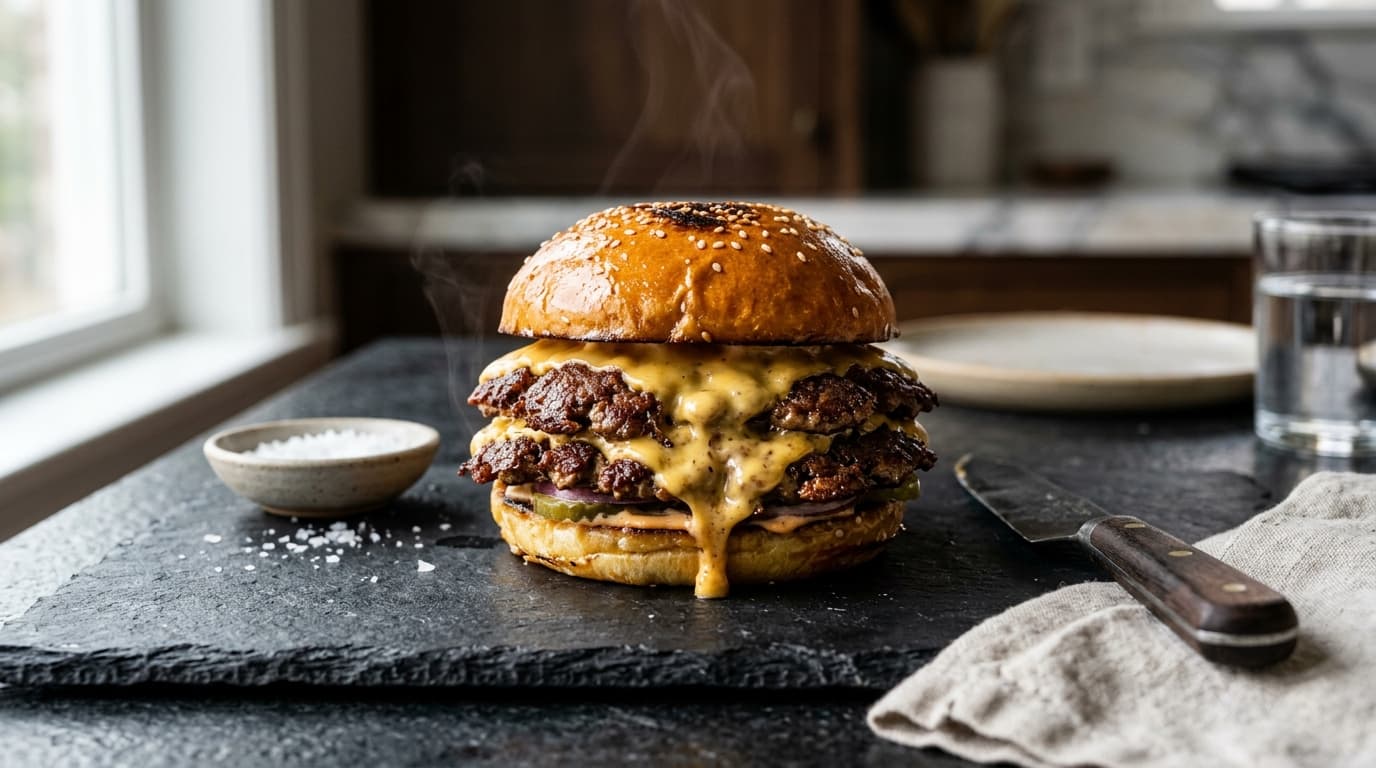
Cast-Iron Lacy-Edge Smash Burgers
Ultra-crispy caramelized edges, double American cheese, and secret burger sauce in 5 minutes.
TEMPSmoking
TIME10 MIN
PROTEIN42G
Easy
DIRECTIONS0065
beefcast iron
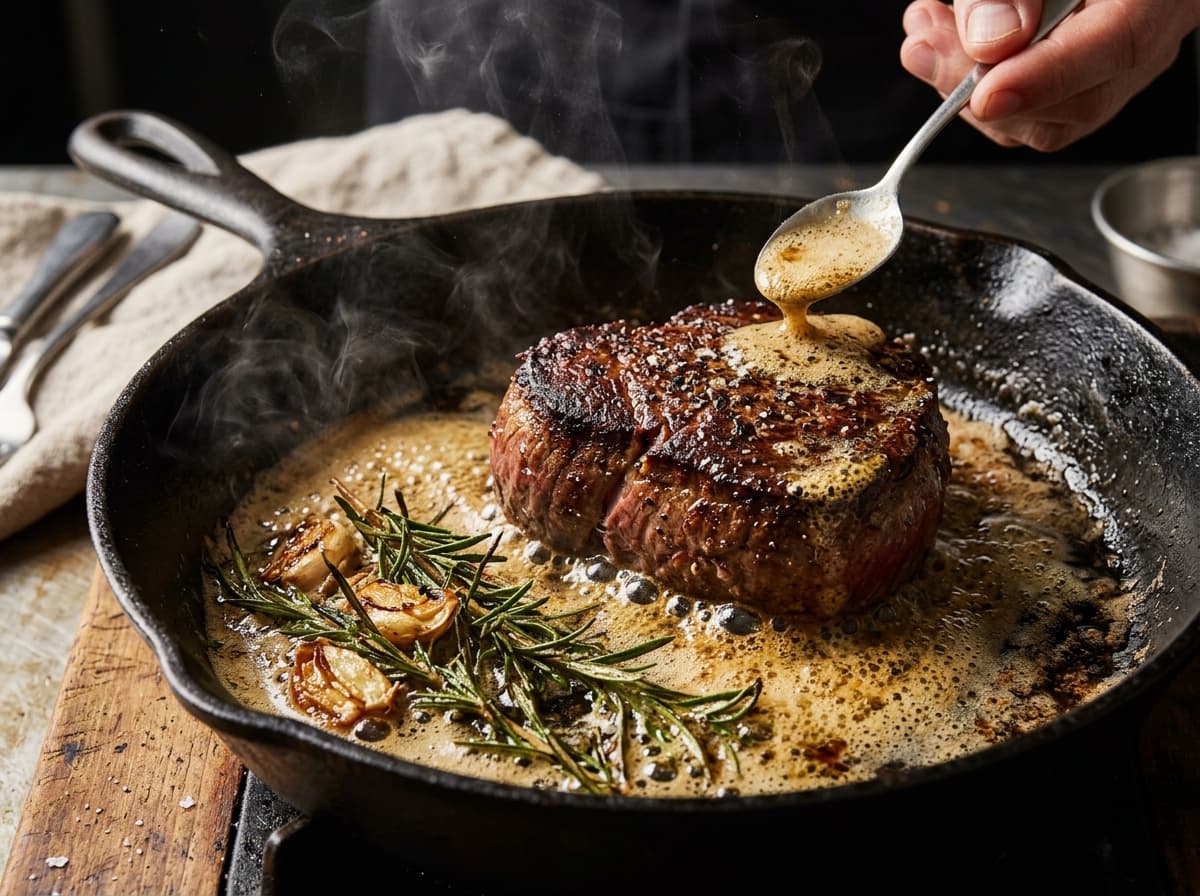
Cast Iron Filet Mignon
Tender 8-ounce beef tenderloin steaks seared in screaming-hot cast iron and basted in foaming garlic rosemary butter in 8 minutes.
TEMPHigh
TIME13 MIN
PROTEIN46G
Easy
DIRECTIONSVerified Cook-Time Datasheets
LAB-TESTED // EXACT SPECSMore Field Guides & Science
View All 50Kitchen Hardware & Physics
6 MIN READREAD →Air Fryer Convection Physics: How Boundary Layer Airflow Cuts Cooking Times
Kitchen Hardware & Physics
6 MIN READREAD →Cast Iron vs Carbon Steel vs Stainless Steel: Thermal Mass and Heat Retention
Kitchen Hardware & Physics
5 MIN READREAD →