Searing Delicate Fish Without Sticking: Protein Coagulation and the Leidenfrost Effect
The thermodynamics of pan preheating, oil barriers, and fish skin desiccation
- [1]Fish sticks when delicate sarcoplasmic proteins bond chemically with hot metal pan pores.
- [2]Preheating stainless steel or cast iron until water droplets dance (the Leidenfrost Effect) closes microscopic pores and expands the metal.
- [3]Moisture on fish skin is the #1 cause of sticking; scrape skin with the back of a knife to squeegee out excess water.
- [4]Fish naturally releases from the pan once the surface proteins have fully browned and contracted—never force a fillet before it releases.
Why Fish Sticks to Stainless Steel and Cast Iron
Metal pans appear smooth to the human eye, but under a microscope, the surface consists of microscopic peaks, valleys, and pores.
When a cold, wet fish fillet is placed into a cool or lukewarm pan:
- Proteins in the fish melt into these microscopic pores.
- As the pan heats, the proteins denature and coagulate, forming a permanent chemical and mechanical bond with the metal.
- When you attempt to flip the fish, the delicate muscle tears apart, leaving the skin welded to the pan.
The 4-Step Anti-Stick Protocol
- Step 1: The Squeegee Method: Lay the fish skin-side up on a cutting board. Take the dull spine of a chef's knife and scrape firmly from head to tail. You will see liquid squeeze out of the skin pores. Wipe away with a paper towel. Repeat 3 times.
- Step 2: Thermal Expansion & The Leidenfrost Point: Heat your stainless steel or cast iron skillet on medium for 3–4 minutes until a drop of water forms a smooth bead that skitters across the surface rather than boiling away instantly.
- Step 3: Fat Layer Lubrication: Add 1–2 teaspoons of high-smoke-point oil (avocado or ghee). Swirl to coat the entire pan. The oil fills any remaining microscopic pores.
- Step 4: The 15-Second Gentle Press: Place the fillet skin-side down and press gently with a fish spatula for 15 seconds. This prevents the skin from curling upward as muscle fibers contract, ensuring flat, uniform contact.
The Natural Thermal Release
Rule of Pan-Searing Fish: If the spatula meets resistance when attempting to slide under the fillet, stop immediately.
As the skin crisps and water vaporizes, the proteins contract and break their temporary bond with the pan. The fish will naturally release and glide across the skillet floor when it is ready to flip (typically at 4 to 5 minutes).
Technical FAQ
Q: Should I cook salmon skin-side down or flesh-side down first?
Always skin-side down first. The skin acts as a thermal insulator, protecting the delicate flesh from direct high heat and allowing 80% of the total cooking to happen on the skin side.
Tested Application Recipes
ZERO FLUFF // DIRECT EXECUTION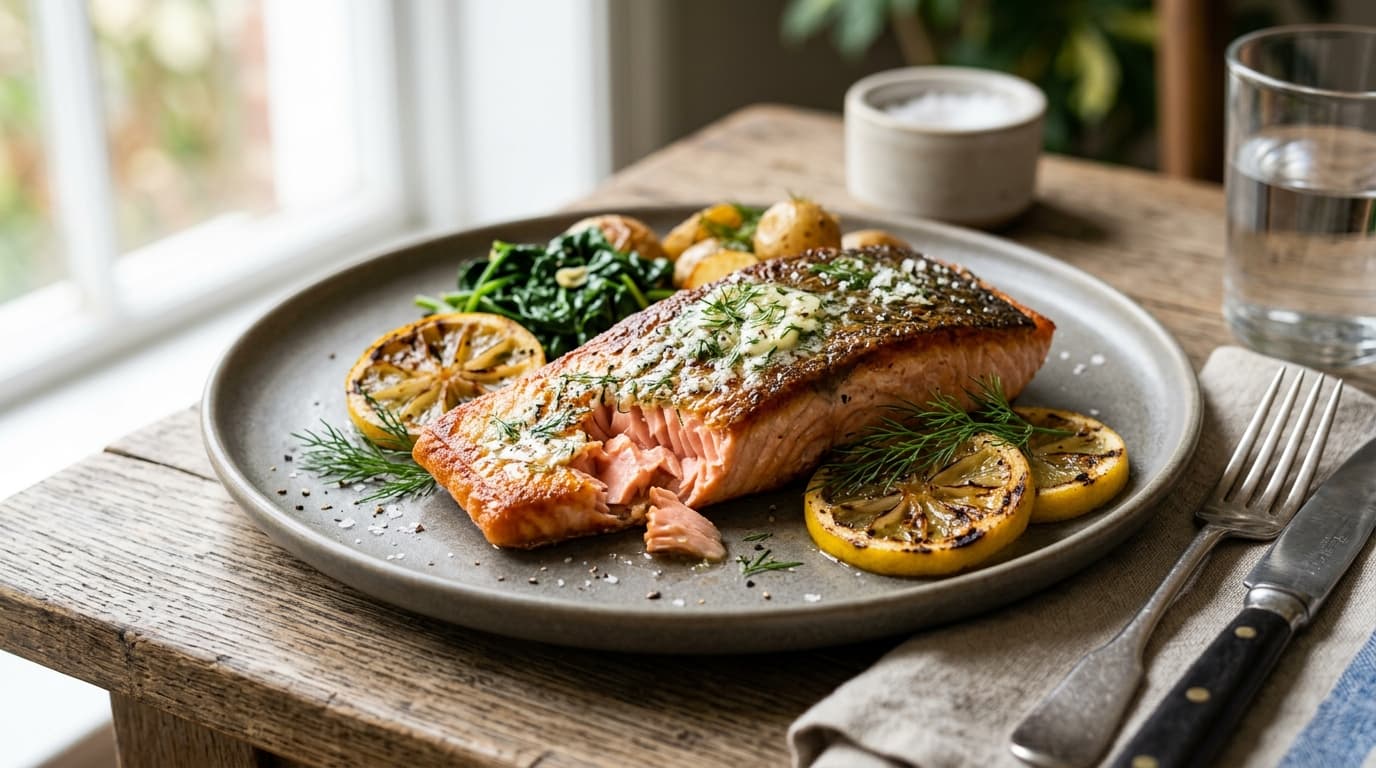
10-Minute Garlic Butter Air Fryer Salmon
Buttery, flaky salmon with crispy skin and garlic herb crust in under 10 minutes.
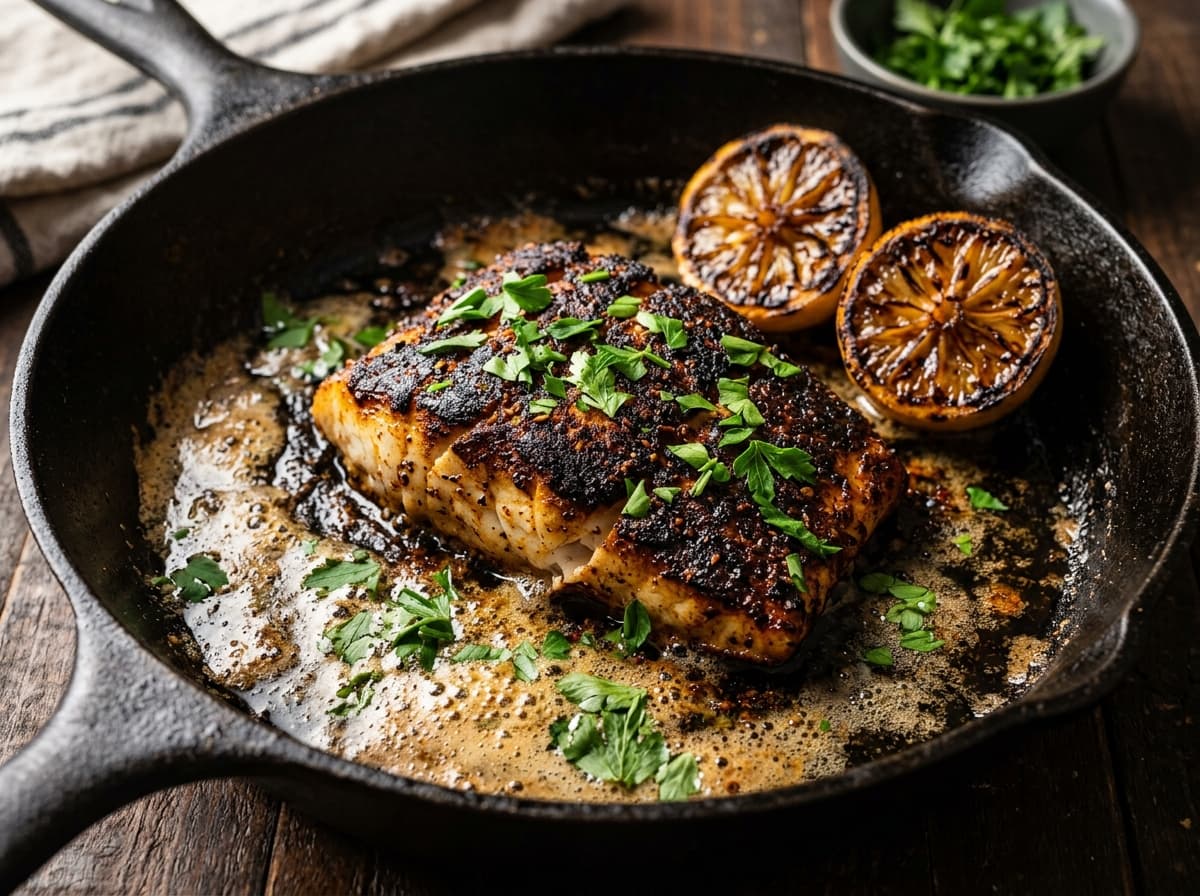
Cast Iron Blackened Cod
Tender flaky wild cod fillets coated in Cajun spices and seared in screaming-hot cast iron butter for restaurant-style blackened fish in 8 minutes.
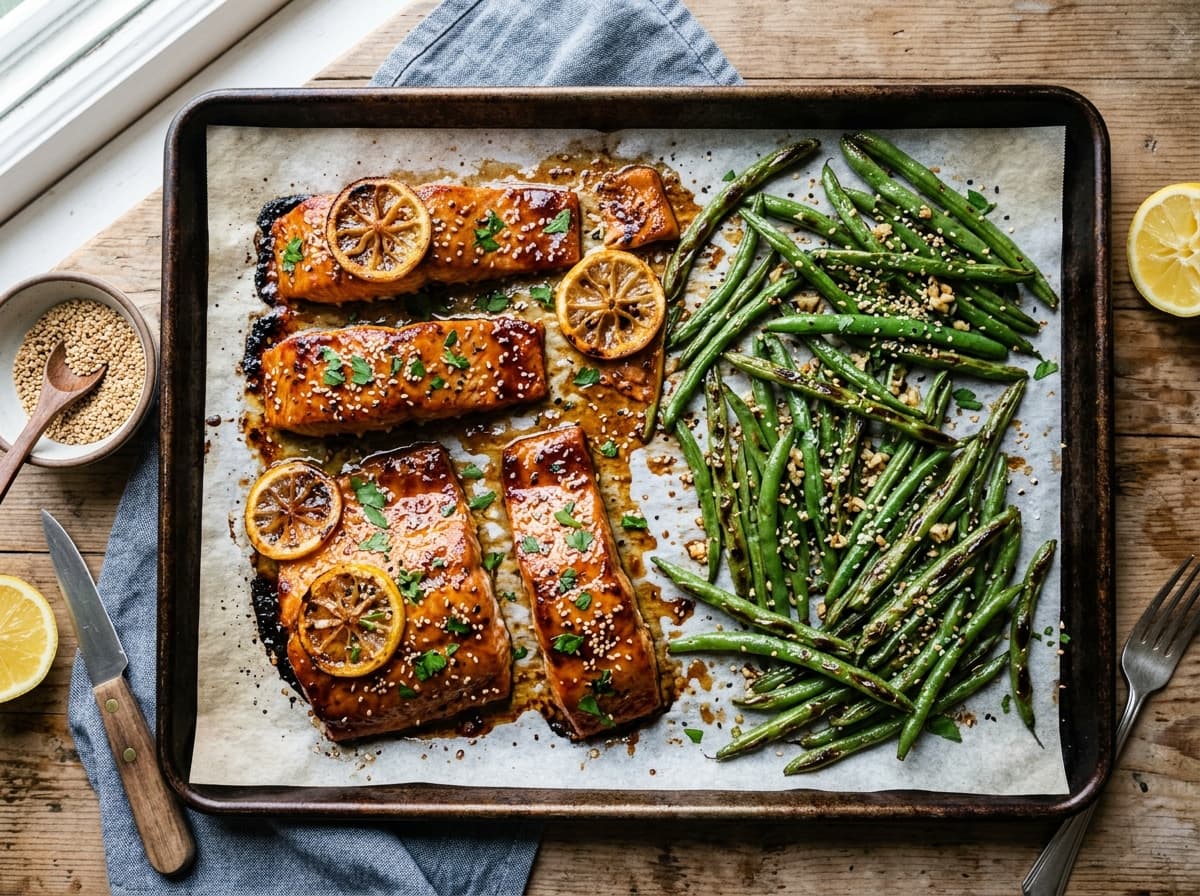
Sheet Pan Honey Garlic Salmon & Green Beans
Glazed tender salmon fillets and blistered green beans roasted together in 14 minutes.