Equilibrium Salting: Diamond Crystal vs Morton Kosher Density and Science
Why a tablespoon of Morton salt will over-salt your dinner by 70% compared to Diamond Crystal
- [1]Diamond Crystal Kosher salt is made via the Alberger process (hollow pyramid flakes) with a bulk density of only 2.8g per teaspoon.
- [2]Morton Kosher salt is rolled under heavy steel rollers into dense flat flakes with a density of 4.8g per teaspoon (71% saltier by volume).
- [3]Table salt is dense cubic crystals at 5.7g per teaspoon (over 100% heavier than Diamond Crystal).
- [4]The Universal Meat Salting Ratio is 1.0% to 1.2% salt by weight (approx. 4.5g to 5.5g salt per 1 lb of raw meat).
The Salt Density Crisis in Modern Recipes
When a recipe calls for "1 tablespoon of kosher salt", what does that actually mean?
Depending on the box in your pantry, you could be adding wildly different amounts of sodium chloride:
- 1 Tbsp Diamond Crystal Kosher Salt = 8.4 grams of salt
- 1 Tbsp Morton Kosher Salt = 14.4 grams of salt (+71% more salt!)
- 1 Tbsp Standard Table Salt = 17.1 grams of salt (+104% more salt!)
If you use Morton salt in a recipe written by a chef who uses Diamond Crystal, your dinner will be aggressively, inedibly over-salted.
Physical Crystal Geometry Under the Microscope
- Diamond Crystal Kosher Salt:
- Manufactured using the patented Alberger process (open-pan evaporation with mechanical agitation).
- Forms hollow, fragile, pyramid-shaped flakes.
- Crushes easily between fingers for precise seasoning control. Dissolves almost instantly on wet food surfaces.
- Morton Kosher Salt:
- Manufactured by compressing evaporated salt granules between heavy industrial steel rollers.
- Forms dense, flat, hard plates.
- Contains yellow prussiate of soda (sodium ferrocyanide) as an anti-caking agent.
- Fine Table Salt:
- Small, hard, cubic crystals packed with high density.
- Drops quickly to the pan bottom rather than clinging to meat surfaces.
Universal Salt Brand Conversion Chart
| Target Weight (Grams) | Diamond Crystal Kosher | Morton Kosher | Fine Table Salt / Sea Salt |
|---|---|---|---|
| 2.8 g (1 tsp Diamond) | 1 tsp | ~1/2 tsp + 1/8 tsp | ~1/2 tsp |
| 5.0 g (~1 lb meat standard) | 1 3/4 tsp | 1 tsp | 7/8 tsp |
| 8.4 g (1 tbsp Diamond) | 1 tbsp (3 tsp) | 1 3/4 tsp | 1 1/2 tsp |
| 14.4 g (1 tbsp Morton) | 1 tbsp + 2 tsp | 1 tbsp (3 tsp) | 2 1/2 tsp |
The 1.0% Equilibrium Meat Salting Standard
For flawless, repeatable seasoning of whole proteins (steaks, roasts, chicken, pork):
- Weigh your meat in grams.
- Multiply by 0.010 (1.0% for mild/standard) or 0.012 (1.2% for hearty roasts/steaks).
- Weigh that exact amount of salt on a digital scale and distribute evenly.
Technical FAQ
Q: Why do pro chefs almost universally prefer Diamond Crystal?
Its hollow flake geometry has high surface area and low density, providing a wide margin of error. You can grab a large pinch with your fingertips without accidentally over-salting the dish.
Tested Application Recipes
ZERO FLUFF // DIRECT EXECUTION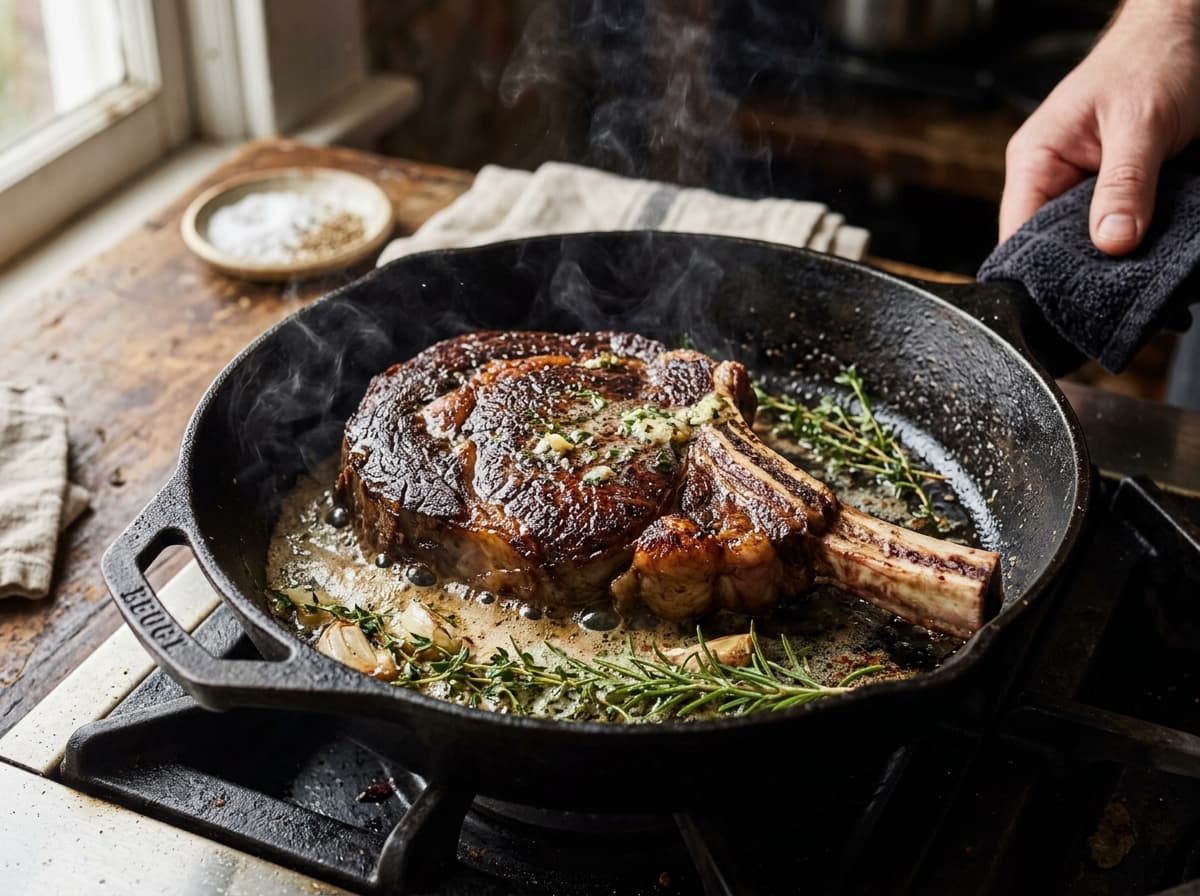
Cast Iron Butter-Basted Ribeye Steak
Restaurant-quality steakhouse sear with garlic herb butter pan basting in 8 minutes.
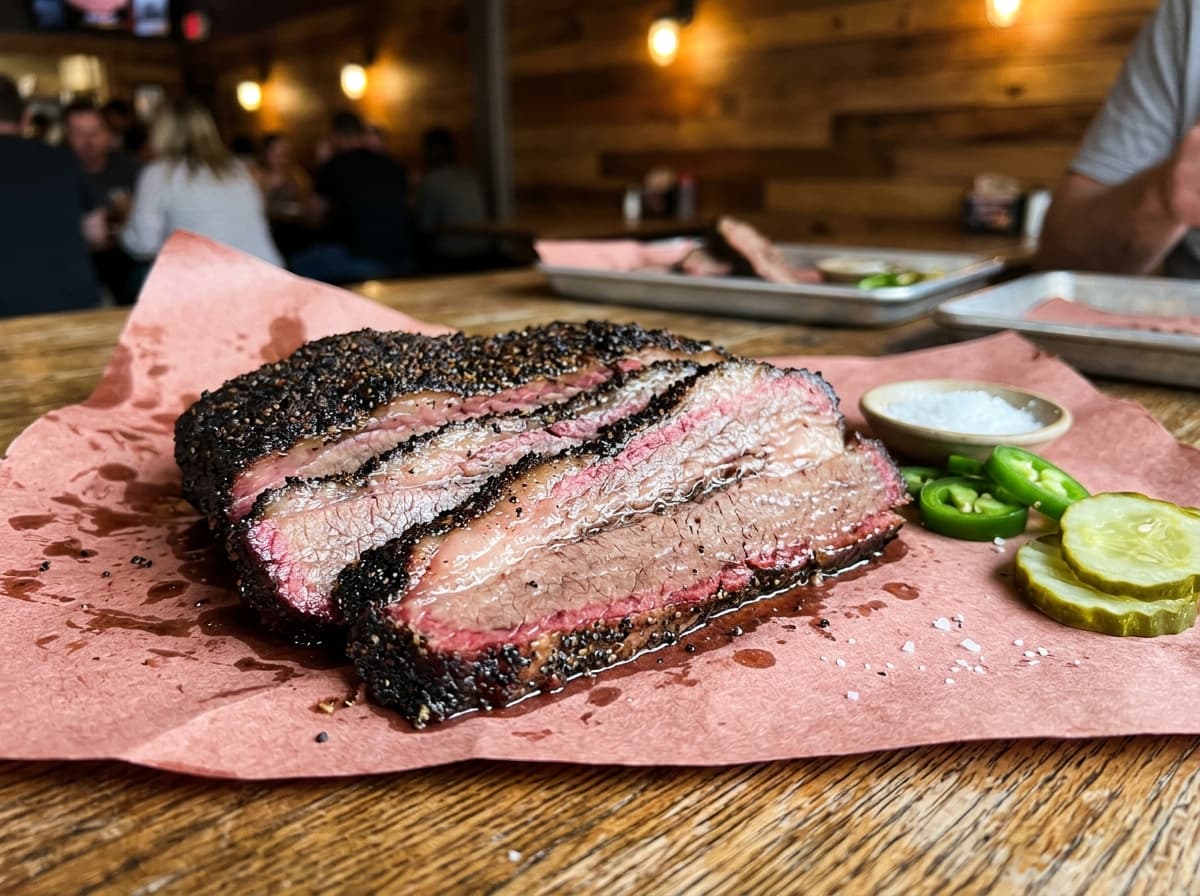
Smoked Texas-Style Beef Brisket
Whole packer beef brisket smoked low and slow at 225°F over oak wood with a coarse salt-and-pepper bark and melt-in-your-mouth fat rendering.
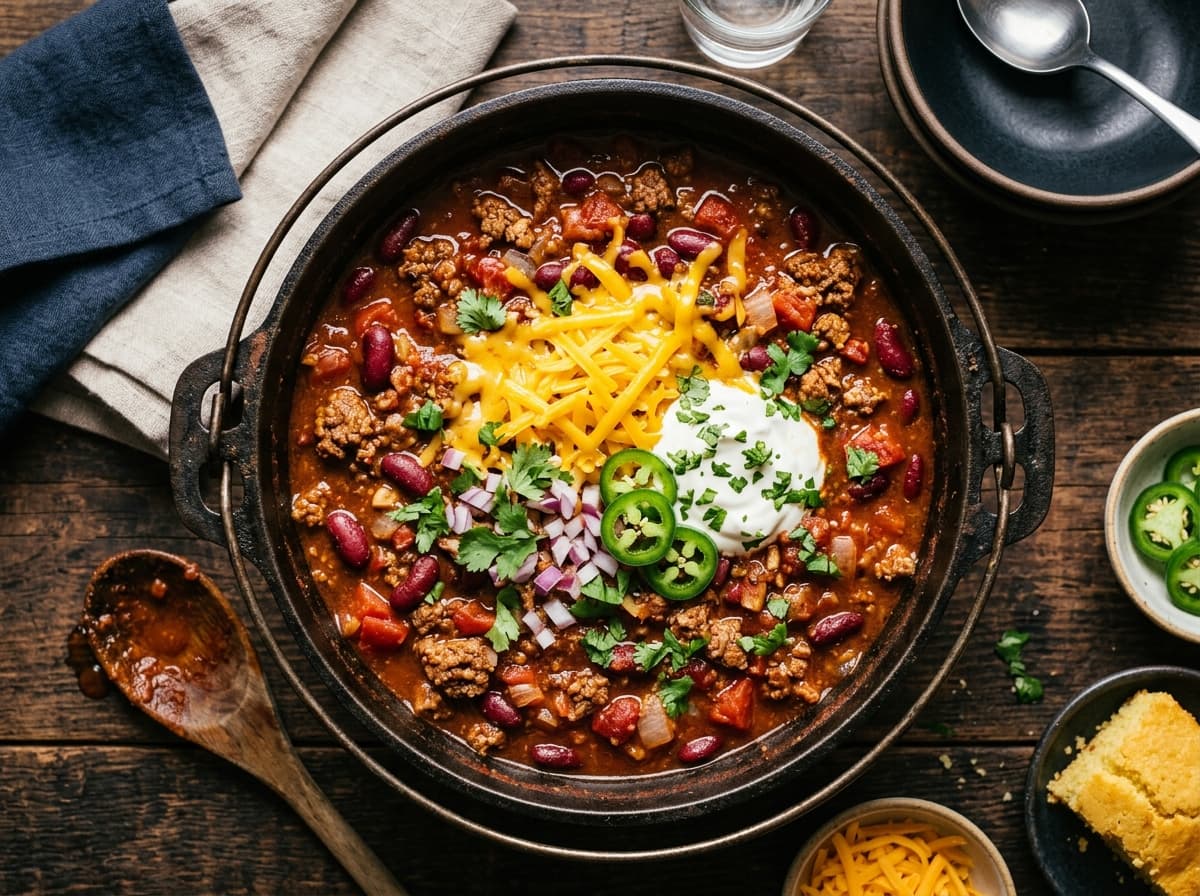
One-Pot Dutch Oven Dad Chili
Hearty ground beef, kidney beans, crushed tomatoes, and bold chili spices simmered in one heavy pot.