Pork Tenderloin vs Pork Loin: Thermal Thresholds, Collagen, and USDA 145°F Safety
Why confusing these two cuts leads to leathery dinner disasters
- [1]Pork tenderloin (1–1.5 lbs) is the psoas major muscle: virtually zero intramuscular fat, zero collagen, extremely tender.
- [2]Pork loin (3–5 lbs) is the longissimus dorsi: a large cylindrical roast often capped with fat.
- [3]In 2011, the USDA lowered the safe cooking temperature for whole cuts of pork from 160°F down to 145°F with a 3-minute rest.
- [4]Pull pork tenderloin at 138°F–140°F; carryover cooking will carry it to 145°F for tender, rosy meat.
Anatomical and Structural Differences
Pork tenderloin and pork loin are completely different cuts with different cooking requirements:
- Pork Tenderloin:
- Anatomy: The psoas major running along the spine. The least exercised muscle on the pig.
- Weight: 1.0 to 1.5 lbs. Long, narrow, torpedo-shaped.
- Composition: Leaner than skinless chicken breast. Zero connective collagen.
- Best Cooking: High heat, rapid sear (air fryer, cast iron, grill). Cook time: 12–15 mins.
- Pork Loin:
- Anatomy: The longissimus dorsi running along the top of the ribs.
- Weight: 3.0 to 5.0 lbs. Large, wide roast, usually with a top fat cap.
- Composition: Moderate lean with exterior fat.
- Best Cooking: Moderate heat roasting (350°F oven or smoker). Cook time: 45–60 mins.
The 145°F USDA Revolution
For decades, home cooks incinerated pork to 160°F–170°F out of fear of Trichinella spiralis (trichinosis). Modern commercial biosecurity has effectively eliminated Trichinella in commercial pork.
In 2011, the USDA updated its safety guidelines:
- Whole cuts of pork are safe at 145°F (63°C) followed by a 3-minute rest.
- At 145°F, pork retains up to 40% more moisture than pork cooked to 160°F. The interior will display a natural, appetizing pale pink blush.
Thermal Targets for Pork Tenderloin
- Pull Temperature: 138°F–140°F
- Resting Rise: +5°F–7°F (during a 5-minute tented rest)
- Final Target: 145°F (Juicy, succulent, tender)
- Danger Zone: >155°F (Turns dry, gray, and requires heavy gravy to swallow)
Technical FAQ
Q: Should I trim the silver skin off the pork tenderloin?
Yes, always. The silver skin is elastin, a tough connective tissue that does not break down at cooking temperatures. Slide a sharp boning knife beneath it and slice it away before cooking.
Tested Application Recipes
ZERO FLUFF // DIRECT EXECUTION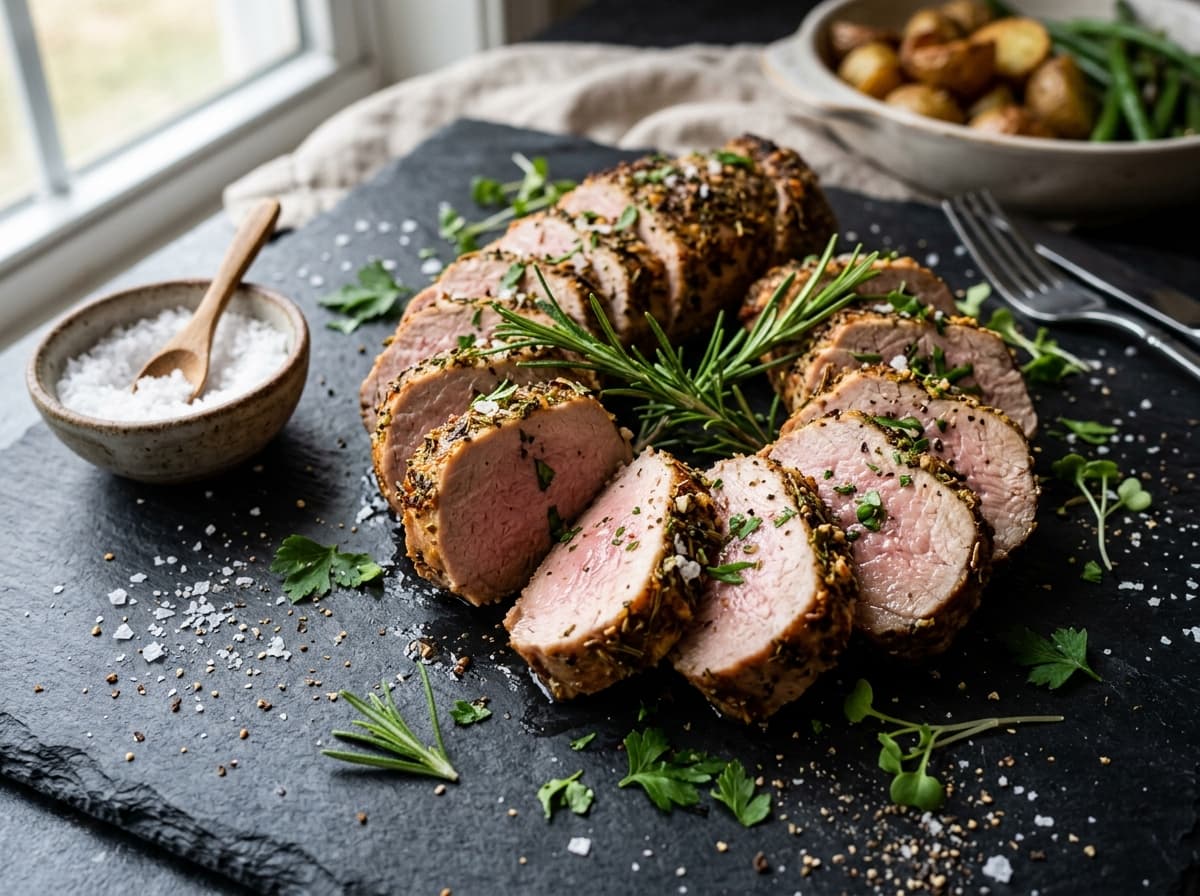
Air Fryer Pork Tenderloin
Juicy, herb-crusted pork tenderloin with a caramelized brown crust and a tender pink center in 18 minutes.
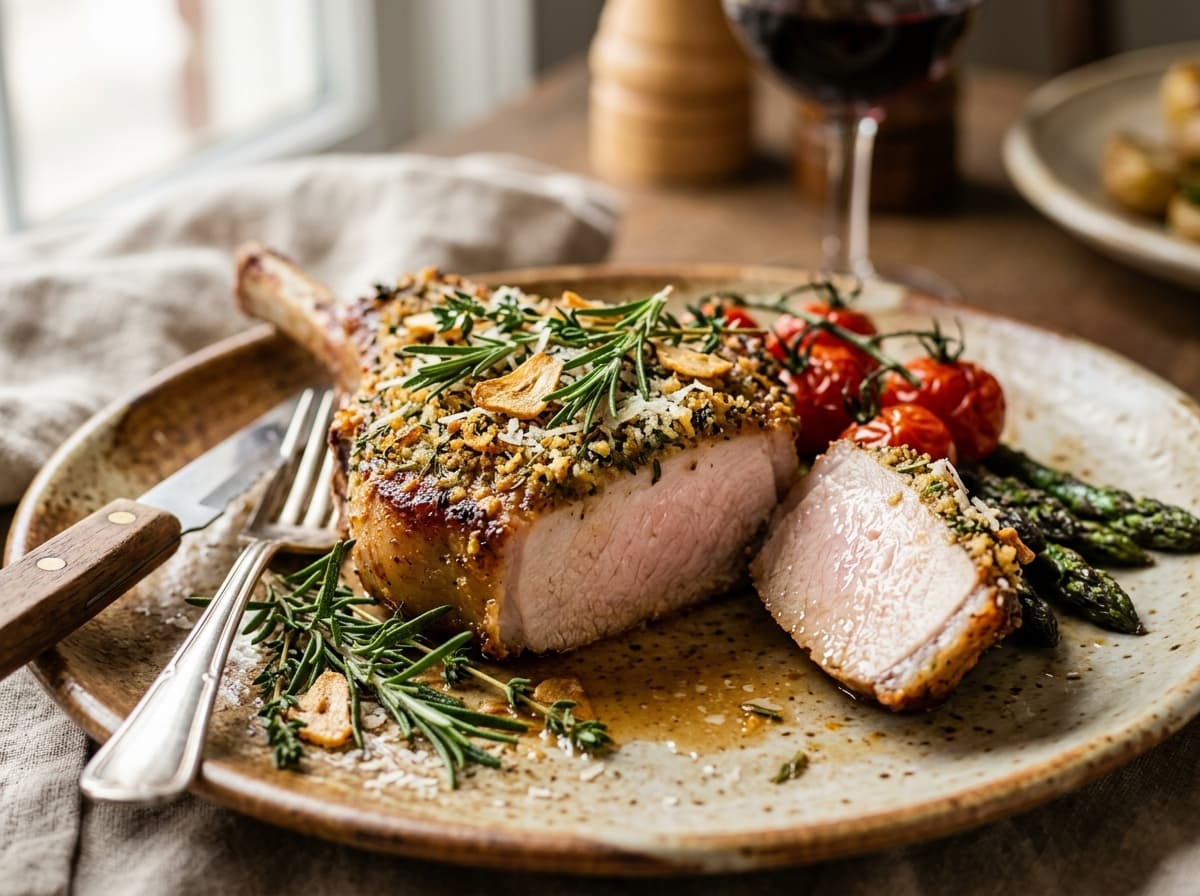
Air Fryer Crispy Parmesan Crusted Pork Chops
Juicy bone-in pork chops with a golden garlic parmesan crust in 12 minutes.
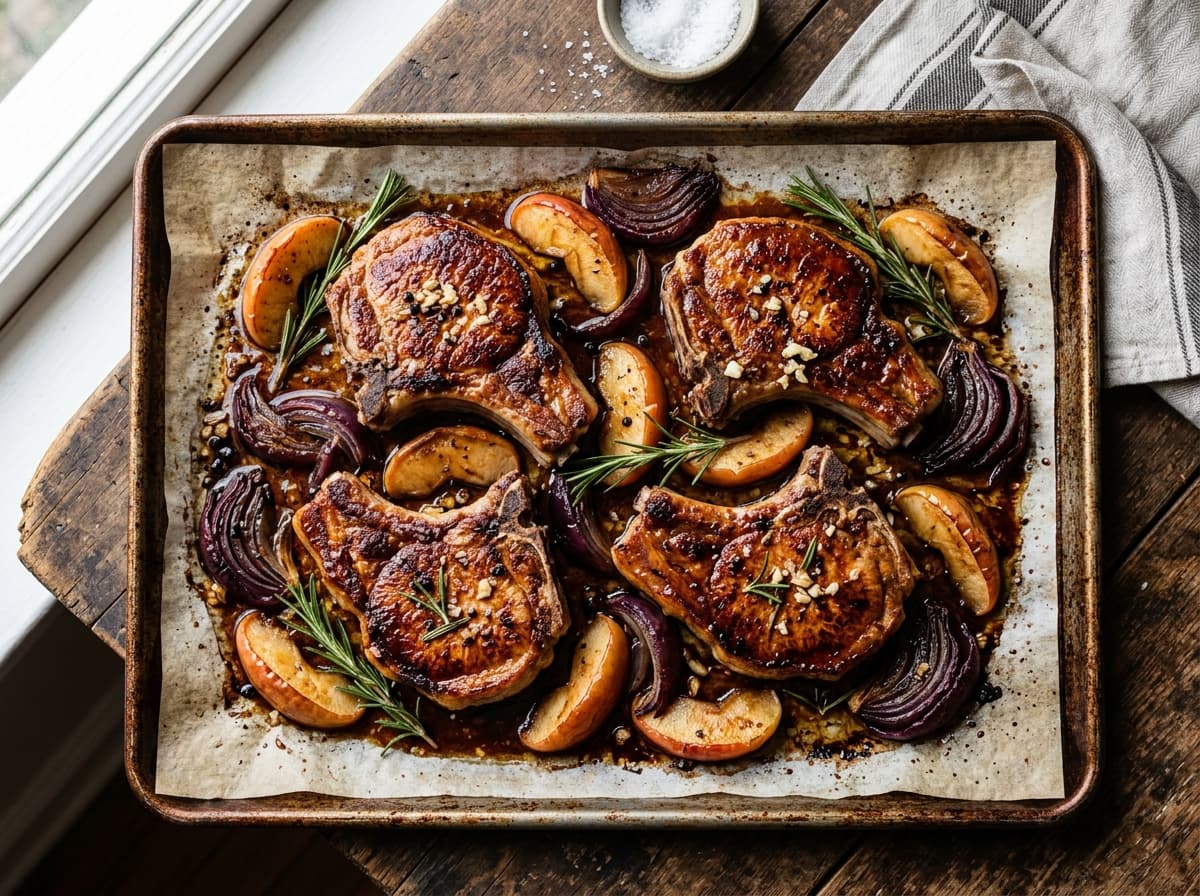
Sheet Pan Pork Chops & Apples
Thick-cut bone-in pork chops roasted alongside sweet Honeycrisp apples, red onions, and fresh thyme on one sheet pan in 22 minutes.